



Does wisdom teeth removal hurt? It’s one of the first questions people ask after finding out they need their wisdom teeth removed. The reassuring news is that the procedure itself is usually not painful because your dentist or oral surgeon numbs the area with local anesthesia or uses sedation to keep you comfortable. However, it’s normal to experience some soreness, swelling, and jaw stiffness during recovery, especially over the first few days.
If you’ve got a wisdom tooth consultation on the calendar, you’ve probably spent more time than you’d like scrolling through Google, reading stories about swollen cheeks, unbearable pain, and surviving on soup for weeks. It’s easy to fall down that rabbit hole, and before long, a routine dental procedure can start to feel far more frightening than it really is.

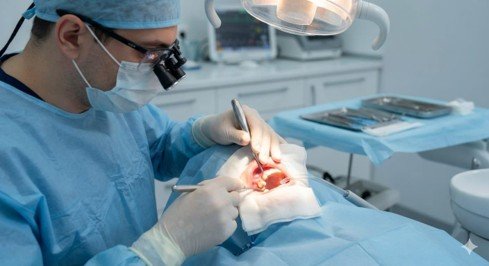
The truth is much less dramatic for most people. While recovery does involve some discomfort, the surgery itself is designed to be as comfortable as possible. Most patients describe the experience as a few days of manageable soreness rather than the nightmare stories they read online. In this guide, you’ll learn what happens during wisdom teeth removal, what recovery actually feels like, which complications are worth knowing about, and the simple aftercare steps that can help you heal comfortably and confidently.
A Quick Overview of Wisdom Teeth
Before answering “Does wisdom teeth removal hurt?”, it helps to understand what wisdom teeth are and why they sometimes need to be removed.
Wisdom teeth, also known as third molars, are the last set of permanent teeth to develop. They usually appear between the late teens and early twenties. Some people have enough space in their jaws for these teeth to grow normally without causing any problems. For many others, however, there simply isn’t enough room. As a result, wisdom teeth may grow sideways, become partially impacted, or remain trapped beneath the gums.
When this happens, they can crowd nearby teeth, trap food and bacteria, and increase the risk of tooth decay, gum disease, infections, or even cysts. According to the American Dental Association (ADA), mild discomfort while wisdom teeth are erupting can be normal, but persistent pain or swelling should always be evaluated by a dentist.
It’s also important to know that not every wisdom tooth needs to be removed. Dentists usually recommend extraction only when the teeth are causing problems or are likely to create issues in the future. Common reasons include repeated infections, severe decay, damage to neighboring teeth, gum disease, or impacted wisdom teeth that cannot erupt properly. The Mayo Clinic also advises that these factors often determine whether removal is the best option.
Why the “Does It Hurt” Question Has Two Answers
When people ask, “Does wisdom teeth removal hurt?”, dentists usually separate the answer into two different stages: the procedure itself and the recovery afterward.
During the extraction, you won’t typically feel pain because the area is completely numbed with local anesthesia, and many patients also choose sedation to help them stay relaxed. You may notice some pressure or gentle pulling, but sharp pain during the procedure is uncommon.
The second part of the answer is recovery. Once the anesthesia wears off, it’s normal to experience some soreness, swelling, and mild discomfort while your mouth heals. For most people, these symptoms are temporary and improve within a few days with proper aftercare. Understanding the difference between the procedure and the recovery helps set realistic expectations and explains why some patients feel back to normal in just a few days, while others may need a week or slightly longer to heal.


What Happens During the Procedure Itself
Before anything starts, the area gets numbed completely with local anesthesia, so on the table you shouldn’t feel sharp pain — pressure, maybe some tugging, or an odd vibration from the instruments, but not pain in the way most people picture it. Some offices add nitrous oxide to take the edge off nervousness, and for more involved cases — teeth that are impacted, angled, or still under the gum — IV sedation or general anesthesia is often the better choice, meaning you’re either drowsy through the whole thing or completely asleep.
How complicated the extraction is depends heavily on the tooth’s position. A wisdom tooth that has already broken through the gum in a normal position is usually a quick, routine pull. A fully impacted tooth trapped in the jawbone is a different story — it may require cutting into the gum, removing a small amount of bone, or splitting the tooth into pieces to remove it cleanly. None of that adds pain during the surgery itself, since you’re numb or sedated regardless, but it does affect how much healing the body has ahead of it, which is really where the discomfort conversation begins. The American Association of Oral and Maxillofacial Surgeons notes that most third molars can be removed with little to no pain during the procedure itself, whether the office uses local anesthesia, IV sedation, or general anesthesia.
Why Anxiety Changes How the Procedure Feels
Anxiety plays a bigger role in how people remember the appointment than most expect going in. Patients who arrive tense, bracing for pain that never actually comes, often describe the whole visit as more unpleasant than patients who go in relaxed — even though both are getting identical numbing and identical surgical steps. Dentists have noticed this pattern for years, which is part of why so many practices now offer some form of sedation even for straightforward extractions. It’s less about the pain demanding it and more about managing the dread beforehand.
What Recovery Actually Feels Like, Day by Day
This is the part people are really asking about when they say “does it hurt,” and the honest answer is: yes, somewhat, but it’s manageable for most people. Once the anesthesia fades — usually within a few hours of leaving the office — a dull ache sets in around the extraction site. Most people describe it less as sharp pain and more like a persistent soreness, similar to a bruise, that peaks around day two or three and then gradually eases off. Over-the-counter pain relievers are often enough on their own.
That last point isn’t just anecdotal. A 2024 clinical practice guideline concluded that NSAIDs like ibuprofen, taken alone or combined with acetaminophen, are an effective first-line option for managing short-term dental pain in adolescents and adults after a tooth extraction — often working as well as or better than opioid painkillers for this kind of pain. For more involved extractions, a short course of prescription medication might still be given for the first day or two, but it’s frequently a backup rather than a necessity.
Swelling, Bruising, and Jaw Stiffness
Swelling tends to track alongside the pain, and it often looks worse than it feels. Cheeks can puff up noticeably by the second day, sometimes with a bit of bruising along the jawline, which can be alarming if you’re not expecting it — but it’s a normal part of healing rather than a sign something’s wrong. Ice packs applied in short intervals during the first 24 hours help keep swelling in check, and after that, switching to gentle warmth can ease any lingering jaw stiffness.
Jaw stiffness itself doesn’t get talked about as much as the pain, but it’s extremely common. Because the mouth has to stay open for an extended stretch during surgery, and because tissue near the jaw joint gets disturbed, a lot of people find it hard to open wide for several days afterward. This usually resolves on its own, though gentle stretching is sometimes recommended if it lingers past a week.


Dry Socket: The Complication People Fear Most
Dry socket is the complication that scares people most, and for good reason — it’s genuinely one of the more painful things that can happen after a tooth extraction, though it’s far from the norm. According to the research it happens when the blood clot that’s supposed to protect the healing socket fails to form or gets dislodged too early, exposing the bone and nerves underneath. Cleveland Clinic estimates dry socket affects roughly 2% to 5% of all tooth extractions overall, and it’s notably more common after wisdom tooth removal than after routine extractions.
The pain from dry socket is sharper and more intense than ordinary post-extraction soreness, and it often radiates toward the ear. It also tends to show up around day three or four — right when people expect to start feeling better instead of worse. Prevention strategies are fairly consistent across sources: avoiding straws, smoking, and vigorous rinsing in the first few days, since suction and disruption are the most common ways that protective clot gets knocked loose.
Normal Recovery vs. Possible Dry Socket
| Symptom | Normal Recovery | Possible Dry Socket |
| Pain onset | Gradual, peaks day 2–3, then fades | Sharp increase around day 3–4 |
| Pain type | Dull, bruise-like ache | Sharp, throbbing, radiates to ear/jaw |
| Socket appearance | Dark blood clot visible | Empty socket, visible whitish bone |
| Bad breath/taste | Minimal | Noticeable foul odor or taste |
| Response to OTC pain relief | Manageable | Little to no relief |
| Trend | Improves daily | Worsens instead of improving |
Do’s and Don’ts During Recovery
Diet and daily habits shape recovery more than most people expect walking in. A few consistent, evidence-backed habits — and a few things to avoid — make a measurable difference in comfort and healing speed.
Recovery Do’s and Don’ts
| Do | Don’t |
| Stick to soft foods (yogurt, mashed potatoes, smoothies, scrambled eggs) for several days | Eat hard, crunchy, or chewy foods that could irritate or dislodge the clot |
| Use ice packs in short intervals during the first 24 hours | Use a straw — the suction can dislodge the healing clot |
| Rinse gently with warm salt water starting a day or so after surgery | Rinse vigorously or spit forcefully in the first few days |
| Take pain medication on schedule, not just when pain spikes | Smoke or use tobacco products during healing |
| Rest and avoid strenuous activity for 48–72 hours | Jump back into intense workouts or a demanding workday too soon |
| Keep follow-up appointments if your dentist requests one | Skip aftercare instructions because symptoms feel mild |
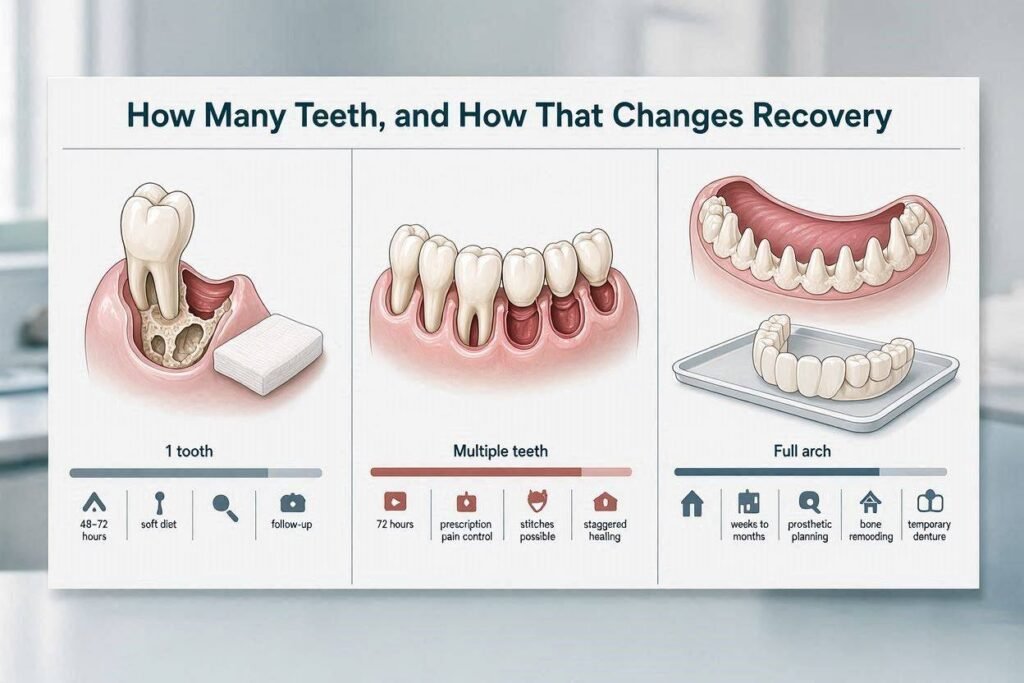
How Many Teeth, and How That Changes Recovery
How many teeth come out at once shifts the intensity of recovery. Having all four wisdom teeth removed in a single appointment — fairly common practice — tends to mean more overall swelling and soreness simply because there’s more surgical area healing at once, compared with removing just one problematic tooth. Some patients and dentists opt to stagger extractions across two visits instead, spreading the recovery out but requiring two separate rounds of downtime. Which approach makes more sense really depends on the specific teeth involved and how a person tends to handle recovery in general.
Why Age Matters More Than People Expect
Age turns out to be one of the bigger factors in how rough recovery feels. Younger patients — particularly teenagers and people in their early twenties — tend to heal faster and report less pain overall, partly because the tooth roots aren’t fully formed yet and partly because younger bone tends to be softer and easier to work with. This is a big part of why dentists often recommend removing wisdom teeth earlier rather than waiting; extractions done in someone’s thirties or forties, once roots are fully developed and bone has hardened, tend to involve a longer, more uncomfortable recovery. It is recommended that third molars be evaluated by an oral surgeon by the time a patient reaches young adulthood, specifically because outcomes tend to be better earlier rather than later.
Aftercare: The Part That’s Actually in Your Control
Following aftercare instructions closely makes a genuinely measurable difference in how much pain people report, and oral surgeons bring this up again and again because patients who skip steps tend to have a rougher time. Rinsing gently with warm salt water, avoiding hard or crunchy foods that could lodge in the healing socket, staying on top of medication on schedule rather than waiting for pain to spike, and resting instead of jumping back into strenuous activity too soon all add up to a smoother recovery. Patients who go back to the gym or push through a demanding workday within a day or two of surgery often report worse swelling and more discomfort than those who genuinely rest for the first 48 to 72 hours.
Everyone’s pain tolerance and healing speed differ enough that comparing notes with a friend who had the same procedure can be misleading. Some people are back to normal eating and activity within three or four days, barely needing more than a couple of doses of ibuprofen, while others need the better part of a week before things feel comfortable again, especially with more complex impacted extractions. Neither experience is abnormal.
Pain Timeline at a Glance
It helps to see the general arc of recovery laid out, even though individual timelines vary.
General Wisdom Teeth Recovery Timeline
| Day | What’s Typically Happening |
| Day 0 (surgery day) | Numbness wears off within hours; mild to moderate ache begins |
| Day 1–2 | Swelling builds, soreness increases, soft-food diet in full effect |
| Day 2–3 | Peak of pain and swelling for most patients |
| Day 3–4 | Discomfort should be easing — worsening pain here can signal dry socket |
| Day 4–5 | Chewing becomes noticeably easier; jaw stiffness starts to loosen |
| Day 7 | Most people are back to normal activity and diet |
| Weeks 2–4 | Gums continue healing internally, even though it feels back to normal |
When to Call Your Dentist or Oral Surgeon
Most recoveries follow the pattern above without any drama, but it’s worth knowing when discomfort has crossed into “call the office” territory. Worsening pain after day three or four, a foul taste or odor that doesn’t improve with rinsing, fever, swelling that keeps increasing rather than peaking and fading, or numbness that doesn’t resolve are all reasons to check in rather than wait it out. Oral surgeons would generally rather field an unnecessary call than have a patient sit with a dry socket or infection for days.
FAQ Section
1. Does wisdom teeth removal hurt during surgery?
No. Local anesthesia or sedation prevents pain, although you may feel pressure.
2.How long does pain last?
Most pain peaks within 2–3 days and improves after about a week.
3.Is dry socket very painful?
Yes. Dry socket causes severe pain after the blood clot becomes dislodged.
4.Can I eat after wisdom teeth removal?
Yes. Stick to soft foods for the first few days.
5.When should I call my dentist?
If pain gets worse after day 3, you have a fever, or notice swelling that continues to increase.
The Bottom Line
So, does wisdom teeth removal hurt? During the extraction itself, no — not in any meaningful way, thanks to anesthesia and sedation options that make the actual procedure a non-issue for the overwhelming majority of patients. Afterward, yes, there’s real soreness and swelling to expect, peaking around day two or three, but for most people it’s manageable with basic pain relief, ice, rest, and a few days of soft food, rather than the extended ordeal that internet horror stories tend to suggest. Complications like dry socket do happen and are worth knowing how to prevent and recognize, but they remain the exception rather than the rule.
Going in with realistic expectations, following the aftercare instructions your dentist actually gives you, and giving your body a genuine few days to rest tends to make the whole experience a lot less dramatic than the stories floating around online would have you believe.