



That dull throb or sudden sharp pain sitting right behind your eye can be unsettling, especially when it shows up out of nowhere and refuses to let go. A headache behind the right eye is one of the most common complaints people search for online, and for good reason — the area around the eye is packed with nerves, blood vessels, and sinus cavities, all of which can trigger pain that feels localized even when the actual cause lies somewhere else entirely. The good news is that most cases trace back to a handful of well-understood conditions, ranging from simple eye strain to tension headaches, sinus pressure, or migraine. The less comfortable truth is that a small number of cases point to something that genuinely needs medical attention. This article walks through the most common causes, how to tell them apart, practical relief strategies, and the specific warning signs that mean it is time to stop self-treating and see a doctor.
Why Pain Behind the Right Eye Feels So Specific
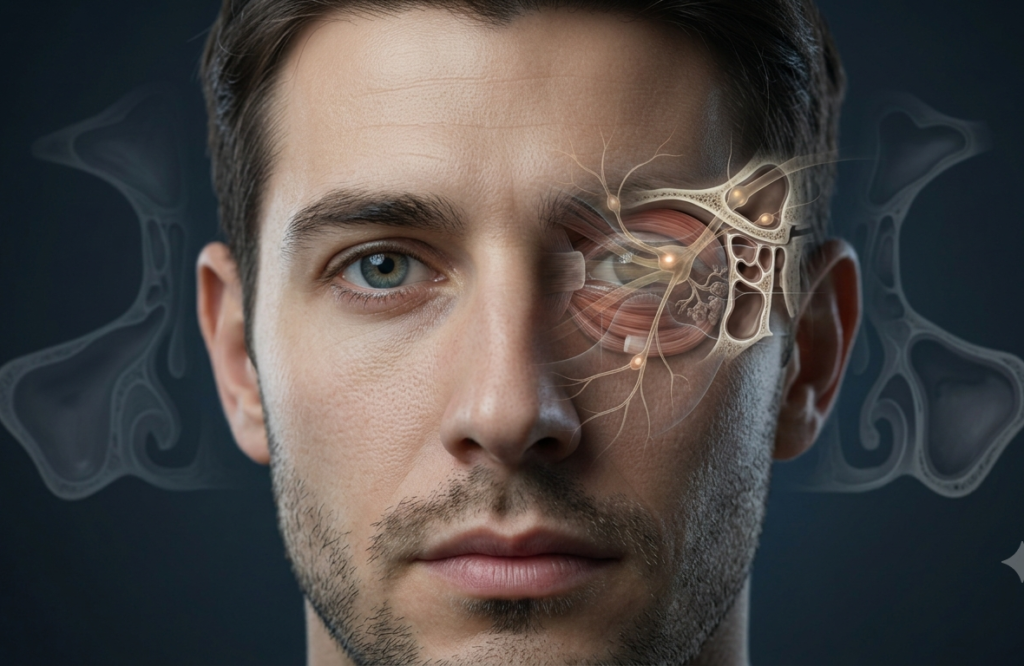
The eye socket, or orbit, sits at the crossroads of several nerve pathways, most notably branches of the trigeminal nerve, which also supplies sensation to the forehead, sinuses, jaw, and scalp. This shared wiring explains why pain that actually originates in your sinuses or your jaw muscles can feel like it is coming from directly behind your eye. It also explains why a migraine, which involves changes in nerve signaling and blood vessel activity, so often localizes around one eye rather than spreading evenly across the head.


Because so many different structures feed into this same nerve network, pain behind right eye symptoms can be genuinely difficult to self-diagnose. A sinus infection, a tension headache, and a migraine can all produce strikingly similar sensations in the same location, which is exactly why doctors rely on the surrounding pattern of symptoms, not just the location of the pain, to figure out what is actually going on.
Migraine Behind Right Eye: The Most Common Culprit
Migraine is one of the leading causes of one-sided head pain that settles behind or around a single eye, and it is often mistaken for a purely eye-related or sinus problem. A useful clinical rule of thumb comes from headache specialists: if you have at least two of these three symptoms — pain that interferes with daily activity, sensitivity to light, and nausea — there is roughly a 90 percent chance you are dealing with a migraine rather than a sinus headache or something else entirely.
A migraine behind right eye typically presents as a throbbing or pulsating pain rather than a constant pressure, and it often comes with additional symptoms like sensitivity to light and sound, nausea, and occasionally visual disturbances such as flashing lights or blind spots, a pattern known as an aura. Some people experience what are sometimes called ocular migraines, where visual disturbances appear first and are followed by pain behind the affected eye. Common migraine triggers include hormonal shifts, disrupted sleep, dehydration, skipped meals, strong smells, and bright or flickering light, and identifying your personal trigger pattern is often the single most useful step toward reducing how often these episodes happen.
Cluster Headache Right Eye: Less Common but Far More Intense
Cluster headaches are much rarer than migraines, but when they occur, the pain is often described as one of the most severe kinds a person can experience. A cluster headache right eye typically causes an intense, boring or piercing pain concentrated tightly around or behind one eye, frequently accompanied by a red or watery eye, a drooping eyelid, and nasal congestion on the same side as the pain. These attacks tend to follow a distinct pattern, often striking at the same time of day or night, sometimes waking a person from sleep, and clustering into a series of attacks over several weeks before going into a period of remission.
Because cluster headaches are both intense and pattern-driven, they generally require a proper medical diagnosis rather than home management alone. If you notice this specific combination of severe one-sided pain, eye redness, and a predictable daily timing, it is worth bringing that exact pattern description to a doctor, since it gives them a strong head start on identifying the cause.
Sinus Headache Behind Right Eye: A Common but Overdiagnoses Cause
Sinus-related pressure is a frequent explanation people reach for when they feel pain behind right eye, and it does happen — congestion from a cold or seasonal allergies can cause a buildup of pressure in the sinus cavities near the eyes, producing a heavy, pounding sensation across the face and behind the eyes. A genuine sinus headache behind the right eye usually comes with other telltale signs of sinus involvement, such as thick nasal discharge, postnasal drip, a feeling of facial fullness, and sometimes a mild fever if an active infection is present.
Here is the twist worth knowing: research has repeatedly found that a striking number of headaches people self-diagnose as sinus-related actually turn out to be migraines once properly evaluated. The overlap happens because the same nerve pathways serve the sinuses, eyes, ears, jaw, and teeth, which means the symptoms can feel nearly identical even though the underlying cause is completely different. If your “sinus headache” keeps recurring without a cold or clear allergy trigger, it may be worth reconsidering migraine as the more likely explanation.

Eye Strain Right Eye Headache: The Everyday Cause Hiding in Plain Sight
In a world where most people stare at screens for the majority of their waking hours, eye strain, right eye headache complaints have become increasingly common, and this cause is often the easiest to overlook simply because it feels too mundane to be the answer. Digital eye strain, sometimes called computer vision syndrome, develops when your eyes work overtime to focus on a screen for extended periods, often made worse by poor lighting, glare, an incorrect screen distance, or an outdated eyeglass prescription.
The resulting headache tends to build gradually over the course of the day, often accompanied by a gritty or dry sensation in the eyes, blurred vision by the evening, and a general feeling of eye fatigue. Uncorrected vision problems such as myopia, astigmatism, or presbyopia can make this kind of strain far worse, since the eye muscles are constantly compensating to bring things into focus. A comprehensive eye exam is often the simplest and most overlooked fix for chronic strain-related headaches, since correcting the underlying vision issue frequently resolves the pain entirely.
Right Side Headache and Eye Pain: Tension-Type Headaches
Tension headaches are the most common headache type overall, and while they usually produce a band-like pressure around the whole head, they can also concentrate more heavily on one side, producing a right side headache and eye pain combination that feels like tight, squeezing pressure rather than a sharp or throbbing sensation. These headaches are frequently linked to muscle tension in the neck, shoulders, and jaw, often triggered or worsened by poor posture, prolonged desk work, stress, or teeth grinding and jaw clenching during sleep.
Unlike migraines, tension headaches typically do not come with nausea or strong light sensitivity, and the pain is usually described as a constant dull ache rather than a pulsating one. Correcting posture, taking regular screen breaks, managing stress, and addressing jaw clenching with a dentist’s help are all practical ways to reduce how often these headaches occur.
Sharp Pain Behind Right Eye: When the Sensation Changes the Picture
A sharp pain behind right eye that appears suddenly and intensely, rather than building gradually, deserves a slightly different level of attention than a dull, familiar ache. Sudden sharp pain can still be explained by common causes like a migraine attack or a cluster headache episode, but it can also occasionally signal something that needs urgent evaluation, such as a sudden spike in eye pressure related to acute glaucoma, or in rare cases, an infection spreading toward the eye tissues. This does not mean every sharp pain is an emergency, but it does mean sudden, severe, and unfamiliar pain deserves more caution than the kind of ache you recognize from past tension headaches or migraines.
Common Causes at a Glance
The table below summarizes how these common causes typically differ, which can help you get a general sense of what you might be dealing with before speaking to a doctor.
| Cause | Typical Pain Quality | Common Accompanying Symptoms | Typical Duration |
| Migraine | Throbbing, pulsating | Light sensitivity, nausea, visual aura | 4 to 72 hours |
| Cluster headache | Sharp, boring, extremely intense | Red or watery eye, drooping eyelid, nasal congestion, same-side symptoms | 15 minutes to 3 hours, recurring in clusters |
| Sinus pressure | Dull, heavy, pressure-like | Nasal congestion, thick discharge, facial fullness, sometimes fever | Days to a few weeks |
| Eye strain | Gradual, tired ache | Dry or gritty eyes, blurred vision by evening, fatigue | Builds through the day, eases with rest |
| Tension headache | Tight, squeezing pressure | Neck and shoulder tightness, jaw clenching, stress-related | 30 minutes to several hours |
Advantages and Disadvantages of Common Relief Options
Choosing how to manage a headache behind the eye often comes down to weighing convenience against long-term effectiveness. This table breaks down the trade-offs of the most commonly used approaches.
| Relief Option | Advantages | Disadvantages |
| Over-the-counter pain relievers | Fast, widely available, effective for occasional mild to moderate pain | Not a long-term fix; frequent use can cause rebound headaches |
| Hydration and rest | No side effects, addresses a common underlying trigger | Slower relief, less effective for migraine or cluster headache attacks |
| Cold or warm compress | Simple, low-cost, can ease tension and sinus pressure | Temporary relief only, does not address the root cause |
| Prescription migraine medication | Highly effective for diagnosed migraine sufferers | Requires a doctor’s diagnosis and prescription |
| Corrective eyewear or vision therapy | Can permanently resolve strain-related headaches | Requires an eye exam and possible ongoing cost |
| Preventive medication for frequent headaches | Reduces overall frequency for chronic sufferers | Requires medical supervision, potential side effects |
Do’s and Don’ts for Managing Headache Behind the Right Eye
| Do | Don’t |
| Track when the pain occurs, how long it lasts, and what symptoms come with it | Ignore a recurring pattern without ever mentioning it to a doctor |
| Stay hydrated and take regular screen breaks throughout the day | Stare at screens for hours without breaks, especially if eye strain is a known trigger |
| See an eye doctor if pain worsens with reading or screen use | Assume every headache behind the eye is sinus-related without checking for migraine symptoms |
| Seek immediate care for sudden, severe pain with vision changes | Wait out severe, unfamiliar pain hoping it resolves on its own |
| Use over-the-counter pain relief occasionally and as directed | Rely on daily pain medication, which can cause rebound headaches over time |
| Note any accompanying fever, stiff neck, or confusion | Dismiss additional symptoms like fever or neck stiffness as unrelated |
When Headache Behind Right Eye Becomes a Medical Emergency
Most cases of headache behind right eye causes are not dangerous and respond well to rest, hydration, or standard over-the-counter treatment. However, certain warning signs should never be brushed aside. Seek urgent medical care if the headache comes on suddenly and is the worst pain you have ever experienced, if it is accompanied by fever and a stiff neck, if you notice sudden vision loss, double vision, or a droopy eyelid, if one pupil appears larger than the other, if you experience confusion, slurred speech, or weakness on one side of the body, or if the headache follows a recent head injury. These combinations of symptoms can point toward serious conditions such as meningitis, a stroke, bleeding in the brain, or acute angle-closure glaucoma, all of which require immediate evaluation rather than home treatment.
It is also worth seeing a doctor, even without emergency symptoms, if your headaches are becoming more frequent, more intense, or are changing in character compared to your usual pattern, since a genuine shift in a long-standing headache pattern is itself a signal worth investigating.
Getting an Accurate Diagnosis
Because so many different conditions can produce nearly identical pain behind the right eye, self-diagnosis is genuinely unreliable beyond a certain point. A doctor will typically ask about the exact location, quality, and timing of the pain, any accompanying symptoms like nausea or visual changes, your personal and family headache history, and any recent triggers such as stress, illness, or changes in sleep. In most cases, imaging like a CT or MRI scan is not routinely necessary unless specific warning signs are present, since the symptom pattern alone is often enough for an experienced clinician to identify the likely cause and recommend the right next step.
For readers who want a deeper, medically reviewed breakdown of headache types and treatment options, the American Migraine Foundation offers detailed, patient-friendly resources, and the Mayo Clinic’s headache section is a reliable reference for understanding when a headache warrants medical attention.


Final Thoughts
A headache behind the right eye is rarely a single, simple thing, it is a symptom shaped by overlapping nerve pathways that connect your eyes, sinuses, jaw, and scalp, which is exactly why the same sensation can trace back to such different causes. Paying attention to the specific quality of the pain, what triggers it, and what other symptoms show up alongside it will get you much closer to an accurate answer than the location of the pain alone ever could. For occasional, mild discomfort tied to screen use, stress, or a passing sinus issue, simple home care is usually enough. But persistent, worsening, or unusually severe pain deserves a proper evaluation, not another round of guessing. Your eyes and your head are giving you useful information either way, and the sooner you listen to the right signals, the sooner you can actually address what is causing the pain instead of just managing it.