


Your liver is one of the hardest working organs in your body, quietly filtering toxins, processing nutrients, and regulating fat metabolism every single day. But when too much fat starts building up inside liver cells, it can lead to a condition known as fatty liver disease. It’s far more common than most people realize, and in many cases, it develops silently for years without any obvious symptoms.
In this article, we’ll break down exactly what causes fatty liver disease, the different types you should know about, the risk factors that increase your chances of developing it, and the early warning signs your body might be sending you.


What Is Fatty Liver Disease?
Fatty liver disease, medically referred to as hepatic steatosis, happens when fat accumulates in the liver cells beyond what’s considered normal. A small amount of fat in the liver is expected, but when fat makes up more than five to ten percent of the liver’s weight, doctors classify it as fatty liver.
For years, this condition was broadly split into two categories: alcoholic liver disease, caused by heavy drinking, and non-alcoholic fatty liver disease, which develops in people who drink little to no alcohol. However, the medical community has recently updated the terminology to better reflect what actually drives the condition.
The New Name: From NAFLD to MASLD
If you’ve researched fatty liver disease recently, you may have come across a newer term called MASLD, which stands for metabolic dysfunction associated steatotic liver disease. In 2023, several international liver associations agreed to move away from the older term NAFLD because the word “fatty” carried unnecessary stigma, and the term “non-alcoholic” didn’t really explain what was driving the disease.
Under this updated system, a person is diagnosed with MASLD when they have excess liver fat along with at least one metabolic risk factor, such as high blood pressure, high triglycerides, obesity, or insulin resistance, regardless of how much alcohol they drink, as long as intake stays within a defined moderate range. According to the American Association for the Study of Liver Diseases, this shift was designed to highlight the direct connection between liver fat and metabolic health rather than framing the condition around what a person doesn’t have, such as alcohol use. You can read more about this update directly from the AASLD’s official nomenclature announcement.
For most practical purposes, MASLD and the older term NAFLD describe the same underlying condition, so you’ll likely see both terms used interchangeably for some time as the healthcare world transitions to the new terminology.
Main Causes of Fatty Liver Disease
Understanding the causes of fatty liver is the first step toward prevention and management. While there isn’t a single cause that explains every case, research has identified several major contributors that consistently show up in people diagnosed with the condition.
Excess Body Weight and Obesity
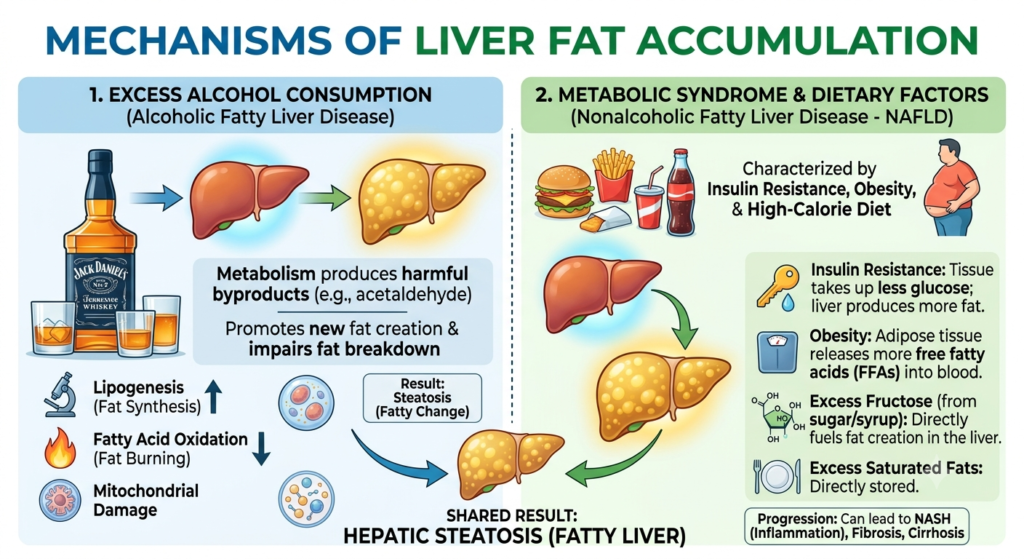
Carrying extra body weight, particularly around the abdomen, is one of the strongest predictors of fatty liver disease. Excess fat tissue increases the release of fatty acids into the bloodstream, and the liver ends up storing much of this fat rather than processing it efficiently. This is why obesity remains one of the most consistent fatty liver risk factors identified across nearly every major study on the subject.
Insulin Resistance and Type 2 Diabetes
Insulin resistance fatty liver connections are well documented in medical literature. When the body’s cells stop responding properly to insulin, blood sugar levels rise, and the liver compensates by converting more sugar into fat. Over time, this process contributes significantly to liver fat accumulation. People with type 2 diabetes or prediabetes are at a notably higher risk of developing fatty liver disease as a result.
High Triglycerides and Cholesterol Issues
High triglycerides liver connections are another major piece of the puzzle. When triglyceride levels in the blood are elevated, the liver often ends up storing the excess fat rather than allowing it to circulate. Low levels of HDL, the so-called good cholesterol, are frequently seen alongside this pattern as well, further reinforcing the link between poor lipid metabolism and liver fat buildup.
Alcohol Consumption
While non alcoholic fatty liver disease develops without heavy drinking, alcohol remains one of the most well-known causes of liver fat accumulation. Alcoholic liver disease occurs when the liver becomes overwhelmed trying to metabolize alcohol, leading to fat storage, inflammation, and eventually more serious liver damage if drinking continues over time. Even moderate but regular alcohol intake can contribute to liver fat in people who already have other metabolic risk factors, which is part of the reasoning behind the newer MetALD classification that sits between MASLD and full alcohol-related liver disease.
Poor Diet and Sedentary Lifestyle
Diets high in refined sugar, processed foods, and unhealthy fats place extra strain on the liver’s ability to process and store fat properly. Combine that with a lack of physical activity, and the risk increases substantially. Regular movement helps the body use stored fat for energy, while a sedentary lifestyle allows fat to accumulate more easily, including in the liver.
Genetics and Family History
Genetics can also play a meaningful role. Certain gene variants affect how the liver processes and stores fat, which may explain why some people develop fatty liver disease despite maintaining a relatively healthy weight, while others with similar lifestyles never develop the condition at all. A family history of fatty liver disease or related metabolic conditions can be a useful clue for assessing your own risk.
Other Medical and Lifestyle Factors
Certain medications, rapid weight loss, some hormonal conditions, and rare genetic metabolic disorders can also contribute to fat buildup in the liver. Sleep apnea and polycystic ovary syndrome have both been associated with a higher likelihood of developing the condition as well, likely due to their shared connection with insulin resistance and metabolic dysfunction.
Fatty Liver Risk Factors at a Glance
Since so many different elements can contribute to fatty liver disease, it helps to see the most significant risk factors laid out clearly.
| Risk Factor | Why It Matters |
| Obesity or excess abdominal fat | Increases fatty acid release into the bloodstream, overloading the liver |
| Type 2 diabetes or insulin resistance | Drives the liver to convert excess sugar into stored fat |
| High triglycerides or low HDL | Reflects poor fat metabolism, often stored directly in liver tissue |
| Heavy or regular alcohol use | Overwhelms the liver’s capacity to process fat safely |
| Sedentary lifestyle | Reduces the body’s ability to burn stored fat for energy |
| Family history of liver disease | Genetic factors can affect liver fat storage independently of lifestyle |
| Rapid weight loss or certain medications | Can trigger short-term fat mobilization that overwhelms the liver |
Signs and Symptoms of Fatty Liver Disease
One of the trickiest aspects of this condition is that the early signs of fatty liver are often vague or completely absent. Many people live with the condition for years without realizing anything is wrong, which is why it’s often discovered incidentally during routine blood work or imaging done for unrelated reasons.
When symptoms of fatty liver do appear, they tend to be mild at first. Fatigue and general low energy are among the most commonly reported complaints. Some people notice a dull ache or sense of fullness in the upper right side of the abdomen, where the liver is located. As the condition progresses, more noticeable signs can develop, including unexplained weight loss, weakness, and in more advanced cases, yellowing of the skin or eyes, swelling in the legs or abdomen, and visible weakness that reflects declining liver function.
Because symptoms often don’t appear until the disease has progressed, doctors frequently rely on blood tests that check liver enzyme levels, along with imaging tests like ultrasound, to catch fatty liver disease in its earlier stages.
Non Alcoholic vs. Alcoholic Fatty Liver Disease
Since both forms of fatty liver disease can look similar on imaging, it helps to understand how they differ in terms of cause and risk profile.
| Feature | Non-Alcoholic Fatty Liver Disease (NAFLD/MASLD) | Alcoholic Liver Disease (ALD) |
| Primary cause | Metabolic factors like obesity, diabetes, high triglycerides | Heavy or prolonged alcohol consumption |
| Typical risk group | People with obesity, insulin resistance, or metabolic syndrome | People who drink alcohol heavily or regularly over time |
| Reversibility | Often improves with weight loss and lifestyle changes | Often improves significantly with alcohol cessation |
| Progression risk | Can progress to MASH (steatohepatitis), fibrosis, or cirrhosis | Can progress to alcoholic hepatitis, fibrosis, or cirrhosis |
| Overlap condition | MetALD, when both metabolic and moderate alcohol factors are present | Shares risk with MetALD in moderate drinkers |

Do’s and Don’ts for Protecting Your Liver
Whether you’ve already been diagnosed with fatty liver disease or you simply want to lower your risk, small daily choices can make a meaningful difference over time.
| Do’s | Don’ts |
| Maintain a healthy weight through gradual, steady changes | Don’t pursue extremely rapid weight loss, as it can worsen liver fat |
| Eat a balanced diet rich in vegetables, fiber, and healthy fats | Don’t rely heavily on sugary drinks, processed snacks, or fried foods |
| Stay physically active with regular movement or exercise | Don’t remain sedentary for long stretches of the day |
| Limit or avoid alcohol, especially if other risk factors are present | Don’t ignore regular or heavy drinking habits |
| Manage underlying conditions like diabetes and high cholesterol | Don’t skip routine checkups or blood work if you’re at higher risk |
| Get enough quality sleep each night | Don’t dismiss chronic fatigue or abdominal discomfort as unimportant |
How Fatty Liver Disease Is Diagnosed
Diagnosing fatty liver disease usually starts with a review of your medical history, lifestyle habits, and any symptoms you may be experiencing. Blood tests are often the first step, since elevated liver enzymes can be an early clue that something isn’t quite right. From there, doctors commonly use ultrasound imaging to visually assess fat buildup in the liver, and in some cases, more advanced imaging like a FibroScan or MRI may be used to check for fibrosis or scarring.
In certain situations, particularly when the diagnosis is unclear or more advanced liver damage is suspected, a liver biopsy may be recommended to get a more detailed picture of what’s happening at the cellular level.
Can Fatty Liver Disease Be Reversed?
The encouraging news is that fatty liver disease, particularly in its earlier stages, is often reversible. Since the condition is closely tied to metabolic health and lifestyle factors, meaningful changes in diet, physical activity, and alcohol consumption can lead to a noticeable reduction in liver fat over time. Weight loss, even in modest amounts of five to ten percent of body weight, has been shown to significantly improve liver fat levels and related blood markers in many people.
However, if the condition progresses without intervention, it can advance to more serious stages, including inflammation known as steatohepatitis, and eventually fibrosis or cirrhosis, which involve permanent scarring of the liver tissue. This is why early detection and consistent lifestyle changes matter so much, since reversing the condition becomes considerably harder once significant scarring has occurred.

When to See a Doctor
If you have known risk factors such as obesity, type 2 diabetes, high triglycerides, or a family history of liver disease, it’s worth discussing liver health with your doctor even if you don’t currently have symptoms. Routine blood work can often catch early warning signs long before symptoms appear. If you’re already experiencing fatigue, abdominal discomfort, or any signs of jaundice or swelling, don’t wait to seek medical advice, since early diagnosis dramatically improves the chances of reversing the condition before it progresses. The Liver Foundation offers additional educational resources on this topic, which you can explore at American Liver Foundation – NAFLD/MASLD Overview.
Final Thoughts
Fatty liver disease has become one of the most common liver conditions worldwide, largely driven by rising rates of obesity, insulin resistance, and metabolic dysfunction. While the shift from NAFLD to MASLD reflects a deeper scientific understanding of what actually causes this condition, the core message remains the same: liver fat buildup is closely tied to how we eat, move, and manage our overall metabolic health.
The good news is that fatty liver disease is largely preventable and, in many cases, reversible with the right lifestyle changes. Paying attention to your diet, staying active, moderating alcohol intake, and keeping up with routine health checkups can go a long way toward protecting one of your body’s most essential organs for years to come.