


Why Do Dental Fillings Crack?
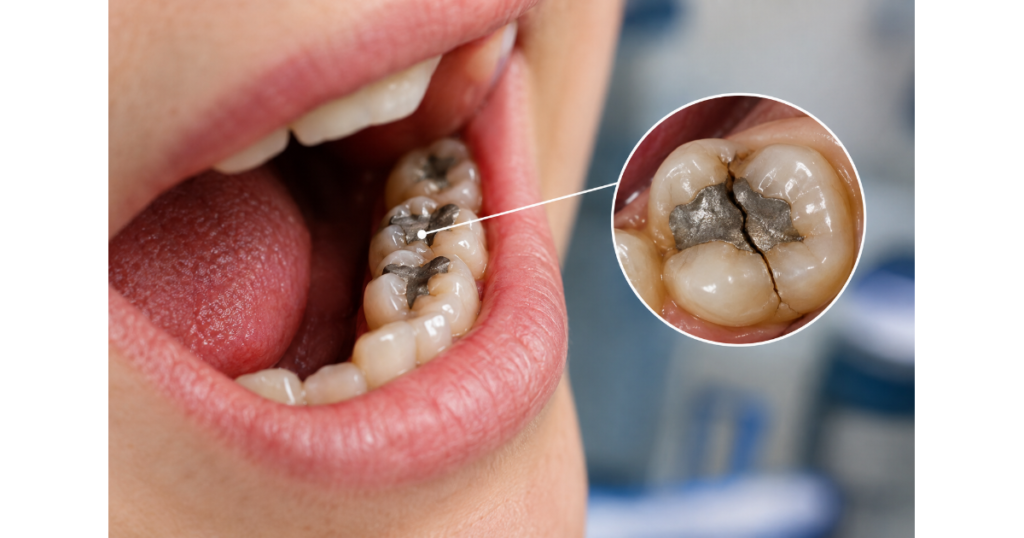
If you have ever bitten into something ordinary, an apple, a piece of toast, a handful of nuts, and felt a sudden sharp jab or heard a tiny click that made your stomach drop, you already know how unsettling a cracked filling can feel. One moment your tooth is doing its job quietly in the background, and the next moment you are running your tongue over a rough edge, wondering what just happened and how much this is going to cost you. Dental fillings are not meant to last forever, but when they crack earlier than expected, it can feel like a personal betrayal from a tooth you trusted. The truth is that filling failure is far more common than most people realize, and it almost always comes down to a handful of predictable reasons: material fatigue, bite forces, bruxism, temperature changes, decay creeping back in, and simple aging. Understanding these causes will not just satisfy your curiosity, it will actually help you protect the fillings you already have and avoid a repeat trip to the dentist’s chair.

Dental Fillings Are Strong, But They Are Not Invincible
A filling is essentially a patch. When a dentist removes decayed tissue or repairs a small fracture, they fill the empty space with a restorative material such as composite resin, amalgam, glass ionomer, ceramic, or gold. According to the Cleveland Clinic, dental fillings help repair tooth cavities, and depending on the material used, some can last up to 20 years. That is genuinely impressive for something sitting inside a wet, warm environment that is used dozens of times a day to bite, chew, grind, and clench. clevelandclinic
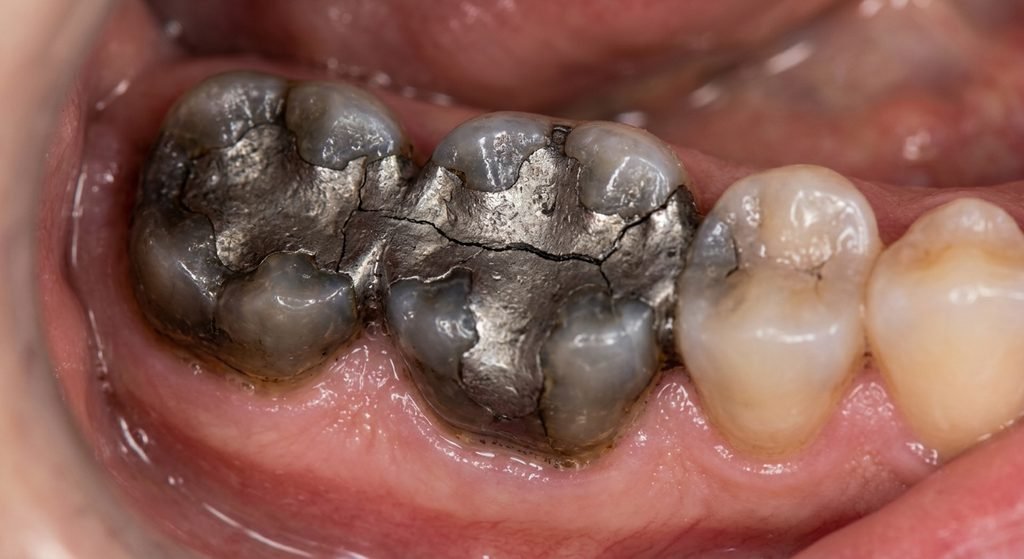
But “up to 20 years” is not the same as “guaranteed for 20 years.” A filling is bonded or mechanically locked into a tooth, not fused into it as one seamless piece. There is always a microscopic seam where the natural tooth structure meets the restorative material, and that seam is the weak point. Over time, chewing forces, temperature swings, and chemical exposure all work on that seam. Eventually, something gives, either the bond weakens, the material itself fractures, or the surrounding tooth structure gives way, taking the filling down with it. Fillings do not fail because dentists do a bad job; they fail because physics and biology are constantly working against a material that was never part of your original tooth.
Bite Forces and Everyday Chewing Pressure
Every time you chew, your teeth absorb an enormous amount of force. Molars, in particular, can generate anywhere from 150 to over 250 pounds of pressure per square inch during normal chewing, and that number climbs even higher if you accidentally bite down on something hard like a bone fragment, an olive pit, or a piece of ice. Fillings sit right in the middle of that force zone, especially back teeth that do the heavy lifting during meals.
Composite resin fillings, while excellent for matching your natural tooth color, are more prone to wear and micro-fracturing under repeated heavy pressure than amalgam or gold. Large fillings are particularly vulnerable because they replace a bigger portion of the natural tooth, leaving less of the original, stronger enamel and dentin to share the chewing load. Think of it like a bridge with a section rebuilt using slightly different materials than the rest, it can hold weight just fine most of the time, but repeated heavy traffic eventually reveals the difference in how the old and new sections respond to stress.
Bruxism: The Silent Filling Killer
If there is one single habit responsible for more cracked fillings than almost anything else, it is bruxism, the medical term for grinding or clenching your teeth. Many people who grind their teeth do it at night, completely unaware, until a partner mentions the noise or a dentist notices unusual wear patterns during a checkup.
Bruxism applies sustained, often extreme pressure directly onto tooth surfaces, sometimes far exceeding the forces experienced during normal chewing. Unlike chewing, which is intermittent and food-cushioned, grinding is often tooth-on-tooth, tooth-on-filling, with no buffer at all. Over months and years, this repetitive stress creates tiny fractures in the filling material, weakens the bond between filling and tooth, and can eventually cause a visible crack or a complete break. People with bruxism often go through fillings and even crowns far faster than people without the habit, and dentists frequently recommend a night guard specifically to protect restorative work from this kind of damage.
Temperature Changes and Thermal Expansion
Your mouth experiences wild temperature swings throughout the day. Hot coffee in the morning, ice water at lunch, a warm soup for dinner, followed by a scoop of ice cream. Natural tooth structure and filling materials do not expand and contract at exactly the same rate when exposed to heat and cold. This mismatch is known as differing thermal expansion coefficients, and it is a genuine engineering problem in restorative dentistry.
Amalgam fillings, being metal, are especially sensitive to this effect since metals generally expand and contract more dramatically with temperature than tooth enamel does. Every time you go from a hot drink to a cold one, the filling and the tooth shift at slightly different speeds, creating tiny stress points along the bonding line. Do this thousands of times over the years, and you get gradual micro-cracks that may not be visible to the naked eye but weaken the structure from the inside out. This is also one of the reasons a cracked filling often produces sharp tooth sensitivity to hot and cold before the crack becomes visible.
Recurrent Decay Undermining the Filling From Beneath
Here is something that surprises a lot of patients: a cracked filling is not always caused by an external force. Sometimes the problem starts underneath. Bacteria are remarkably good at finding their way into the smallest possible gaps, and even a well-placed filling can develop a microscopic leak at its margin over time. Once bacteria slip past that margin, they begin causing new decay directly beneath or around the existing filling, a process dentists call recurrent decay or secondary caries.
As this hidden decay spreads, it eats away at the healthy tooth structure that was supporting the filling from below. The filling essentially loses its foundation. Without adequate support, it becomes far more likely to crack, shift, or pop out entirely under normal biting pressure. This is precisely why regular dental checkups matter so much, recurrent decay often produces no pain in its early stages, and an X-ray during a routine visit is frequently the only way to catch it before the filling actually fails.
Materials Aging and Simple Wear Over Time
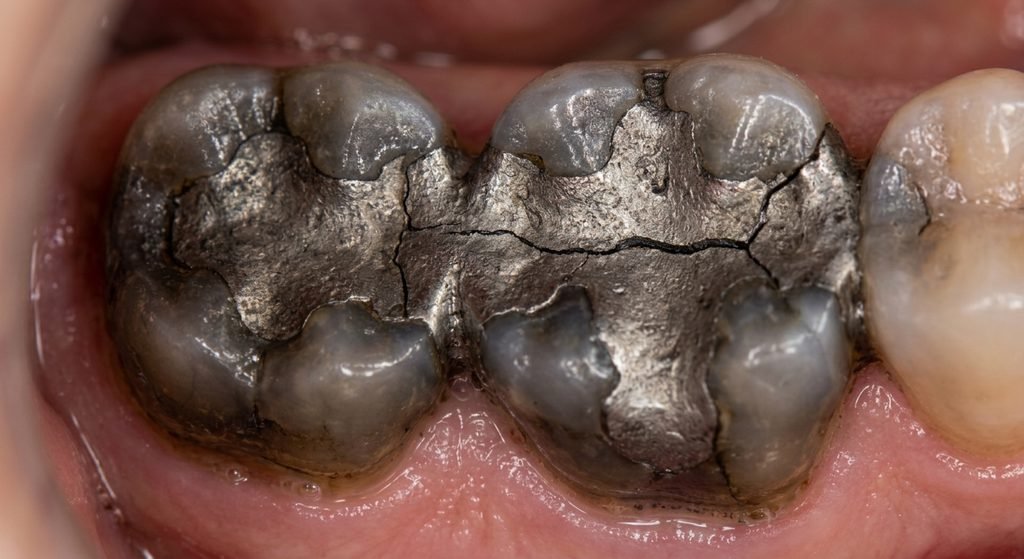
Like most manufactured materials, filling substances degrade with age. This is not a flaw in dentistry, it is simply how materials behave under decades of mechanical stress, chemical exposure, and temperature cycling. Composite resins can lose their surface luster, develop tiny surface cracks, and become more brittle as the resin matrix breaks down slowly. Amalgam fillings, although extremely durable, can develop what is known as marginal breakdown, a gradual crumbling at the edges where the metal meets the tooth.
Dental fillings usually don’t last a lifetime, so getting regular dental checkups can help you determine when a filling might have to be replaced, and different materials really do age at different rates. The table below breaks down the general lifespan you can expect, though your personal habits play a huge role in whether you land on the low end or the high end of these ranges. healthline
| Filling Material | Average Lifespan | Crack Risk Factors |
|---|---|---|
| Amalgam (silver) | 10–15 years | Thermal expansion, marginal breakdown, brittle with age |
| Composite resin | 5–10 years | Wear from chewing, staining, more prone to micro-cracks |
| Glass ionomer | Up to 5 years | Weaker material, not ideal for chewing surfaces |
| Ceramic/porcelain | Up to 15 years | Brittle under sudden impact despite high strength |
| Gold | 15–20+ years | Rarely cracks, but expensive and less commonly used |
Trauma, Accidents, and Hard Foods
Not every cracked filling develops gradually. Sometimes it happens in an instant. Biting into something unexpectedly hard, an errant kernel of popcorn, a fragment of bone in a piece of chicken, or a piece of hard candy, can create enough sudden, concentrated force to crack even a healthy filling instantly. A blow to the face during sports, a fall, or a car accident can produce similar results. Nail-biting, chewing on pens, and using your teeth as tools to open packages are smaller but cumulative versions of the same problem, repeated small traumas that eventually add up.
Poorly Placed or Oversized Fillings
Occasionally, the root cause traces back to the filling procedure itself, not because of poor dentistry in most cases, but because of the physical limitations of large restorations. When a cavity is extensive, a large portion of the natural tooth structure has to be replaced with filling material. The more natural tooth that is removed, the weaker the remaining structure becomes, and the more weight the filling itself has to bear. A filling that takes up a large percentage of the tooth’s surface acts less like a small patch and more like a load-bearing wall made of a different material than the rest of the house. In cases like this, a crown is often a better long-term solution than a large filling, because it caps and protects the entire tooth rather than asking the filling to do more structural work than it was designed for.
Warning Signs That a Filling Might Be Cracking
Cracks do not always announce themselves with dramatic pain. Often, the early symptoms are subtle enough to ignore, which is exactly why they tend to get worse before they get better. Common signs include sharp sensitivity to hot or cold, a rough spot you can feel with your tongue, visible dark lines running across the filling, discomfort when biting down on that specific tooth, and food consistently getting trapped in the same spot. If you notice any combination of these, it is worth getting the tooth checked sooner rather than later, since a small crack caught early is a simple fix, while a neglected one can mean a root canal or crown down the road.
Do’s and Don’ts for Protecting Your Fillings
| Do | Don’t |
|---|---|
| Wear a night guard if you grind or clench your teeth | Chew ice, hard candy, or popcorn kernels |
| Visit your dentist every six months for checkups | Skip checkups just because nothing hurts |
| Chew evenly on both sides of your mouth | Use your teeth to open packages or bottles |
| Rinse with water after acidic or sugary foods | Go from very hot to very cold drinks rapidly |
| Mention any new sensitivity to your dentist right away | Ignore rough edges or minor discomfort for months |
| Brush and floss around filling margins carefully | Assume a filling is permanent and needs no maintenance |
Advantages and Disadvantages of Common Filling Materials
| Material | Advantages | Disadvantages |
|---|---|---|
| Composite resin | Natural tooth color, bonds directly to tooth, less drilling needed | Shorter lifespan, more prone to wear and staining |
| Amalgam | Very durable, cost-effective, tolerates heavy bite forces well | Silver color, sensitive to temperature-driven expansion |
| Glass ionomer | Releases fluoride, good for small or gumline cavities | Weakest material, not suited for chewing surfaces |
| Ceramic | Highly stain-resistant, aesthetically excellent | Can be brittle under sudden hard impact, costly |
| Gold | Extremely long-lasting, gentle on opposing teeth | Expensive, visible metal color, requires more visits |
What Happens if You Ignore a Cracked Filling
Ignoring a cracked filling rarely makes the problem disappear. Instead, the crack becomes an open door for bacteria, food particles, and moisture to reach the sensitive layers of the tooth underneath. This often accelerates recurrent decay, deepens sensitivity, and increases the odds that the entire tooth structure weakens further. In more advanced cases, an untreated cracked filling can progress to the point where a simple filling repair is no longer enough, and the tooth needs a crown, or in severe situations, a root canal. Catching the problem early is almost always cheaper, faster, and far less stressful than waiting until it becomes an emergency.
When to See Your Dentist
You do not need to wait for pain to justify a dental visit. If a filling feels different in any way, rougher, sharper, more sensitive, or simply “off,” it is worth having it examined. Dentists can often spot early micro-cracks using magnification, bite tests, or X-rays long before you would ever notice symptoms on your own. Routine six-month checkups remain one of the simplest, most effective tools for catching filling failure early, exactly the kind of preventive habit that saves both your natural teeth and your wallet in the long run. For more detailed guidance on filling types and what to expect from restorative treatment, resources like the Cleveland Clinic’s overview of dental fillings and Healthline’s breakdown of how long different fillings typically last are genuinely useful starting points before your next appointment. clevelandclinichealthline
Final Thoughts
Cracked fillings are frustrating, but they are rarely mysterious once you understand what is really going on underneath the surface. Bite forces, bruxism, temperature swings, aging materials, recurrent decay, and the occasional unlucky bite into something hard all combine over time to stress a restoration that was never designed to last forever. The good news is that most of these causes are at least partially within your control. Wearing a night guard, avoiding hard foods, keeping up with regular dental checkups, and paying attention to early warning signs can dramatically extend the life of your fillings and spare you from more invasive, expensive treatment later. Your fillings work hard for you every single day, a little extra care goes a long way toward keeping them intact.