

Why Is Regular Dental Care Important for Children?
There’s a particular kind of parenting moment that catches you off guard, your kid grins up at you missing a tooth, proud as anything, and you suddenly realize you have no idea when they last saw a dentist. It happens to almost everyone. Life gets busy, teeth look fine on the surface, and dental care quietly slides down the priority list behind pediatrician visits, school forms, and everything else. But here’s the thing that really should give us pause: tooth decay is almost entirely preventable, and yet it still affects nearly one in five children under the age of five, according to the American Academy of Pediatric Dentistry. That’s not a small number. It means a huge chunk of childhood cavities are happening not because they’re unavoidable, but because regular dental care got pushed aside. So let’s actually talk about why it matters, what it looks like in real life, and how a bit of consistency now saves your child (and you) a whole lot of trouble later.
The Early Years Really Do Set the Tone
It’s tempting to think baby teeth don’t matter much since they’re just going to fall out anyway. I get why parents think that, but it’s honestly one of the more common misconceptions in dentistry. Those little teeth are doing more work than they get credit for. They help kids chew properly, they shape how speech develops, and they literally hold space for the permanent teeth waiting underneath. Lose a baby tooth too early because of decay or an injury, and the teeth around it can start drifting into that gap, which often means crowding or alignment problems that show up years later. Children’s oral health isn’t a side plot, it’s really the opening chapter of a much longer story about how healthy someone’s mouth stays for the rest of their life.
What Makes Pediatric Dentistry Different
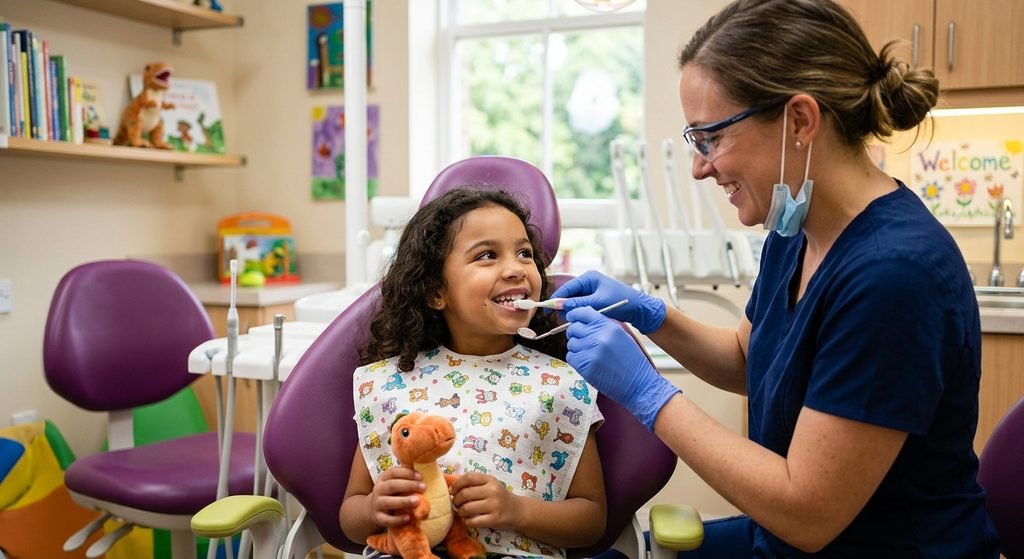
Pediatric dentistry isn’t just “regular dentistry, but smaller chairs.” It’s its own specialty, and pediatric dentists go through extra training specifically to understand how kids think, how their mouths develop, and how to make an appointment feel more like a friendly visit than a scary ordeal. That distinction matters more than people realize. A child’s first few experiences in a dental chair tend to stick with them. Handle those visits well, with patience and the right approach, and you’re basically inoculating your kid against the dental anxiety that keeps so many grown adults avoiding the dentist decades later.
So When Should That First Visit Actually Happen?
Here’s a fact that surprises almost every parent I’ve ever talked to about this: the recommended age for a first dental visit is way earlier than most people assume. The American Academy of Pediatrics, the American Dental Association, and the American Academy of Pediatric Dentistry all agree on this one, kids should see a dentist within six months of their first tooth coming in, or by their first birthday at the very latest. And yet, survey after survey shows most parents wait until age two or three before booking that first appointment. It’s not really anyone’s fault, this information just doesn’t get talked about enough. But that early visit is genuinely useful, it’s when a dentist can flag feeding habits that might lead to decay, talk through whether fluoride is needed, and show you, the parent, how to actually clean those tiny teeth and gums properly.
What a Typical Visit Schedule Looks Like
Once that first appointment happens, a rhythm usually kicks in. Most kids do well with a checkup roughly every six months, though your dentist might adjust that based on your child’s individual risk for cavities. These visits aren’t just quick peeks for cavities either, they cover jaw and bite development, preventive treatments, and ongoing advice that shifts as your child grows. Here’s a general sense of what that looks like across different ages.
| Age Range | Recommended Visit Frequency | Main Focus Areas |
|---|---|---|
| First tooth to age 1 | Within 6 months of first tooth, or by age 1 | Setting up a dental home, feeding habits, basic hygiene |
| 1 to 6 years | Every 6 months | Cavity prevention, fluoride, watching bite development |
| 6 to 12 years | Every 6 months | Sealants, orthodontic screening, permanent teeth coming in |
| 12 to 18 years | Every 6 months | Wisdom teeth, orthodontic follow-ups, habit coaching |
Prevention Really Is the Whole Point
If there’s one idea worth taking away from all of this, it’s that pediatric dentistry is built around stopping problems before they start, not scrambling to fix them afterward. That means routine cleanings, fluoride, sealants, and honest conversations about brushing and snacking, rather than waiting for a cavity to show up and then dealing with it. This matters even more for kids than adults, because a child’s enamel is thinner and more fragile, so decay can move faster once it gets a foothold. Families who stay consistent with preventive care tend to see dramatically fewer fillings and emergency visits down the line. It’s not magic, it’s just showing up regularly.
How Cavities Actually Happen in Kids
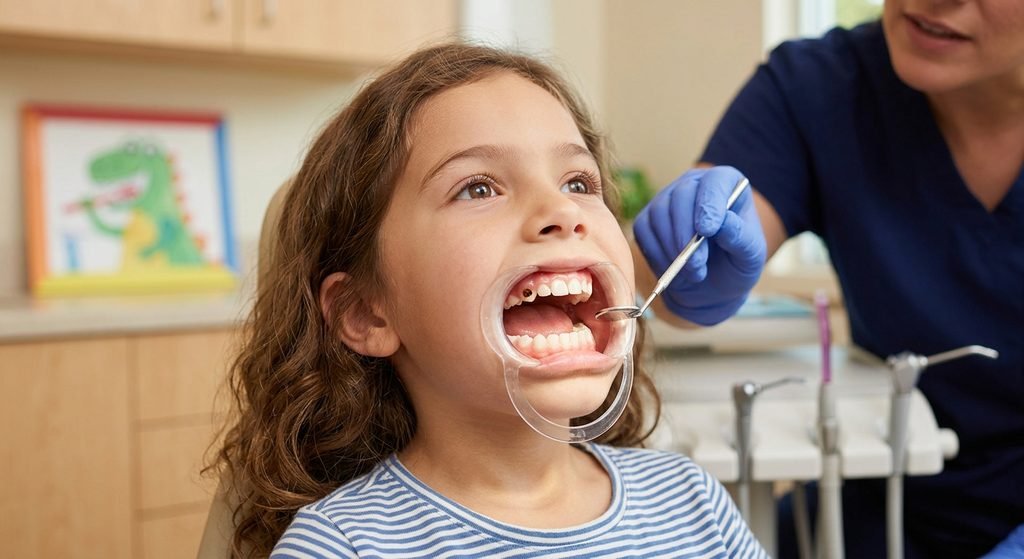
Cavities form when bacteria in the mouth feast on leftover sugars and produce acid that slowly wears down enamel. In children, this tends to happen faster than in adults, since baby teeth have thinner enamel and a larger nerve chamber sitting just underneath the surface. Left alone, decay can cause real pain, make eating uncomfortable, lead to infection, and even mess with the permanent teeth developing below. The frustrating part, and also the hopeful part, is that almost all of this is preventable. Good daily habits, sensible food choices, and regular professional care work together to keep decay from ever getting a start.
Fluoride: The Unsung Hero of Kids’ Teeth
Fluoride doesn’t get much glamour, but it’s genuinely one of the most effective tools we have for protecting young teeth. It strengthens enamel and can even reverse the very earliest, faintest signs of decay before a cavity actually forms. During checkups, dentists often apply a professional-strength fluoride treatment that’s simply more powerful than anything a tube of toothpaste at home can offer. That said, balance matters, both the CDC and AAPD are pretty clear that kids should use only a small, age-appropriate amount of fluoride toothpaste under supervision. Too little and you lose the benefit, too much over time and you risk a cosmetic issue called fluorosis. Your dentist can help you find that sweet spot.
Sealants: A Small Coating That Does a Lot
Dental sealants are one of those things that sound minor but genuinely punch above their weight. They’re thin protective coatings painted onto the chewing surfaces of back teeth, the molars, where deep little grooves make brushing alone less effective at clearing out food and bacteria. Sealants basically smooth those grooves over so plaque has nowhere to burrow in. Dentists usually apply them once the first permanent molars come in around age six, and again around twelve. It takes minutes, doesn’t hurt, and can meaningfully lower a child’s risk of cavities in exactly the teeth that are hardest to keep clean.
Yes, Kids Can Get Gum Disease Too
It’s easy to assume gum disease is strictly an adult problem, but gingivitis, the early and thankfully reversible stage, absolutely shows up in kids, especially when brushing and flossing are inconsistent. You’ll usually notice it as gums that look red, swollen, or bleed a little during brushing. Left unchecked, that kind of chronic inflammation can become a pattern that just carries into adulthood. Regular checkups give a dentist the chance to catch this early and walk both you and your child through better brushing and flossing habits before it becomes a long-term issue.
Helping Kids Build Habits That Actually Stick
No child is born knowing how to brush properly, it’s a skill, and like any skill, it takes repetition and a fair amount of parental involvement before it clicks. Brushing twice a day, flossing once teeth start touching, and going easy on sugary snacks, these are the basics, but building them into a genuine habit takes time. Younger kids especially need a parent’s help or at least supervision, since the hand coordination required for a really thorough brushing job usually doesn’t fully develop until around six or seven.
A Few Do’s and Don’ts Worth Keeping in Mind
| Do | Don’t |
|---|---|
| Start cleaning gums even before the first tooth shows up | Wait until several teeth have come in to start any cleaning |
| Book that first dental visit by age one | Put it off until something looks wrong |
| Supervise brushing until your child can really do it well alone | Assume a young child can brush thoroughly on their own |
| Stick to a pea-sized amount of fluoride toothpaste | Let toddlers swallow large amounts of toothpaste |
| Save sugary snacks for mealtimes | Let kids sip juice or sugary drinks all day long |
| Get your kid a mouthguard for sports | Shrug off the risk of dental injury during active play |
| Keep every six-month appointment, even when teeth look great | Skip checkups just because nothing seems wrong |
What Your Kid Eats Really Does Matter
Diet plays a bigger role in dental health than most of us want to admit. Constant sipping on juice, frequent sugary snacks, sticky candies that cling to teeth, all of it gives mouth bacteria a steady supply of fuel to produce decay-causing acid. Even habits that feel totally normal, like a toddler falling asleep with a bottle of milk, can quietly set the stage for what’s sometimes called early childhood caries, or “baby bottle tooth decay.” Simple swaps help more than you’d think, water between meals instead of juice, cheese and vegetables as snacks, saving the sweet stuff for mealtimes rather than all-day grazing. Your pediatric dentist can also give feeding advice tailored specifically to your child’s age and risk level, which is worth asking about at your next visit.
Catching Problems Early Saves Everyone a Headache
This might be the most underappreciated benefit of regular checkups, and it’s a simple one, small problems caught early stay small. A cavity spotted at its earliest stage might need nothing more than a quick, minor filling. The same cavity ignored for a year can turn into an infection and a much bigger procedure. It’s the same story with bite issues, jaw development, or habits like prolonged thumb-sucking, a dentist trained to notice these things will catch them long before a parent would. That’s really the whole value of consistency, it’s not that something is usually wrong, it’s that when something is wrong, you find out while it’s still easy to fix.
When Teeth Don’t Quite Line Up
Not every child needs braces, but plenty benefit from an early orthodontic look, which pediatric dentists typically start considering around age seven. Crowding, bite issues, or misaligned teeth are often much simpler to address early, sometimes with something as straightforward as a space maintainer if a baby tooth is lost too soon. Wait until every permanent tooth has already come in, and the fix can end up more involved and more expensive. Regular visits give your dentist a front-row seat to how your child’s jaw and bite are developing, while there’s still room to guide things in a good direction.

Weighing Early Orthodontic Screening
| Advantages | Disadvantages |
|---|---|
| Can help guide jaw growth while it’s still happening | Adds a few extra appointments to keep track of |
| Often shortens or simplifies treatment down the road | Not every child flagged early ends up needing treatment |
| Preserves space for permanent teeth to come in properly | Can cause unnecessary worry if not explained clearly |
| Catches habits like thumb-sucking before they leave lasting effects | Some fixes depend on a child’s cooperation, which varies |
Kids Fall Down, Mouthguards Help
Active kids collect bumps and scrapes, that’s just childhood. But a knocked-out or chipped tooth can happen in a split second, a fall off a bike, a rough tumble on the playground, a stray elbow during a soccer match. A custom-fitted mouthguard, the kind your pediatric dentist can make, offers noticeably better protection than the generic ones off a store shelf. It’s also worth asking your dentist what to actually do if a tooth does get knocked out, because knowing what to do in the first few minutes can genuinely be the difference between saving that tooth and losing it.
There’s an Emotional Side to This Too
Regular dental visits aren’t just about teeth; they quietly build a kid’s comfort with medical settings in general. Kids who grow up going to the dentist regularly tend to see it as just another normal part of life, not something to dread, and that comfort tends to carry over into how they handle doctor’s visits and other healthcare experiences too. There’s a confidence piece here as well, a kid who isn’t dealing with tooth pain or feeling self-conscious about visible decay is simply more comfortable talking, eating, and smiling around other people. That’s not a small thing.
It’s Worth Making the Time
Busy schedules make it easy to let dental visits slip, and the “it’s just baby teeth” mindset doesn’t help either. But neglect in this area tends to snowball, small, easily preventable issues turn into bigger, more complicated ones if they’re left alone long enough. Starting early, sticking to that six-month rhythm, and reinforcing good habits at home really does set kids up for healthier teeth and a lot more confidence going forward. If you want to dig deeper, the American Academy of Pediatric Dentistry and the CDC’s oral health program both offer solid, trustworthy guidance for parents navigating all of this.
Final Thoughts
Nobody expects you to have it all figured out from day one, dental care for kids is a learning curve for parents too. But the pattern is pretty clear, that first visit around age one, the steady six-month checkups after, the fluoride, the sealants, all of it adds up to something real. It’s honestly one of the simplest, most effective things you can do for your child’s long-term health, and it doesn’t ask for much, just a bit of consistency and showing up twice a year.