

Healthy habits that change your life are built through the small choices you make every day. While many people look for quick solutions to improve their health, lasting transformation comes from consistently practicing positive daily habits over time. These habits do not require expensive equipment, strict diets, or dramatic lifestyle changes. Instead, they involve making small, consistent decisions that support physical health, mental well-being, and emotional balance.

Building a Better Lifestyle Through Daily Choices
Building a healthier lifestyle is not about being perfect. It is about making better choices every day and staying committed to them. Whether your goal is to increase your energy, improve your productivity, lose weight, or simply feel happier, adopting daily habits to improve life can help you achieve lasting results. Research consistently shows that people who follow healthy routines enjoy better physical health, lower stress levels, improved sleep quality, and greater overall satisfaction with life.
The Importance of Consistency Over Perfection
Health experts also emphasize that small improvements often produce the biggest long-term benefits. Simple actions such as drinking enough water, taking short walks, eating balanced meals, and maintaining regular sleep schedules may seem insignificant at first, but their impact grows over time. This principle is commonly referred to as consistency over perfection, meaning that repeating healthy actions regularly is more valuable than making occasional dramatic efforts.
Starting Small for Lifelong Success
For many people, changing old behaviors feels overwhelming. However, successful habit formation begins with realistic goals rather than unrealistic expectations. Instead of trying to completely transform your lifestyle overnight, focus on adding one positive habit at a time. As these behaviors become automatic, they create a strong foundation for lifelong health and personal growth.
Why Healthy Habits Matter
Improving Physical and Emotional Well-Being
Healthy habits influence every aspect of our lives, from physical fitness to emotional resilience. They improve the body’s ability to function efficiently while supporting mental clarity and reducing the risk of chronic diseases such as diabetes, heart disease, and obesity. More importantly, healthy routines allow people to feel more energetic and confident in their daily lives.
Understanding the Elements of True Wellness
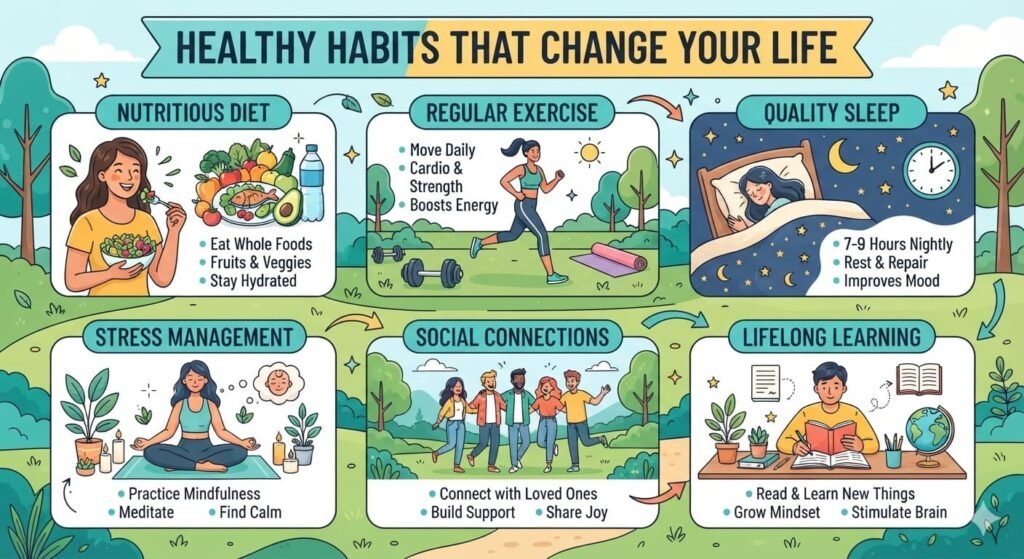
Many individuals believe that health depends only on exercise or diet, but true wellness is much broader. It includes regular physical activity, proper nutrition, quality sleep, stress management, hydration, and maintaining meaningful social relationships. These components work together to create a balanced lifestyle that promotes both short-term well-being and long-term health.
Recognizing the Impact of Modern Lifestyles
Modern lifestyles often encourage unhealthy behaviors. Long working hours, excessive screen time, irregular sleep schedules, and processed foods have become common parts of everyday life. While these habits may seem harmless initially, they gradually affect physical and mental health. Fortunately, replacing these behaviors with good habits for a healthy lifestyle can significantly improve overall quality of life.
Supporting Brain Health Through Healthy Living
Scientific studies also suggest that healthy routines positively influence brain function. Regular exercise increases blood flow to the brain, while nutritious foods provide essential vitamins and minerals needed for cognitive performance. Combined with proper sleep and stress management, these habits improve concentration, memory, and decision-making abilities.
The Power of Small Daily Changes
Why Small Actions Lead to Big Results
One of the biggest misconceptions about self-improvement is believing that major success requires major effort from the beginning. In reality, lasting success often starts with small actions performed consistently. This concept has become increasingly popular through the ideas of habit stacking and atomic habits, which encourage people to attach new positive behaviors to routines they already perform.
Using Habit Stacking to Build Better Routines
For example, if you already brush your teeth every morning, you can immediately drink a glass of water afterward. If you usually make coffee every morning, you can stretch for five minutes while it brews. These simple combinations reduce the effort needed to develop new behaviors because they become part of an existing routine.
The Long-Term Impact of Tiny Improvements
Over time, these tiny improvements compound into significant lifestyle changes. A person who walks for just twenty minutes each day may eventually develop the stamina and motivation to exercise regularly. Likewise, someone who replaces one sugary snack with fruit every afternoon gradually builds healthier eating patterns without feeling deprived.
Focusing on Sustainable Progress
This gradual approach is especially effective because it avoids burnout. Rather than chasing perfection, individuals focus on progress, making healthy behaviors sustainable for years instead of weeks.
Small Habits and Their Long-Term Benefits
Small Daily Habit which leads to long-term benefits daily drinking 2–3 liters of water for better hydration and digestion, walk for 20–30 minutes Improved heart health and fitness, Sleep 7–9 hours for better focus and immune function, eat fruits and vegetables daily leads to stronger immunity and balanced nutrition, practice gratitude Improved emotional well-being.
Building a Morning Routine for Better Health
Starting the Day with Purpose
A productive day often begins with a purposeful morning. A consistent morning routine for better health prepares both the body and mind for daily responsibilities while reducing unnecessary stress.
Beginning the Morning with Healthy Habits
The first hour after waking plays a significant role in setting the tone for the rest of the day. Instead of checking social media immediately, many health professionals recommend starting with hydration, light stretching, and a nutritious breakfast. Drinking water after waking helps restore fluids lost during sleep, while stretching improves blood circulation and reduces muscle stiffness.
Choosing a Nutritious Breakfast
Eating a balanced breakfast rich in protein, fiber, and healthy fats provides sustained energy throughout the morning. Foods such as eggs, oatmeal, yogurt, fruits, and nuts supply essential nutrients that support brain function and reduce unhealthy cravings later in the day.
Practicing Mindfulness Every Morning
Mindfulness activities such as deep breathing, meditation, or journaling can further improve emotional well-being. Spending just ten minutes practicing mindfulness helps reduce anxiety, improve focus, and increase self-awareness before the demands of the day begin.
Learning from Successful Morning Routines
Many successful individuals attribute their productivity to structured morning routines. Although every routine differs, the common element is consistency. Following the same healthy sequence every morning helps establish discipline and creates a positive mindset.

Physical and Mental Wellness Habits
Understanding the Mind-Body Connection
Physical health and mental well-being are deeply connected. When the body feels healthy, the mind often becomes more focused, positive, and resilient. Likewise, managing stress effectively improves physical health by lowering blood pressure, reducing inflammation, and strengthening the immune system.
Making Exercise Part of Daily Life
Regular exercise remains one of the most effective physical and mental wellness habits. Activities such as walking, cycling, swimming, yoga, or strength training not only improve cardiovascular fitness but also release endorphins that naturally elevate mood. Even thirty minutes of moderate activity most days of the week can make a noticeable difference.
Fueling the Body with Proper Nutrition
Nutrition also plays an essential role in mental wellness. Foods rich in omega-3 fatty acids, whole grains, vegetables, fruits, and lean proteins provide nutrients that support brain function. On the other hand, excessive consumption of processed foods and sugary drinks may contribute to fatigue and mood fluctuations.
Building Healthy Social Connections
Equally important is maintaining healthy relationships. Spending time with supportive family members and friends strengthens emotional resilience and helps reduce feelings of loneliness or isolation.Sleep Hygiene: The Foundation of Long-Term Health
One of the most overlooked life changing healthy habits is maintaining proper sleep hygiene. Sleep is the body’s natural recovery process, allowing the brain and muscles to repair while strengthening the immune system. Adults generally need seven to nine hours of quality sleep each night to function at their best. Unfortunately, many people sacrifice sleep because of work, entertainment, or excessive screen time, which gradually affects both physical and mental health.
Creating a Healthy Sleep Environment
Improving sleep quality begins with simple lifestyle changes. Going to bed and waking up at the same time every day helps regulate the body’s internal clock. Reducing screen exposure before bedtime, keeping the bedroom dark and quiet, and avoiding caffeine late in the evening can significantly improve sleep quality. Better sleep enhances concentration, mood, productivity, and overall energy levels.
Mindful Eating for Better Nutrition
Healthy eating is about more than simply choosing nutritious foods. Mindful eating encourages people to pay attention to hunger, fullness, and food choices instead of eating out of habit or emotion. This practice helps individuals enjoy meals more while reducing overeating and unhealthy snacking.
Making Smarter Food Choices
A balanced diet should include vegetables, fruits, lean protein, whole grains, and healthy fats. Replacing processed snacks with healthier alternatives provides the body with essential nutrients while maintaining steady energy levels throughout the day. Drinking enough water before meals can also improve digestion and reduce unnecessary calorie intake.
People often believe healthy eating requires giving up their favorite foods completely. However, moderation is usually more sustainable than strict restrictions. Enjoying occasional treats while maintaining a balanced diet creates a healthier relationship with food.
Habits to Reduce Stress and Anxiety
Stress is a natural part of life, but unmanaged stress can negatively affect both physical and emotional health. Developing healthy habits to reduce stress and anxiety helps improve resilience and promotes a greater sense of balance.

Practicing Relaxation Every Day
Simple techniques such as deep breathing, meditation, prayer, journaling, or spending time outdoors can reduce stress significantly. Physical activity also lowers stress hormones while increasing endorphins, which naturally improve mood. Even taking short breaks during work or study sessions helps refresh the mind and prevent burnout.
Social support is equally important. Talking with trusted friends or family members often provides emotional comfort and practical solutions during difficult situations.
Micro Habits for Weight Loss
Many people associate weight loss with intense workouts and strict diets. In reality, micro habits for weight loss are often more effective because they are easier to maintain over time.
Small Changes That Produce Big Results
Replacing sugary drinks with water, walking after meals, eating slowly, using smaller plates, and preparing healthy snacks in advance are examples of small habits that gradually support weight management. These actions may appear minor individually, but together they create meaningful improvements without overwhelming daily routines.
Instead of focusing only on the number shown on a scale, people should prioritize developing healthier behaviors that naturally lead to sustainable weight loss.
How to Build a Healthy Routine
Creating lasting habits requires patience and consistency. Learning how to build a healthy routine begins by setting realistic goals rather than attempting dramatic lifestyle changes. Starting with one or two habits allows the brain to adapt without feeling overwhelmed.
Building a Baseline Routine
A baseline routine includes the essential habits that can be maintained even during busy periods. For example, drinking enough water, walking for twenty minutes, eating one healthy meal, and getting adequate sleep create a simple routine that supports long-term health regardless of daily challenges.
Tracking progress through journals or habit-tracking apps also increases motivation. Celebrating small achievements encourages continued improvement while reinforcing positive behaviors.
Daily Habits of Successful People
Many highly successful individuals follow structured daily routines that support both productivity and health. While their professions may differ, they often share common habits that contribute to long-term success.
Learning from Successful Routines
Successful people usually wake up at consistent times, exercise regularly, plan their day, continue learning, and protect their mental health. They understand that discipline and self-care are closely connected. These daily habits of successful people demonstrate that success is built through repeated positive actions rather than occasional bursts of motivation.
Conclusion: Small Habits Create a Better Life
Developing healthy habits that change your life is not about making perfect choices every day. Instead, it is about creating routines that are realistic, sustainable, and consistent. Small daily improvements gradually become lifelong behaviors that strengthen physical health, improve mental clarity, and increase emotional well-being.
Whether your goal is improving fitness, increasing productivity, reducing stress, or achieving a healthier lifestyle, success begins with one simple step. By following daily habits to improve life, practicing habit stacking, maintaining sleep hygiene, eating mindfully, and focusing on consistency over perfection, anyone can create meaningful and lasting change.
Remember that healthy living is a lifelong journey rather than a short-term project. Every positive choice you make today becomes an investment in your future. Over time, these good habits for a healthy lifestyle will help you enjoy better health, stronger relationships, greater confidence, and a happier, more fulfilling life.