

What Is Jock Itch? If you have ever dealt with an itchy, burning rash spreading across your groin that just would not go away, there is a good chance you were dealing with jock itch. It is one of those conditions nobody wants to talk about at a dinner table, but millions of people deal with it every single year. The good news is that it is common, well understood by doctors, and almost always treatable with the right approach. This article walks through everything you need to know about jock itch, medically known as tinea cruris, including why it happens, how to recognize it, and what actually works to get rid of it.
Understanding Jock Itch and Why It Happens
Jock itch is a fungal infection of the skin that develops in the groin, inner thighs, and sometimes the buttocks. Doctors call it tinea cruris, a term that combines “tinea,” meaning a fungal skin infection, with “cruris,” the Latin word for leg or groin. It belongs to a family of infections known as dermatophyte infections, which means the fungi involved feed on keratin, the protein found in the outer layer of your skin, hair, and nails.

The condition earns its common nickname because it shows up so frequently among athletes. Sweating heavily, wearing tight gear, and staying in damp clothing for long stretches creates exactly the kind of warm, moist environment that fungi love. That said, you do not need to be an athlete to develop this groin fungal infection. Anyone who sweats a lot, wears snug clothing, or lives in a hot and humid climate is at risk.
The Fungi Behind the Infection
Jock itch does not appear out of nowhere. It is caused by specific types of fungi called dermatophytes, and understanding them helps explain why the infection behaves the way it does. The most common culprit is Trichophyton rubrum, a fungus responsible for a large share of skin, nail, and hair infections worldwide. Another frequent cause is Epidermophyton floccosum, which has a particular fondness for skin folds like the groin, armpits, and feet.
These organisms thrive in warmth and moisture, which is exactly what the groin area provides, especially after exercise or on a humid day. Once they land on the skin, they multiply in the outermost layer, triggering inflammation, itching, and the telltale rash. Because these fungi are contagious, they can spread from one part of the body to another, or from person to person through direct contact or shared items.
How Jock Itch Connects to Athlete’s Foot
One detail that surprises a lot of people is how closely jock itch is linked to athlete’s foot. Both conditions are caused by the same family of fungi, and it is entirely possible to carry the infection from your feet to your groin without realizing it. This is sometimes referred to as athlete’s foot transfer, and it usually happens through touch or through clothing.
Picture this common scenario: someone has athlete’s foot, dries their feet with a towel, then uses that same towel on their groin. Or they pull on their underwear before their socks, letting fungal spores from their feet brush against their underwear and then their groin skin. Doctors often recommend a simple fix for this exact reason, put your socks on before your underwear. It sounds minor, but it genuinely helps interrupt the chain of transmission between your feet and your groin.
Recognizing the Symptoms
The symptoms of jock itch tend to be fairly distinctive once you know what to look for. The hallmark sign is intense itching and rash in the groin crease, inner thighs, and sometimes extending toward the buttocks. Doctors refer to the itching sensation using the medical term pruritus, and with jock itch, it can range from mildly annoying to genuinely uncomfortable, especially after sweating or exercise.
Alongside the itching, the affected skin usually turns red or reddish-brown and develops a scaly, flaky texture. Many people also notice a ring-shaped rash with a raised, well-defined border, similar in appearance to ringworm, since both conditions come from the same fungal family. The center of the rash sometimes looks slightly clearer than the edges, which is a classic clue dermatologists look for. A burning or stinging feeling, along with a faint musty odor, can also accompany the rash in some cases.
It is worth noting that jock itch typically spares the scrotum in men, a detail that can help distinguish it from other skin conditions affecting the same region.
Common Symptoms at a Glance
| Symptom | Description |
|---|---|
| Itching and rash | Persistent, often worsens with sweat, heat, or friction |
| Scaly skin | Flaky, dry-looking patches with a defined edge |
| Ring-shaped rash | Circular pattern with a raised border and clearer center |
| Redness | Pink to reddish-brown discoloration of affected skin |
| Burning sensation | Mild to moderate discomfort, especially during activity |
| Odor | Occasional faint, musty smell in the affected area |
Who Is Most Likely to Get It
While anyone can develop jock itch, certain groups face a higher risk. Teenage boys and young men are among the most commonly affected, largely because of hormonal changes and higher activity levels. People who are overweight or living with obesity are also more susceptible, since skin folds trap moisture and create friction, both of which favor fungal growth.

Diabetes is another significant risk factor, partly because elevated blood sugar can weaken the skin’s natural defenses and partly because it can affect circulation and healing. A weakened immune system, whether from illness, medication, or another underlying condition, also raises the odds of developing this kind of infection. Athletes, gym-goers, and anyone who wears tight, non-breathable clothing for extended periods round out the list of people who should pay closer attention to groin hygiene.
How Doctors Diagnose Jock Itch
In most cases, a healthcare provider can identify jock itch just by looking at the rash and asking about your symptoms and habits. The appearance, location, and pattern of the rash are usually enough to make a confident diagnosis. However, when the presentation is unclear or the rash does not respond to typical treatment, a doctor may take a small skin scraping and examine it under a microscope after applying a potassium hydroxide, or KOH, solution. This test dissolves the skin cells and leaves fungal elements visible, confirming the diagnosis.
This step matters because several other skin conditions can look remarkably similar, including yeast infections, certain forms of eczema, psoriasis, and a bacterial condition called erythrasma. Getting the right diagnosis ensures you are not treating the wrong problem with the wrong product.
Treatment Options That Actually Work
Fortunately, jock itch responds well to antifungal treatment, and most cases clear up within a couple of weeks with consistent care. Over-the-counter antifungal creams, powders, and sprays containing ingredients like clotrimazole, miconazole, or terbinafine are usually the first line of defense. These medications are applied directly to the rash, typically once or twice daily, and should extend slightly beyond the visible edges of the rash to catch any spreading fungus.
For more stubborn or widespread infections, a doctor may prescribe a stronger topical antifungal or, in rare cases, an oral antifungal medication. It is important to keep applying the treatment for the full recommended duration, even after the rash appears to have cleared, since stopping too early is one of the most common reasons jock itch comes right back.
Keeping the area clean and dry throughout treatment also speeds up recovery. Gently washing the groin daily, drying thoroughly afterward, and avoiding tight clothing while the skin heals all support the antifungal medication’s work.
Antifungal Treatment Options Compared
| Treatment Type | Examples | Availability | Typical Use |
|---|---|---|---|
| Topical creams | Clotrimazole, miconazole, terbinafine | Over-the-counter | Mild to moderate cases, applied 1–2 times daily |
| Antifungal powders | Tolnaftate, miconazole powder | Over-the-counter | Helps absorb moisture while treating infection |
| Antifungal sprays | Terbinafine spray, clotrimazole spray | Over-the-counter | Convenient for larger or hard-to-reach areas |
| Prescription topical | Ketoconazole, econazole | By prescription | Persistent or resistant infections |
| Oral antifungals | Fluconazole, itraconazole | By prescription | Severe, widespread, or recurring infections |
Do’s and Don’ts for Managing Jock Itch
A large part of successfully treating and preventing jock itch comes down to daily habits. Small, consistent choices make a real difference in how quickly the rash clears and whether it comes back.
| Do’s | Don’ts |
|---|---|
| Keep the groin area clean and completely dry | Don’t wear damp or sweaty clothing for long periods |
| Wear loose, breathable cotton underwear | Don’t share towels, clothing, or personal items |
| Put socks on before underwear if you have athlete’s foot | Don’t scratch the rash, as it can worsen irritation |
| Apply antifungal treatment for the full recommended course | Don’t stop treatment as soon as symptoms improve |
| Change out of workout clothes and shower promptly | Don’t wear tight, non-breathable fabrics during flare-ups |
| Use a separate towel for your feet if you have athlete’s foot | Don’t ignore a rash that spreads or worsens |
Preventing Jock Itch from Coming Back
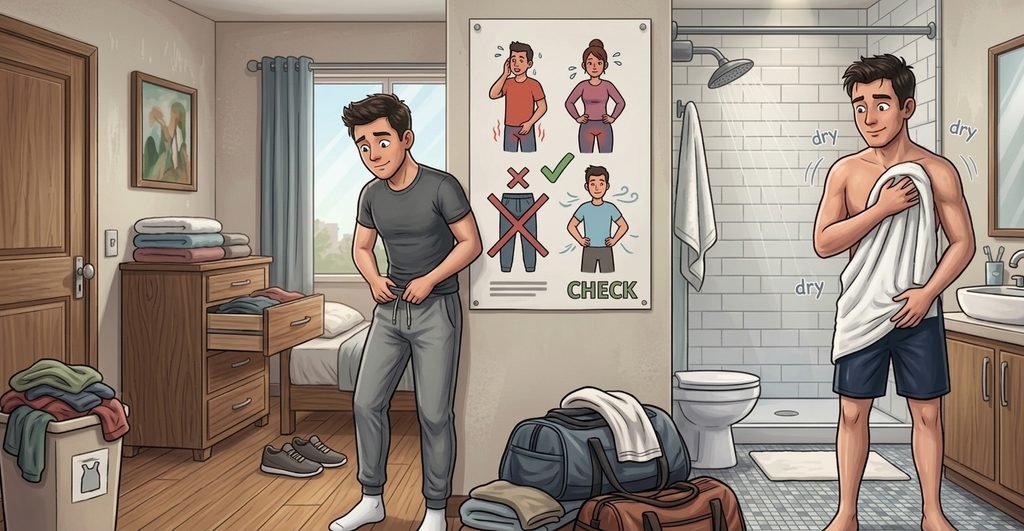
Prevention largely revolves around controlling moisture and reducing friction in the groin area. Since fungi flourish in a warm, moist environment, the single most effective habit is simply staying dry. This means drying off thoroughly after showers, swimming, or workouts, and changing out of sweaty clothes as soon as possible rather than lounging in them.
Loose-fitting clothing made from breathable materials like cotton allows air to circulate and reduces the trapped moisture that fungi need to thrive. If you are prone to sweating heavily, an antifungal powder used preventively can help absorb moisture before it becomes a problem. Treating athlete’s foot promptly is another important preventive step, since an untreated foot infection is a common source of recurring groin infections.
Maintaining a healthy weight, managing conditions like diabetes, and avoiding shared towels, clothing, or gym equipment without proper cleaning all contribute to lowering your risk. None of these habits are complicated, but together they make a meaningful difference in keeping this fungal rash from returning.
When to See a Doctor
Most cases of jock itch can be managed with over-the-counter antifungal treatment and good hygiene habits. However, it is worth reaching out to a healthcare provider if the rash does not improve after two to three weeks of consistent treatment, if it keeps coming back, or if it starts spreading rapidly or looks unusually severe. Signs of a possible bacterial infection, such as pain, swelling, warmth, or discharge, also warrant medical attention. People with diabetes or a weakened immune system should generally check with a doctor sooner rather than later, since infections can behave differently and take longer to resolve in these situations.
A doctor can also help rule out other conditions that mimic jock itch, ensuring you are using the right treatment from the start rather than guessing.
Living With and Moving Past Jock Itch
The most reassuring thing about jock itch is that it is rarely serious. It does not usually spread beneath the skin or cause lasting harm, and for the vast majority of people, it responds well to antifungal treatment within a matter of weeks. The discomfort and embarrassment it causes are real, but the condition itself is manageable, common, and nothing to feel self-conscious about. Understanding what triggers it, recognizing the symptoms early, and sticking with treatment and prevention habits go a long way toward keeping your skin healthy and rash-free.
If you are dealing with persistent itching and rash in your groin area, do not hesitate to reach out to a healthcare provider or dermatologist for guidance. With the right care, most people see real improvement within just a couple of weeks.
For further reading from trusted medical sources, you can visit the Mayo Clinic’s page on jock itch or the Cleveland Clinic’s overview of tinea cruris for more detailed medical information.
This article is for general informational purposes only and is not a substitute for professional medical advice, diagnosis, or treatment. Always consult a qualified healthcare provider regarding any medical condition.