

Is Dental Fluoride Treatment Suitable for Children?
If you have ever watched your child wince at a cold drink or seen a tiny brown spot appear on a freshly erupted tooth, you already know how quickly a parent’s worry can grow. Tooth decay is one of the most common chronic conditions in childhood, and it often begins before a child can even say the word “dentist.” Dental fluoride for children is one of the most widely studied and recommended ways to protect those small teeth. Yet many parents still hesitate, because they have heard conflicting stories online and are not sure what to believe. The short answer is yes: when it is used correctly and in the right amounts, fluoride treatment is suitable for children, and it is endorsed by major dental and public health organizations around the world. The longer answer, which this article walks through, explains how it works, when to start, what the risks are, and how to use it wisely at home.
What Fluoride Actually Is and Why Teeth Need It
Fluoride is a naturally occurring mineral found in soil, water, and many foods. Dentists value it for one simple reason: it makes tooth enamel more resistant to acid. Every day, the bacteria in your child’s mouth feed on sugars and produce acids that slowly dissolve minerals from the enamel, a process called demineralization. Saliva helps put those minerals back, which is called remineralization. Fluoride speeds up the repair work and helps rebuild the enamel in a form that is tougher than before. This is why child teeth strengthening is the main goal of any fluoride program. Think of it as a protective shield that gets topped up regularly, rather than a one-time fix.
How Pediatric Fluoride Treatment Works
Pediatric fluoride treatment usually means a professional, topical application done in the dental chair. It is different from the fluoride in your toothpaste or tap water because the professional products are more concentrated and are applied directly to the tooth surfaces for a short time. The most common options are varnish, gel, and foam, and for young children varnish is by far the most popular. Topical fluoride for children works on the outside of the tooth, where the enamel meets the mouth’s daily acid attacks. Because it acts on the surface, it does not need to be swallowed to be effective, which is an important point for parents who worry about how much their little one might ingest.
Fluoride Varnish for Kids: The Gold Standard for Little Mouths
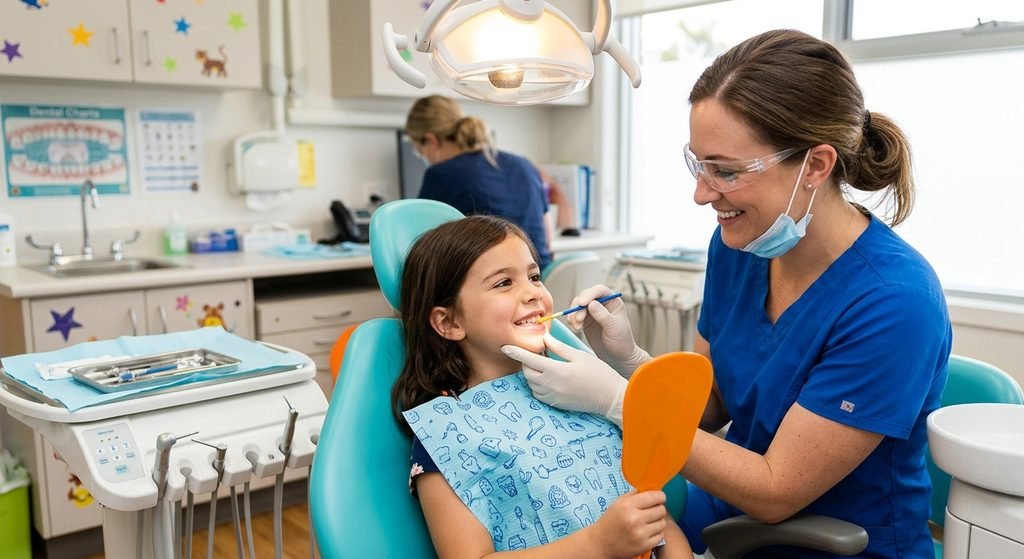
Fluoride varnish for kids is a sticky, quick-setting coating that a dental professional paints onto the teeth with a small brush. It takes only a minute or two, there is no need for trays or a lot of rinsing, and most children tolerate it very well. The varnish hardens on contact with saliva, so the child can usually go about their day right away, though the dentist will give a few simple instructions, such as avoiding hard or crunchy foods for the rest of the day and delaying brushing until the next morning. Because only a thin layer is applied and most of it stays on the teeth, very little is swallowed. That is why many pediatric dentists prefer varnish for toddlers and preschoolers, who tend to squirm, swallow, or fuss during longer procedures.
The Real Benefits of Fluoride for Kids
The benefits of fluoride for kids are among the best documented in all of preventive health care. Fluoride lowers the risk of new cavities, slows down early decay, and can even help reverse the tiniest enamel lesions before they turn into holes that need fillings. For families, this often translates into fewer painful dental emergencies, fewer missed school days, and less time in the dental chair for restorative work. Preventing cavities in children is also far gentler and cheaper than treating them, especially because baby teeth are thin and decay can spread quickly. Healthy baby teeth also matter more than people think. They hold space for permanent teeth, help children chew and speak clearly, and support confidence when they smile.
Tooth Decay Prevention for Toddlers
Toddlers are surprisingly vulnerable to decay. Frequent snacking, bedtime bottles, sippy cups of juice, and the difficulty of brushing a wriggly two-year-old all put their teeth at risk. Tooth decay prevention in toddlers works best as a combination of habits: brushing twice a day with a tiny smear of fluoride toothpaste, limiting sugary drinks and sticky snacks, cleaning gums and teeth after the last feed at night, and scheduling regular dental checkups. Professional fluoride varnish acts as an extra layer of protection on top of these habits. It does not replace brushing or a healthy diet, but it fills the gaps on the days when brushing is rushed or a toddler simply refuses to open wide.
Is Fluoride Safe for Toddlers?
This is the question that brings many parents to the internet at midnight. Is fluoride safe for toddlers? According to the American Dental Association and the American Academy of Pediatrics, yes, when it is used in the recommended amounts. The key phrase is “recommended amounts,” because the dose matters. Professional varnish is applied in very small quantities, and the dentist controls the amount carefully. At home, the main risk comes from swallowing too much toothpaste, which is easy to prevent with supervision. You can read more about fluoride safety and children’s oral health on the American Dental Association’s MouthHealthy site, a trustworthy resource written for families.
When Should a Child Start Fluoride Treatment?
Most pediatric dental guidelines suggest that fluoride varnish can begin as soon as the first tooth appears, which is usually around six months of age. The first dental visit is typically recommended by the child’s first birthday, and that visit is a great time to talk through fluoride, feeding habits, and brushing technique. Starting early makes sense because newly erupted enamel is still maturing and is more prone to decay. Of course, every child is different. A child with a high risk of cavities, such as one with a history of decay, a sugary diet, or limited access to fluoridated water, may need earlier and more frequent attention than a child with very low risk.
How Often Should Kids Get Fluoride?
Parents often ask how often kids should get fluoride, and the answer depends on risk. For most children, professional applications every six months, timed with regular checkups, are enough. For children at higher risk of decay, a dentist may recommend applications every three to four months. Your child’s dentist will look at their diet, brushing habits, the water you drink at home, any past cavities, and any medical conditions before deciding on a schedule. It is perfectly fine to ask for the reasoning behind the recommendation. A good dentist will be happy to explain it in plain language.
Pediatric Dentist Fluoride Application: What to Expect
A pediatric dentist’s fluoride application is usually one of the easiest parts of the visit. The dentist or hygienist will first dry the teeth gently and sometimes clean them. Then they paint the varnish onto the surfaces with a small brush, which may leave the teeth looking slightly yellow or dull for a few hours. The whole thing takes only a few minutes. Many children think it is a game, especially when the dental team is skilled at talking to little ones. There are no needles and no drilling, and most kids feel nothing more than a mild taste. After the visit, the dentist will usually advise a soft diet for the rest of the day and will ask you to hold off on brushing until the next morning so the varnish has time to work.
Advantages and Disadvantages at a Glance
Like any health measure, fluoride treatment has strengths and a few limits. The table below gives a quick, honest picture to help you weigh them up.
| Advantages | Disadvantages |
|---|---|
| Strengthens enamel and reduces the risk of cavities | Needs repeat visits to stay effective |
| Quick, painless, and needle-free | May temporarily leave teeth looking yellowish or dull |
| Very little is swallowed with varnish | Cannot replace brushing, flossing, or a healthy diet |
| Can help reverse very early enamel damage | Possible mild stomach upset if swallowed in excess (rare) |
| Cost-effective compared with fillings or crowns | May carry a cost if not covered by insurance |
Fluoride Varnish Side Effects in Children
Fluoride varnish side effects in children are usually mild and short-lived. The most common one is a temporary change in the look of the teeth, which can seem slightly yellow or coated until the varnish is brushed off the next day. Some children may notice a mild taste they do not enjoy, and a small number experience a bit of nausea if they swallowed some varnish. Allergic reactions are rare, but parents should tell the dentist about any history of allergies, especially to ingredients such as rosin or certain resins, which are used in some varnishes. If a child develops hives, swelling, or trouble breathing after any dental product, seek medical help right away. Serious problems are very unlikely, and the benefits for most children clearly outweigh the small risks.
Dental Fluorosis in Kids: What Parents Should Know
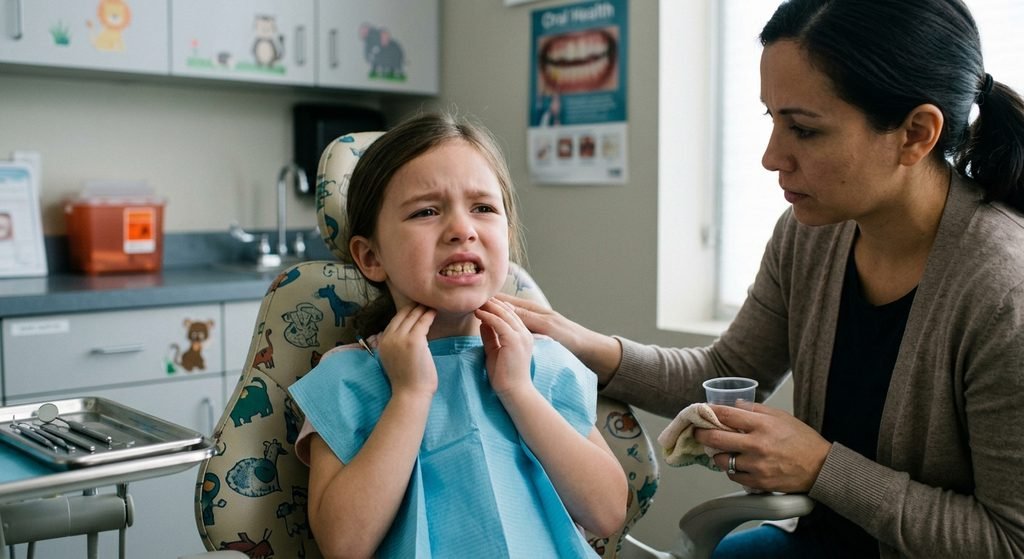
Dental fluorosis in kids is the concern that worries parents most, so it deserves a clear explanation. Fluorosis happens when a child swallows too much fluoride over a long period while their permanent teeth are forming under the gums, which is mostly from birth to around eight years of age. In its mild form, which is by far the most common, it appears as faint white lines or flecks on the teeth that are often noticeable only to a dentist. It does not hurt and does not harm the tooth’s function. Moderate to severe fluorosis, which can cause visible staining or pitting, is much rarer in places where fluoride use is monitored. Importantly, professional varnish is not considered a major cause of fluorosis, because the amount swallowed is so small. Most fluorosis comes from swallowing toothpaste or consuming fluoride from several sources at once.
Safe Fluoride Dosage for Infants
Parents of babies often ask about a safe fluoride dosage for infants. The best practice is to avoid giving any fluoride supplement unless a dentist or pediatrician specifically prescribes it after checking the local water supply. For babies who have teeth, a very small smear of fluoride toothpaste, about the size of a grain of rice, is generally recommended. If your infant formula is mixed with fluoridated tap water, the amount your baby gets is usually well within safe limits, though some pediatricians suggest occasionally using low-fluoride water if the formula is the main source of nutrition. Do not guess or calculate this by yourself. A short conversation with your pediatrician or dentist can give you a personalized answer based on your area and your baby’s needs.
Toothpaste Amounts by Age
At-home fluoride is just as important as what happens in the dental office. Using the right amount makes all the difference between protection and over-exposure. Here is a simple guide that most pediatric dental groups support.
| Child’s Age | Fluoride Toothpaste Amount | Brushing Frequency | Supervision Needed |
|---|---|---|---|
| Birth to 3 years | A smear, about the size of a grain of rice | Twice daily | Parent brushes for the child |
| 3 to 6 years | A pea-sized amount | Twice daily | Parent guides and checks |
| 6 years and above | A pea-sized amount | Twice daily | Light supervision, remind them to spit |
Fluoride Treatment Cost for Kids
Fluoride treatment cost for kids varies depending on where you live, the type of dental office, and whether you have insurance. In many places, a single varnish application costs a modest amount, often much less than a filling or other restorative care. Many dental insurance plans and public health programs cover fluoride applications for children, sometimes at no extra charge during routine checkups. If cost is a concern, ask the office to explain the fee before treatment, check what your insurer covers, and look into community clinics or school-based dental programs, which sometimes offer fluoride varnish at reduced or no cost. Considering how expensive cavity treatment can become, preventive fluoride is generally seen as a smart investment.
Do’s and Don’ts for Parents
A few simple habits can help you get the most from fluoride while keeping your child safe. The table below sums up the essentials.
| Do’s | Don’ts |
|---|---|
| Start brushing as soon as the first tooth appears | Don’t let young children swallow toothpaste |
| Use the correct amount of fluoride toothpaste for their age | Don’t use more than a smear or pea-sized amount |
| Book regular dental checkups from the first birthday | Don’t skip appointments even if teeth look healthy |
| Follow the dentist’s post-treatment food advice | Don’t give hard or sticky foods right after varnish |
| Ask your dentist about your local water’s fluoride level | Don’t give fluoride supplements without professional advice |
| Supervise brushing until about age seven or eight | Don’t let kids “eat” flavored toothpaste from the tube |
Who Might Need Extra Care or a Different Approach?
Most children are good candidates for fluoride, but a few need more tailored attention. Children with a high risk of cavities may benefit from more frequent applications and additional products recommended by their dentist. Children with certain medical conditions, such as dry mouth, braces, or special healthcare needs, may also need a personalized plan. On the other hand, children who already show signs of moderate fluorosis, or who live in areas where natural fluoride levels in water are high, may need their intake monitored more carefully. This is exactly why the dentist’s assessment matters. A one-size-fits-all rule does not work for every child, and a good pediatric dentist will adjust the plan to match your family’s situation.
Addressing Common Myths and Concerns
Misinformation travels fast, and fluoride has attracted more than its share. Some parents worry that fluoride is a “toxin” or that it harms children’s brains. Large reviews by health authorities have consistently found that fluoride at the levels used in dental care and community water supplies is safe and effective. Concerns about high-level exposure are real in places where natural fluoride in drinking water is far above recommended limits, but that is a very different situation from a professional varnish or a pea-sized dab of toothpaste. If you want to read an authoritative overview, the CDC’s community water fluoridation page explains the science and the safety monitoring in clear language. Questions are healthy, and your dentist should welcome them.
Practical Tips for Making Fluoride Part of Your Routine
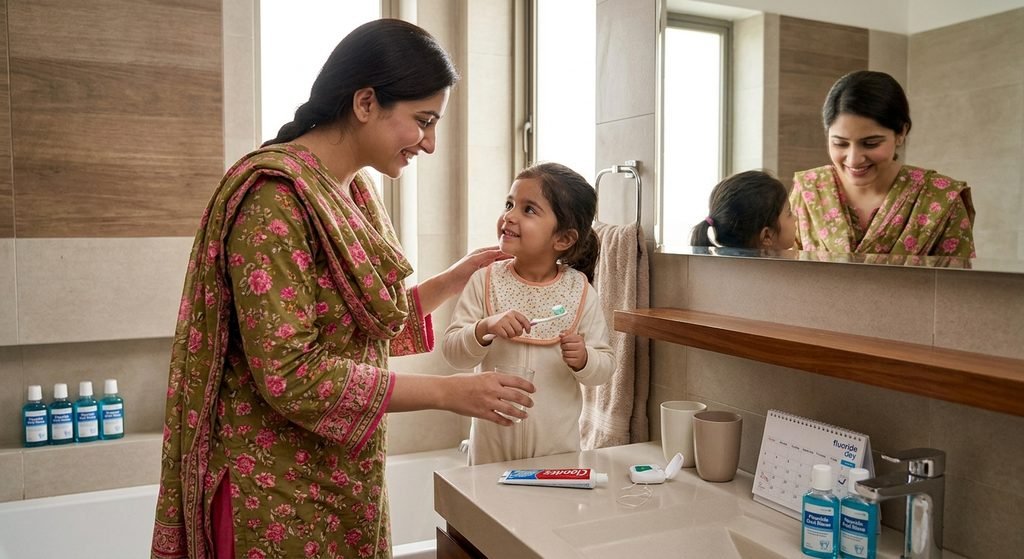
Building a simple routine helps fluoride do its best work. Brush your child’s teeth twice a day, especially before bed, because saliva flow slows down at night and the teeth are more exposed to acid. Keep sugary snacks and juices to mealtimes rather than all-day sipping, and offer water between meals. Let your child spit out toothpaste instead of rinsing heavily, which keeps a thin film of fluoride on the teeth longer. Make dental visits positive by talking about them in a calm, friendly way. Children pick up on our attitudes, so if you treat the dentist as a helper rather than a scary place, they are likely to follow your lead.
Final Thoughts: So, Is It Suitable for Your Child?
For the vast majority of children, dental fluoride treatment is not only suitable but highly beneficial. When it is applied by a trained professional, combined with the right amount of fluoride toothpaste at home, and supported by good eating habits, it offers strong protection against cavities at a very low risk. The small chance of mild fluorosis or temporary side effects can be managed by following simple guidelines, and your dentist can tailor those guidelines to your child’s age, diet, and local water supply. Rather than worrying alone, book a visit with a pediatric dentist, ask every question on your mind, and decide together. A healthy smile built in childhood often lasts a lifetime, and fluoride is one of the simplest tools to help make that happen.
1 Comment