

Pernicious anemia is a type of vitamin B12 deficiency anemia caused by an autoimmune anemia that prevents the body from absorbing enough vitamin B12. Because the condition develops slowly, many people don’t notice the early signs of vitamin B12 deficiency until symptoms begin affecting their daily lives. Persistent fatigue, weakness, tingling in the hands and feet, poor memory, and balance problems are some of the most common symptoms of pernicious anemia, yet they’re often mistaken for stress, ageing, or other health conditions.

Recognizing the condition early is important because untreated pernicious anemia can lead to serious complications, including neurological symptoms and long-term nerve damage. The good news is that, although it isn’t curable, it is highly manageable with the right treatment, including vitamin B12 injections for pernicious anemia, dietary support, and regular medical care.
What Exactly Is Pernicious Anemia?
Pernicious anemia is a form of vitamin B12 deficiency anemia that happens when the body cannot absorb enough vitamin B12 from food, even if the diet itself is perfectly healthy. The word “pernicious” simply means harmful or destructive, and it was given this name because before treatment existed, the condition was often fatal.
At the centre of the problem is a protein called intrinsic factor, which is produced by cells lining the stomach. Vitamin B12 needs to bind with intrinsic factors before it can be absorbed further down in the small intestine. In pernicious anemia, the immune system mistakenly attacks these stomach cells, so intrinsic factor production drops and B12 absorption fails. This is why pernicious anaemia is classified as an autoimmune anemia rather than a simple dietary deficiency.
Because red blood cells need B12 to develop properly, the bone marrow starts producing cells that are larger than normal but fewer in number. Doctors call this pattern macrocytic anemia, and it is one of the clearest clues that points them towards a B12 problem rather than iron deficiency.
What Causes Pernicious Anemia?
The causes of pernicious anemia are rooted in autoimmune activity, though researchers are still working out exactly why the immune system turns against the stomach lining in some people and not others. According to the NHS, pernicious anemia is an autoimmune condition that affects the stomach, meaning the immune system attacks the body’s own healthy cells Over time, this attack damages the parietal cells responsible for making an intrinsic factor, leading to chronic B12 malabsorption.
There are a few factors known to raise the likelihood of developing this condition. It tends to be more common in women around 60 years of age, in people who have a family history of the disease, and in those who already have another autoimmune condition such as Addison’s disease or vitiligo. Genetics appear to play a role too; the condition sometimes runs in families and has been linked to certain blood types and physical traits in earlier clinical observations.
It is worth noting that pernicious anemia is not the only route to B12 deficiency. Some people simply do not get enough B12 in their diet, particularly those following a vegan diet without supplementation, since B12 is found almost exclusively in animal products. Others develop absorption problems because of long-term use of certain medications, including some acid-reducing drugs, or because of surgery on the stomach or intestines. However, pernicious anemia remains the leading cause of significant B12 deficiency in many Western countries.
Recognizing the Symptoms of Pernicious Anemia
One of the trickiest aspects of this disease is how slowly it creeps up. The body can store several years’ worth of vitamin B12 in the liver, so symptoms often do not appear until the reserves are almost gone. This means the early signs of vitamin B12 deficiency can be vague and easy to dismiss.
Common physical symptoms include persistent tiredness, pale or slightly yellow-tinged skin, a sore or unusually smooth tongue, and shortness of breath during everyday activities. Some people notice heart palpitations, dizziness, or headaches. Digestive complaints such as nausea, loss of appetite, and unintended weight loss are also frequently reported.
What sets pernicious anemia apart from many other types of anemia, though, is its effect on the nervous system. The neurological symptoms of B12 deficiency can include tingling or numbness in the hands and feet, muscle weakness, difficulty walking or maintaining balance, and in more advanced cases, memory problems or mood changes such as irritability and depression. These neurological effects can occur even before the anemia itself is picked up on a blood test, which is one reason doctors take unexplained numbness or coordination problems seriously.
Quick Reference: Common Symptoms by Body System
| Body System Affected | Typical Symptoms |
| Blood and Circulation | Fatigue, pale skin, breathlessness, rapid heartbeat |
| Digestive System | Sore tongue, loss of appetite, nausea, weight loss |
| Nervous System | Tingling or numbness, poor balance, muscle weakness |
| Mental and Emotional | Irritability, low mood, memory difficulties, confusion |
| Vision | Blurred or disturbed vision in advanced cases |
If several of these symptoms overlap, especially the neurological ones, it is a good reason to ask a doctor specifically about B12 levels rather than assuming it is just stress or overwork.
Pernicious Anemia Risk Factors Worth Knowing
Certain groups of people are more likely to develop this condition, and being aware of these pernicious anemia risk factors can help with earlier detection.
- A family history of pernicious anaemia or other autoimmune diseases
- Existing autoimmune conditions such as type 1 diabetes, thyroid disease, or vitiligo
- Being of Northern European or Scandinavian descent
- Age over 60, since the condition becomes noticeably more common with advancing years
- A personal history of gastric surgery or chronic gastritis
This last point brings us to an important subgroup: pernicious anemia in elderly people. Ageing naturally reduces stomach acid production and can affect nutrient absorption generally, and when this overlaps with autoimmune gastric changes, older adults become particularly vulnerable. Because many of the early symptoms, like fatigue or mild confusion, can be mistaken for normal aging, doctors often recommend that B12 levels be checked as a routine part of care for older patients presenting with unexplained tiredness or cognitive changes.
How to Diagnose Pernicious Anemia
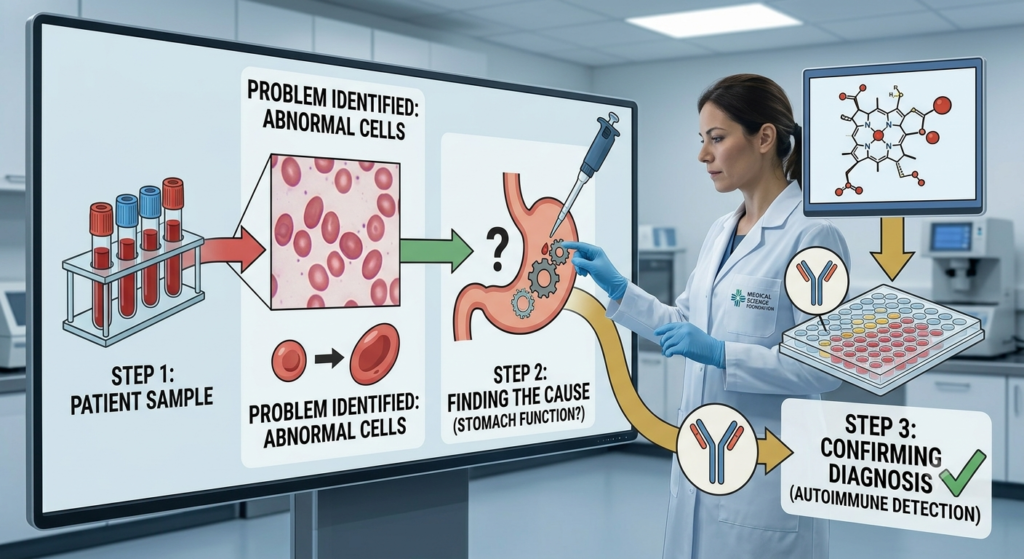
Working out how to diagnose pernicious anemia usually starts with a simple blood test, but confirming the diagnosis often takes a few more steps because low B12 levels alone do not tell the whole story.
A full blood count typically shows the enlarged red blood cells characteristic of macrocytic anemia, along with a low haemoglobin level. From there, doctors usually order a serum B12 test. If levels are low or borderline, they may follow up with tests for intrinsic factor antibodies and parietal cell antibodies, since these help confirm an autoimmune cause rather than a simple dietary shortfall. It is worth knowing that intrinsic factor antibodies are highly specific to pernicious anaemia but are only found in roughly half to two-thirds of people who have the condition, so a negative antibody test does not automatically rule it out.
Some patients are also tested for methylmalonic acid and homocysteine levels, which tend to rise when B12 is genuinely deficient at the cellular level, giving doctors extra confidence in the diagnosis. In certain cases, particularly where stomach symptoms are prominent, an endoscopy may be recommended to check for gastritis or other changes in the stomach lining, since pernicious anaemia is linked to a higher risk of stomach-related complications later in life.
Pernicious Anemia Treatment: What to Expect
The good news is that pernicious anemia treatment is straightforward and highly effective once the diagnosis is confirmed. Because the underlying problem is absorption rather than intake, treatment focuses on getting B12 into the body through a route that bypasses the damaged stomach cells.
B12 injections for pernicious anaemia, usually in the form of hydroxocobalamin or cyanocobalamin, are the standard first-line treatment. Injections are typically given regularly at first to rebuild the body’s B12 stores, and then continued every two to three months for life, since the underlying autoimmune process does not go away. Some people notice an improvement in energy within days, while nerve-related symptoms can take longer, sometimes several months, to improve, and in cases of long-standing nerve damage, some effects may not fully reverse.
High-dose oral B12 supplements are sometimes used as an alternative for people who cannot tolerate injections, but this approach relies on a small amount of B12 being absorbed passively without intrinsic factor, so it needs to be monitored carefully by a doctor.
Do’s and Don’ts of Managing Pernicious Anemia
| Do | Don’t |
| Attend all scheduled B12 injection appointments | Skip injections once symptoms start feeling better |
| Ask your doctor about monitoring blood counts regularly | Assume oral supplements alone will fix an absorption problem |
| Report new tingling, numbness, or balance issues promptly | Ignore neurological symptoms, since delays can cause lasting damage |
| Mention pernicious anaemia to any new doctor or specialist | Take iron or folic acid supplements without medical advice, as they can mask symptoms |
| Ask about screening for other autoimmune conditions | Assume fatigue is “just stress” without getting levels checked |
Pernicious Anemia Diet: Does Food Really Help?
Many people ask whether adjusting their pernicious anemia diet can replace the need for injections. The honest answer is that diet alone usually cannot fix the problem, because the issue is absorption rather than a shortage of B12 in food. That said, nutrition still matters for overall health and can support recovery alongside medical treatment.
Foods naturally rich in B12 include meat, fish, eggs, and dairy products. Fortified foods such as certain breakfast cereals and plant-based milks can also contribute meaningful amounts, which is particularly useful for people who eat little animal produce. A generally balanced diet with adequate iron and folate is also encouraged, since deficiencies in these nutrients can sometimes exist alongside B12 deficiency and may need to be corrected as well.
For anyone wondering how to treat pernicious anemia naturally, it is important to be realistic: no diet or supplement regime can substitute for B12 injections once intrinsic factor production has failed. Nutrition is a helpful companion to treatment, not a replacement for it.
Possible Pernicious Anemia Complications
Left untreated, pernicious anemia complications can become serious and, in some cases, permanent. Long-term nerve damage, known as subacute combined degeneration of the spinal cord, can lead to lasting problems with walking, balance, and sensation. Cognitive changes, including memory loss and confusion, may also persist if treatment is delayed for too long, particularly in older adults.
There is also a recognized link between pernicious anemia and an increased risk of stomach polyps and gastric cancer, which is one reason doctors sometimes recommend periodic monitoring of the stomach lining in people with this diagnosis. Heart complications can arise too, since severe, prolonged anemia forces the heart to work harder, occasionally leading to an enlarged heart or heart failure in extreme, untreated cases.
The reassuring part is that with regular treatment and monitoring, most of these complications are preventable. This is precisely why early diagnosis and consistent chronic anemia management matter so much.
Difference Between Pernicious Anemia and Other Anemias
People often confuse pernicious anemia with other types of anemia, but the underlying mechanisms are quite different. Understanding the difference between pernicious anemia and other anemias can clear up a lot of confusion around treatment approaches.
Comparing Pernicious Anemia with Other Common Anemias
| Feature | Pernicious Anemia | Iron-Deficiency Anemia | Folate-Deficiency Anemia |
| Underlying Cause | Autoimmune attack on stomach cells, blocking B12 absorption | Insufficient iron intake or blood loss | Insufficient folate intake or absorption |
| Red Blood Cell Size | Larger than normal (macrocytic) | Smaller than normal (microcytic) | Larger than normal (macrocytic) |
| Neurological Symptoms | Common, can be significant | Rare | Uncommon |
| Typical Treatment | Lifelong B12 injections | Oral or intravenous iron supplements | Folic acid supplements |
| Reversibility | Nerve damage may be permanent if delayed | Generally fully reversible | Generally fully reversible |
This comparison highlights why getting the diagnosis right matters so much. Treating pernicious anaemia as though it were simple iron deficiency, or vice versa, would leave the real problem unaddressed and allow neurological symptoms to progress.
Living Well with Pernicious Anemia
A diagnosis of pernicious anemia is not a life sentence of poor health. With consistent B12 injections, most people return to feeling entirely like themselves, often within a few months of starting treatment. The key is treating it as a lifelong condition that needs ongoing attention rather than a one-time problem to be solved.
Staying in touch with a doctor for regular blood tests, keeping track of injection schedules, and paying attention to any new symptoms are the three pillars of good chronic anemia management. It also helps to build awareness among family members, since the autoimmune and genetic links mean relatives may want to get their own B12 levels checked, particularly if other autoimmune conditions run in the family.

Final Thoughts
Pernicious anemia is a manageable, well-understood condition once it is correctly identified, but it is also one that is easy to miss because its early symptoms mimic so many other everyday complaints. Persistent fatigue, a sore tongue, or unexplained tingling in the hands and feet are all worth mentioning to a doctor, especially if they do not improve over time. With a simple blood test and, when needed, a course of B12 injections, most people go on to live full, active lives with this condition kept firmly under control.