

How much do braces cost? It’s one of the first questions people ask after learning they need orthodontic treatment. Whether you’re considering braces for yourself or your child, understanding the cost upfront can make planning much easier. The truth is there’s no one-size-fits-all price. The total cost of braces depends on several factors, including the type of braces you choose, the complexity of your treatment, where you live, and whether you have dental insurance.
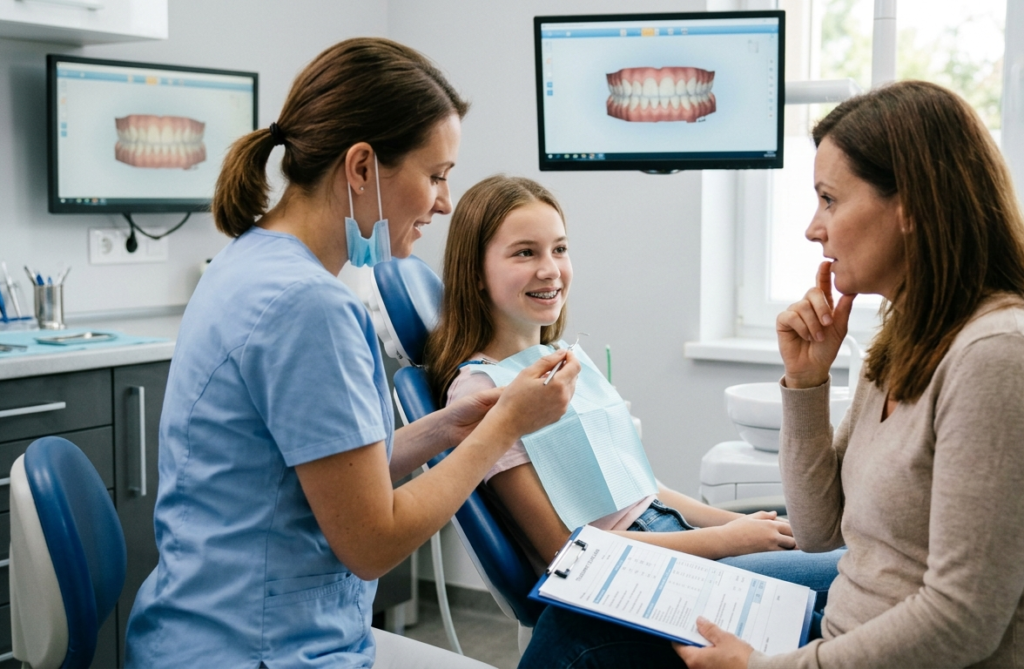
Getting braces recommended by your dentist can be both exciting and overwhelming. While you’re looking forward to achieving a healthier, straighter smile, it’s natural to wonder how much you’ll actually have to pay. This guide takes a realistic, no-nonsense look at braces costs in 2026, comparing different types of braces, explaining the factors that influence pricing, and showing how insurance and payment plans can affect your final bill. By the end, you’ll have a clear understanding of what to expect before your first orthodontic consultation.
What Determines the Price of Braces
Before jumping into dollar figures, it helps to understand what actually drives the average cost of braces up or down. Orthodontic pricing isn’t random. A handful of factors consistently shape the final bill.
The type of appliance you choose plays the biggest role, since metal, ceramic, lingual, and clear aligner systems all come with different manufacturing and labor costs. The complexity of your case matters too. Someone with a mild crowding issue will typically pay less than someone correcting a significant overbite or jaw misalignment, simply because the second case requires a longer, more involved treatment plan. Your geographic location also affects pricing, since orthodontic offices in larger cities or high cost-of-living areas tend to charge more than those in smaller towns. Finally, the orthodontist’s experience and reputation can shift the price, much like any specialized service.
How Much Are Braces on Average
So, what’s the real number? Across the country, how much are braces typically comes down to a range of $3,000 to $10,000 for a full course of treatment, with the majority of patients paying somewhere between $5,000 and $6,000. That figure usually includes your consultation, the appliance itself, monthly adjustment appointments, and a retainer once your teeth have finished shifting into place.
It’s worth remembering that this is a national average, not a guaranteed quote. Your actual price will depend on the specific factors mentioned above, which is why getting an in-person evaluation is really the only way to know your exact cost.
| Braces Type | Average Price Range | Typical Treatment Length |
| Metal Braces | $3,000 – $7,000 | 1 – 2 years |
| Ceramic Braces | $4,000 – $8,000 | 1.5 – 2.5 years |
| Lingual Braces | $8,000 – $13,000 | 1.5 – 3 years |
| Invisalign / Clear Aligners | $3,000 – $8,500 | 6 months – 2 years |
Metal Braces Cost: Still the Most Affordable Choice
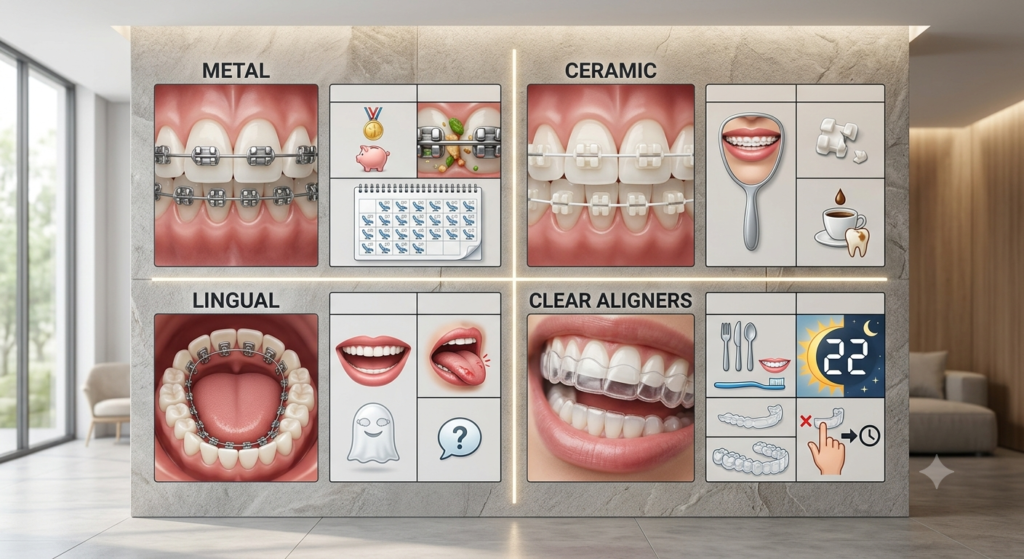
Metal braces have been the go-to orthodontic option for decades, and despite newer alternatives flooding the market, they remain the most budget-friendly. Metal braces generally sit between $3,000 and $7,000, making them the entry point for most families comparing prices.
The setup is straightforward. Small metal brackets are bonded to each tooth, connected by an archwire that your orthodontist tightens at regular checkups, usually every month or so. This steady pressure gradually guides your teeth into proper alignment. Because the technology behind metal braces has been refined for so long, they’re also known for being reliable and effective even for more complicated bite corrections.
The obvious tradeoff is visibility. Metal braces are noticeable when you smile or talk, which is why plenty of teens and nearly all adults ask about other options before committing, even though metal remains the cheapest and often fastest route to a finished result.
Ceramic Braces Cost: A Step Toward Subtlety
For patients who want the effectiveness of traditional braces without quite as much visual impact, ceramic braces are usually the next option discussed. Instead of metal, the brackets are made from a clear or tooth-colored ceramic material that blends in far better with your natural teeth.
Ceramic braces typically run from $4,000 to $8,000, roughly $1,000 more than the metal equivalent on average. The added expense reflects both the material itself and the slightly more careful handling of ceramic brackets needed throughout treatment, since they can be a bit more fragile than metal.
Many teens and adults find ceramic braces to be a comfortable middle ground, offering solid results with far less visibility. One thing to keep in mind is that the elastic ties used with ceramic brackets can pick up stains from coffee, tea, or curry-based foods if you’re not diligent about your dental hygiene routine during treatment.
Lingual Braces Cost: Maximum Discretion, Maximum Price
If you want orthodontic treatment that’s completely invisible to the people around you, lingual braces are worth discussing with your orthodontist. Instead of sitting on the front of your teeth, the brackets are bonded to the back, facing your tongue, so nobody can tell you’re wearing braces at all unless you point it out.
This level of discretion comes at a cost. Lingual braces cost is the highest among all traditional options, typically running from $8,000 to $13,000. The steep price reflects the specialized training required to place and adjust brackets on the back surface of the teeth, along with the fully custom fabrication process each patient’s braces go through.
There’s an adjustment period to expect as well. Many patients notice a temporary lisp during the first couple of weeks, and cleaning around the brackets takes a bit more effort since you can’t see them directly. Still, for people in client-facing careers or anyone who simply doesn’t want visible hardware, lingual braces remain a popular premium choice.
Invisalign Cost: The Clear Aligner Favorite
Clear aligners have completely changed how many adults approach orthodontic treatment. Rather than brackets and wires, Invisalign uses a series of custom, removable plastic trays that gradually shift your teeth over time, swapped out for a new set roughly every one to two weeks.
Invisalign cost usually falls between $3,000 and $8,500, with the final number depending heavily on how many aligner trays your case requires. Shorter, simpler treatment plans land toward the lower end, while more involved cases needing well over a year of aligner wear will cost more.
The biggest draw is convenience. Aligners are nearly invisible, can be removed for eating and brushing, and tend to be more comfortable on a daily basis compared to wires and brackets. That said, they only work if you’re disciplined about wearing them the recommended twenty to twenty-two hours a day, and severe bite or spacing issues may still require traditional braces instead.
Braces Cost for Adults Compared to Kids
Age doesn’t change the fundamental pricing structure of braces, but it does influence which type of treatment people typically choose, and that indirectly affects the final bill.
Braces cost for adults is often estimated between $3,000 and $10,000, with many landing closer to $4,500 to $7,500 for comprehensive treatment. Adults tend to gravitate toward Invisalign, ceramic, or lingual options rather than metal, partly for professional appearance reasons, which can nudge the average slightly higher. Treatment can also take longer for adults since jaw growth has already completed, meaning tooth movement sometimes requires more time and precision.
How much are braces for kids typically lands toward the lower to middle end of the overall range. Pediatric orthodontic treatment sometimes starts with an early interceptive phase around ages seven to ten, followed by comprehensive treatment during the early teenage years once enough adult teeth have come in. Childhood and adolescent treatment is also more commonly covered, at least partially, by family dental insurance plans, which can bring the out-of-pocket number down considerably compared to adult treatment.
| Comparison Point | Kids and Teens | Adults |
| Typical starting age | 7 – 14 years | 18+ |
| Most common braces type | Metal braces | Ceramic, Invisalign, or lingual |
| Average treatment duration | 1 – 3 years, sometimes two phases | 1 – 2 years |
| Insurance coverage likelihood | Higher | Lower, especially under medical plans |
| Typical price range | $3,000 – $7,000 | $3,000 – $10,000 |
Understanding Braces Cost With Insurance
Dental insurance can noticeably reduce your final bill, but coverage varies a lot from plan to plan, so it’s worth reading the fine print before assuming you’re covered.
Braces cost with insurance generally means your provider pays somewhere between 25% and 50% of the total treatment fee, usually up to a lifetime orthodontic maximum of $1,000 to $3,000. So if your quoted treatment cost is $6,000, decent insurance coverage might bring your share down to somewhere in the $3,000 to $4,500 range. It’s important to note that many standard dental plans exclude orthodontic coverage entirely or only include it for patients under eighteen, so always confirm the specifics with your insurer before assuming braces are covered.
For anyone without coverage, braces cost out of pocket naturally feel heavier. Without insurance, most people pay somewhere between $2,750 and $7,000 for standard treatment, and premium options like lingual braces can climb well past $10,000. The upside is that virtually every orthodontic office offers a payment plan to spread the cost out.
How much are braces monthly through a typical financing arrangement usually works out to somewhere between $100 and $300 per month, depending on your down payment, total treatment cost, and how long your payment plan runs. Many practices offer these plans interest-free, which makes monthly payments a genuinely practical way to manage the expense without needing outside financing.
Advantages and Disadvantages by Braces Type
Cost is only part of the decision. Comfort, visibility, and lifestyle all factor into choosing the right type of braces for you.
| Braces Type | Advantages | Disadvantages |
| Metal Braces | Lowest cost, highly durable, works for complex cases | Most visible option, can irritate cheeks initially |
| Ceramic Braces | Blends with tooth color, same effectiveness as metal | Higher price than metal, prone to staining |
| Lingual Braces | Completely hidden from view | Most expensive, harder to clean, temporary speech impact |
| Invisalign / Aligners | Removable, discreet, generally more comfortable | Requires strict daily wear, not ideal for severe cases |
Do’s and Don’ts for Managing Braces Costs
A little planning goes a long way when it comes to affording orthodontic treatment without unwanted surprises along the way.
| Do’s | Don’ts |
| Compare quotes from two or three different orthodontists | Don’t assume all providers charge the same rate for identical treatment |
| Ask what’s included in the quote, retainers, emergency visits, X-rays | Don’t skip asking about retainer costs after treatment ends |
| Review your dental insurance policy for orthodontic-specific benefits | Don’t assume braces are automatically covered by standard dental insurance |
| Ask about interest-free in-house payment plans first | Don’t agree to financing without checking the interest rate |
| Use HSA or FSA funds if available to pay with pre-tax dollars | Don’t choose a provider based purely on the lowest price |
Extra Costs People Often Forget About
Beyond the headline treatment price, a few smaller expenses tend to sneak up on patients. Retainers, which are essential after treatment to keep your teeth from drifting back, typically cost between $150 and $600 depending on the type you choose. If a bracket breaks or a wire needs an unscheduled fix, some practices charge separately for emergency visits outside your regular adjustment schedule. Diagnostic records like X-rays, photos, and digital scans are sometimes billed separately too, though most offices fold this into your total treatment cost upfront. Always ask your orthodontist directly what’s included before signing any agreement, so nothing catches you off guard later.
Is Paying for Braces Worth It in the Long Run
While the upfront number can feel intimidating, it’s worth thinking about braces as a long-term investment rather than a one-time expense. Straight teeth are easier to clean properly, which lowers your risk of cavities, plaque buildup, and gum disease over the years. A properly aligned bite also reduces uneven wear on your teeth and can ease jaw tension for people dealing with bite-related discomfort. According to guidance from the American Association of Orthodontists, treatment costs vary significantly by individual case, and scheduling a personal consultation remains the most reliable way to get an accurate quote rather than relying solely on general online estimates.
Final Thoughts on Braces Pricing
There’s no universal answer to how much braces cost, since your final price depends on the type of treatment you choose, your age, where you live, and how complex your case is. As a general guide, most patients can expect somewhere between $3,000 and $10,000, with metal braces sitting at the more affordable end and lingual braces at the premium end.
The smartest next step is booking a consultation. Most orthodontic offices offer this free of charge, and it’s the only real way to get a personalized number instead of a rough estimate. Come prepared with questions about payment plans, insurance, and what’s included in the total price, and don’t hesitate to get a second opinion before making your final decision. Your smile, and your budget, deserve that extra bit of research.