

Seeing two lines on a pregnancy test is one of the most emotional moments in a person’s life. For some women, however, that joy is unexpectedly followed by positive pregnancy test then bleeding, leaving them confused and searching for answers. Although this experience can be heartbreaking, chemical pregnancy symptoms are surprisingly common, and most cases are linked to chromosomal abnormalities rather than anything the woman did or didn’t do.

In this guide, you’ll learn what is a chemical pregnancy, the most common causes of chemical pregnancy, the typical early miscarriage signs, how chemical pregnancy vs miscarriage differs, what falling hCG levels (Human Chorionic Gonadotropin (hCG) is a hormone produced by the cells that form the placenta shortly after a fertilized egg implants in the uterus. It helps support early pregnancy by signaling the body to continue producing progesterone, which maintains the uterine lining and supports the developing embryo) mean, and what to expect when getting pregnant after chemical pregnancy.
What Is a Chemical Pregnancy?
A chemical pregnancy is a very early pregnancy loss that occurs shortly after implantation, usually before the fifth week of pregnancy. It happens when a fertilized egg implants in the uterine lining and begins producing human chorionic gonadotropin, or hCG, which is the hormone that pregnancy tests detect. However, the pregnancy stops developing before an ultrasound can detect a gestational sac or a heartbeat.
The term “chemical” refers to the fact that the pregnancy is only confirmed through chemical (hormonal) testing, such as a blood test or a urine test, rather than through an ultrasound. In other words, the pregnancy exists on a biological and hormonal level, but it never progresses far enough to be visible on imaging.
This is essentially the same thing as what doctors call a biochemical pregnancy. The two terms are used interchangeably, and you’ll see both throughout medical literature, patient forums, and fertility clinic resources. Understanding what is a chemical pregnancy in plain terms simply means recognizing it as a loss that happens right at the start, often before a woman even realizes she may be further along.
According to reproductive health experts, chemical pregnancies account for a significant share of all early pregnancy losses, and they’re believed to happen more frequently than most people assume, partly because many occur before a woman even knows she conceived.
How Common Is a Chemical Pregnancy?
Chemical pregnancies are thought to make up a large portion, possibly more than half, of all early miscarriages. Many women who aren’t actively trying to conceive, or who don’t test early, may never even know they experienced one. They might simply notice their period arriving a few days later than expected, slightly heavier than usual, without ever suspecting a pregnancy occurred at all.
For women who are trying to conceive and testing early with sensitive home pregnancy tests, chemical pregnancies are noticed far more often, simply because the technology now allows detection of hCG at very low levels, sometimes even before a missed period.
Symptoms of a Chemical Pregnancy
One of the confusing aspects of this experience is that chemical pregnancy symptoms often mimic a regular period, which is exactly why so many go unnoticed. Still, there are a few signs that tend to stand out for women who have taken an early test.
The most recognized pattern is a positive pregnancy test followed by bleeding within days. A woman may see a faint or clear positive line, feel early pregnancy symptoms like mild cramping, breast tenderness, or fatigue, and then within a few days to a week, experience bleeding that resembles or slightly exceeds a normal period.
Other common signs include:
- A positive test that becomes progressively fainter on repeat testing instead of darkening
- Cramping that feels similar to menstrual cramps, sometimes slightly more intense
- Bleeding that starts around the time a period would normally be expected, though it may arrive a few days late
- A negative pregnancy test taken again a few days after the initial positive result
Because these symptoms overlap so closely with a regular period, many women only realize what happened in hindsight, especially if they weren’t tracking ovulation or testing early.
Causes of Chemical Pregnancy
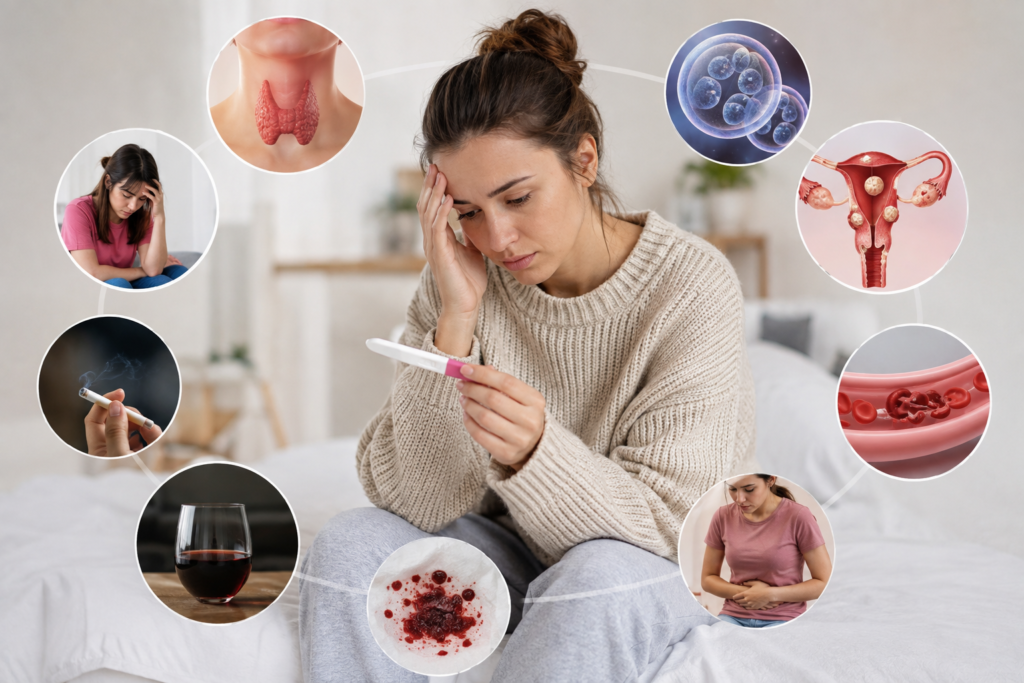
Understanding the causes of chemical pregnancy can bring some comfort, because in the vast majority of cases, nothing was done wrong. The body is simply following its own quality-control process.
Chromosomal abnormalities are the leading cause. When an egg and sperm combine, the resulting embryo needs the correct number of chromosomes to develop properly. If there’s an error during cell division, the embryo often can’t sustain growth, and the pregnancy ends early. This is the body’s natural way of stopping a pregnancy that wouldn’t have been viable regardless of intervention.
Other contributing factors can include:
- Hormonal imbalances, such as low progesterone, which is needed to maintain the uterine lining and support early pregnancy
- Uterine abnormalities, including fibroids, polyps, or scar tissue that can interfere with implantation
- Thin or unreceptive uterine lining, which makes it harder for an embryo to implant securely
- Underlying thyroid conditions, since thyroid hormones play a role in early pregnancy stability
- Blood clotting disorders, which can affect blood flow to the developing embryo
- Age-related factors, as egg quality naturally declines with age, increasing the likelihood of chromosomal errors
- Lifestyle factors, such as smoking, excessive alcohol use, or high stress, though these are far less commonly the sole cause
It’s worth emphasizing that a single chemical pregnancy is rarely a sign of an underlying fertility problem. It’s usually a one-time chromosomal glitch rather than a pattern.
Chemical Pregnancy vs Miscarriage: What’s the Difference?
This is one of the most searched questions on the topic, and understandably so, because the emotional weight of these two terms feels very different, even though medically they’re closely related. A chemical pregnancy is technically a very early form of miscarriage. The distinction mostly comes down to timing and how the loss is confirmed.
According to information published by Texas Children’s Hospital, a chemical pregnancy is essentially a miscarriage that happens so early that it occurs before the pregnancy can be confirmed by ultrasound, distinguishing it from losses that happen after a heartbeat, or gestational sac has already been seen.
| Feature | Chemical Pregnancy | Clinical Miscarriage |
| Timing | Before 5 weeks, right around expected period | After 5–6 weeks, once pregnancy is confirmed on ultrasound |
| Confirmation method | Positive urine or blood hCG test only | Ultrasound showing gestational sac, sometimes with heartbeat |
| Physical experience | Feels like a slightly late or heavier period | Bleeding, cramping, and passing of tissue, often more noticeable |
| Medical intervention | Rarely needed | May require monitoring, medication, or a procedure |
| Emotional impact | Often minimized by others, but can still be significant | Widely recognized and validated as a loss |
| Follow-up care | Usually none required unless recurrent | Follow-up ultrasound or hCG monitoring often recommended |
Both experiences are valid losses, and both deserve emotional support, even though a chemical pregnancy is sometimes dismissed as “not a real pregnancy” by people who don’t understand the biology involved. If you experienced this, your feelings about it are completely legitimate.
Early Miscarriage Signs to Watch For
Recognizing early miscarriage signs can help you know when to contact your doctor, whether you’re experiencing a chemical pregnancy or a slightly later loss. General signs include:
- Vaginal bleeding, ranging from light spotting to heavier flow
- Cramping in the lower abdomen or back
- A sudden decrease in pregnancy symptoms, such as breast tenderness or nausea
- Passing of clots or tissue
- A positive test result followed by a negative one on repeat testing
If bleeding is very heavy, accompanied by severe pain, fever, or dizziness, it’s important to seek medical attention promptly, as these symptoms could point to something requiring closer monitoring, such as an ectopic pregnancy.
Understanding hCG Levels Dropping
Tracking hCG levels dropping is one of the clearest ways doctors and patients confirm a chemical pregnancy. In a healthy, developing pregnancy, hCG levels typically double roughly every 48 to 72 hours during the first few weeks. In a chemical pregnancy, levels rise briefly and then plateau or fall instead of continuing to climb.
| hCG Pattern | What It Typically Suggests |
| Rising and doubling every 48–72 hours | Pregnancy is developing as expected |
| Rising slowly, less than expected | May indicate a pregnancy that isn’t developing normally, needs monitoring |
| Rises briefly, then falls | Consistent with a chemical pregnancy |
| Falls to zero over several days to weeks | Confirms the pregnancy has ended, hormone levels returning to baseline |
| Stays elevated without dropping | Should be evaluated by a doctor to rule out other causes |
If your doctor is tracking your hCG through blood tests, they’ll usually want to see the number return to zero to confirm the loss is complete, which can take anywhere from a few days to a few weeks depending on how high the levels rose initially.
Do’s and Don’ts After a Chemical Pregnancy
Going through this experience can feel disorienting, especially if it’s your first time. Here’s a simple breakdown of what’s generally recommended and what’s best to avoid in the days and weeks that follow.
| Do’s | Don’ts |
| Rest and allow your body time to recover physically | Don’t blame yourself; chromosomal issues are rarely preventable |
| Track your cycle to understand your body’s pattern going forward | Don’t ignore heavy bleeding, severe pain, or fever, seek medical care |
| Talk to your doctor if you experience this more than once | Don’t compare your experience to someone else’s pregnancy loss |
| Allow yourself to grieve, even if others minimize the loss | Don’t rush into strenuous exercise or activities before you feel ready |
| Stay hydrated and eat nourishing, balanced meals | Don’t hesitate to ask for a follow-up hCG test if you want confirmation |
| Reach out to a counselor or support group if you’re struggling emotionally | Don’t feel pressured to “try again immediately” before you’re emotionally ready |
There’s no single right way to move through this. Some women feel ready to try again the following cycle, while others need more time, and both approaches are perfectly okay.
Getting Pregnant After Chemical Pregnancy
One of the most reassuring facts about this experience is that getting pregnant after chemical pregnancy is very often straightforward, and most women go on to have completely normal, healthy pregnancies afterward. A chemical pregnancy on its own doesn’t usually indicate a fertility problem or increase the risk of future losses.
Doctors generally don’t recommend delaying conception after a chemical pregnancy unless a woman prefers to wait for personal or emotional reasons. Your cycle typically returns to its normal pattern the following month, and ovulation usually resumes on schedule, meaning you can try again as soon as you and your partner feel ready.
That said, if you experience two or more chemical pregnancies or early losses in a row, it may be worth speaking with a fertility specialist. They can run tests to check for hormonal imbalances, uterine structural issues, thyroid function, or clotting disorders that could be contributing factors. In many cases, even after further testing, no clear cause is found, and future pregnancies proceed without complications.
Some steps that may support a healthy pregnancy going forward include maintaining a balanced diet, taking a prenatal vitamin with folic acid, managing stress where possible, avoiding smoking and excessive alcohol, and keeping regular checkups with your healthcare provider. According to guidance shared by London Pregnancy clinic specialists, most women who experience a chemical pregnancy go on to conceive and carry a healthy pregnancy in the following cycles, without any lasting impact on their fertility.

When to See a Doctor
While most chemical pregnancies resolve naturally without medical intervention, there are certain situations where it’s worth checking in with a healthcare provider:
- If you experience very heavy bleeding that soaks through more than one pad an hour
- If cramping or pain becomes severe rather than period-like
- If you have a fever, chills, or signs of infection
- If your hCG levels aren’t dropping back to zero as expected
- If you’ve had two or more early losses in a row
- If you simply want reassurance and a follow-up test for peace of mind
There’s no wrong reason to check in with your doctor. Even if your loss turns out to be a straightforward chemical pregnancy, having medical support can make the experience feel less isolating.
Coping Emotionally With a Chemical Pregnancy
It’s easy for others, and sometimes even medical professionals, to treat a chemical pregnancy as a minor, forgettable event simply because it happens so early. But for the person who experienced it, the loss of hope, the brief excitement of a positive test, and the abrupt end of that possibility can feel very real and very heavy.
Give yourself permission to feel whatever comes up, whether that’s sadness, relief, confusion, or a mix of all three. Talking to a partner, a trusted friend, or a therapist who understands pregnancy loss can help. Online communities of women who’ve been through the same experience can also be a source of comfort, since chemical pregnancies are so common yet so rarely discussed.
Final Thoughts
A chemical pregnancy is an early loss that happens before a pregnancy can be confirmed by ultrasound, and it’s far more common than most conversations around pregnancy would suggest. In most cases, it’s caused by a random chromosomal issue rather than anything the mother did or didn’t do, and it rarely affects future fertility. If you’ve experienced this, know that your feelings are valid, your body isn’t broken, and for the vast majority of women, a healthy pregnancy is still very much within reach.
If you’re currently going through this or trying to make sense of your test results and bleeding pattern, don’t hesitate to reach out to your OB-GYN or a fertility specialist. They can help confirm what’s happening, offer reassurance, and guide you on next steps whenever you feel ready to try again.