

Why Which Food Is Best for Healthy Eyes?
Most people think protecting their eyes means wearing sunglasses or getting regular eye exams. While those habits are important, what you eat every day has an even bigger impact on your long-term vision. Your eyes rely on a steady supply of vitamins, minerals, antioxidants, and healthy fats to keep the retina, blood vessels, and other delicate structures working properly. That’s why filling your plate with healthy foods like leafy greens, colorful fruits and vegetables, fatty fish, eggs, nuts, and seeds can help support clear vision and healthy eyes. On the other hand, a diet loaded with unhealthy foods, sugary drinks, and highly processed snacks may leave your body short of the nutrients your eyes need and could increase the risk of certain vision problems over time. So, which food is best for healthy eyes? The truth is that there isn’t a single food that does it all. Healthy vision comes from eating a variety of nutrient-rich foods that work together to nourish your eyes and protect them as you age. In this guide, we’ll explore the best foods for healthy eyes, the essential nutrients behind their benefits, foods that are best enjoyed in moderation, and simple eating habits that can help keep your vision healthy for years to come.
How Nutrition Affects Your Vision
Every part of your eye, from the cornea to the retina, is built from proteins, fats, and cells that rely on nutrients to repair themselves. Over time, oxidative stress caused by sunlight, pollution, and even normal aging can damage these cells. Antioxidants found in food help neutralize this damage before it turns into a bigger problem, such as cataracts or macular degeneration. According to the American Academy of Ophthalmology, a diet low in fat and rich in fruits, vegetables, and whole grains supports not just heart health but eye health too, since the eyes rely on tiny arteries for oxygen just as the heart relies on larger ones. This is why doctors keep repeating the same advice: eat colorful, whole foods, and your eyes will thank you later.
The Power of Leafy Green Vegetables
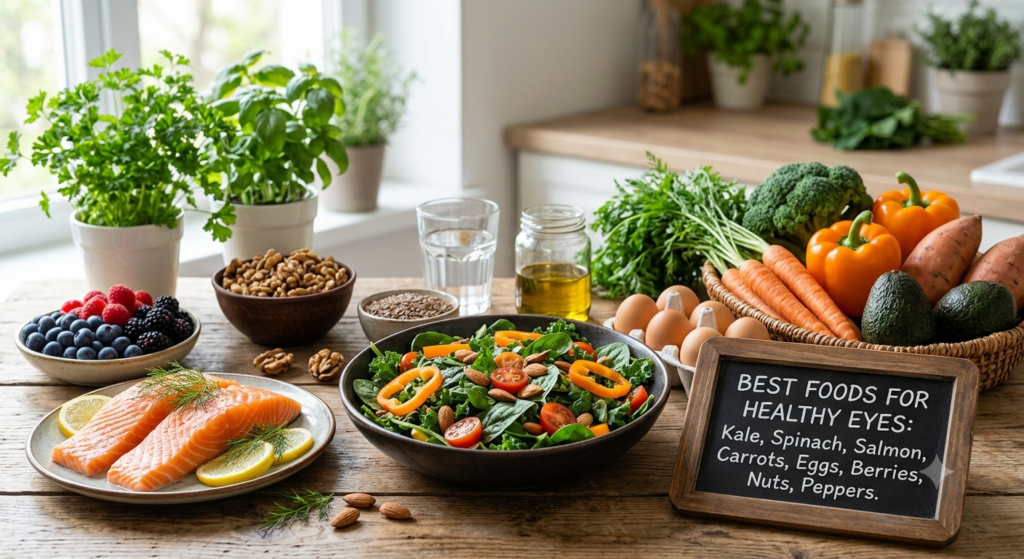
If there is one food group that eye doctors almost never stop recommending, it’s leafy greens. Spinach, kale, collard greens, and Swiss chard are loaded with two plant pigments called lutein and zeaxanthin. These carotenoids collect naturally in the macula, the part of the retina responsible for sharp, central vision, and they act like an internal pair of sunglasses, filtering out harmful blue light. Regularly eating leafy greens has been linked to a lower risk of age-related macular degeneration and cataracts. Try adding a handful of spinach to your morning smoothie or tossing kale into a stir-fry — small changes like these add up over months and years.
Carrots and Orange Vegetables: The Classic Eye Food
Carrots have earned their reputation as “the” eye vegetable, and for good reason. They are rich in beta-carotene, which your body converts into vitamin A, a nutrient essential for night vision and keeping the surface of the eye healthy. Severe vitamin A deficiency can even lead to night blindness and dryness of the eyes. Sweet potatoes, pumpkins, and butternut squash offer similar benefits thanks to their deep orange color, which signals a high beta-carotene content. While carrots alone won’t give you super-vision, including them regularly in your diet supports the basic biological processes your eyes rely on every day.
Citrus Fruits and Berries for Vitamin C
Oranges, grapefruits, lemons, kiwis, and strawberries are packed with vitamin C, one of the most important antioxidants for eye health. Vitamin C helps the body repair and grow new tissue cells and protects against damage caused by free radicals produced by fried foods, cigarette smoke, and ultraviolet rays. Some research has even linked higher vitamin C intake with a noticeably lower risk of cataract progression compared to people who consume very little of it. A simple habit like eating an orange as a snack or squeezing lemon into your water is a small step with a meaningful long-term payoff for your eyes.
Fatty Fish and Omega-3s
Salmon, sardines, mackerel, and tuna are some of the best foods for healthy vision because of their high omega-3 fatty acid content. These healthy fats are a structural part of the retina and play a major role in tear production, which means they can help ease symptoms of dry eye syndrome. Eating fish twice a week has been associated with a lower risk of both age-related macular degeneration and dry eyes. If you are not a fan of fish, flaxseeds, chia seeds, and walnuts are good plant-based alternatives that also supply omega-3s, though in a slightly different form.
Nuts and Seeds for Vitamin E
Almonds, sunflower seeds, walnuts, and hazelnuts are excellent sources of vitamin E, another powerful antioxidant that protects the cells in your eyes from unstable molecules called free radicals. Vitamin E works alongside vitamin C to reduce oxidative stress, which is one of the main drivers of age-related eye conditions. A small handful of almonds or a spoonful of sunflower seeds as a daily snack is an easy and satisfying way to include more vitamin E in your routine without much effort.
Eggs: A Small but Mighty Eye Food
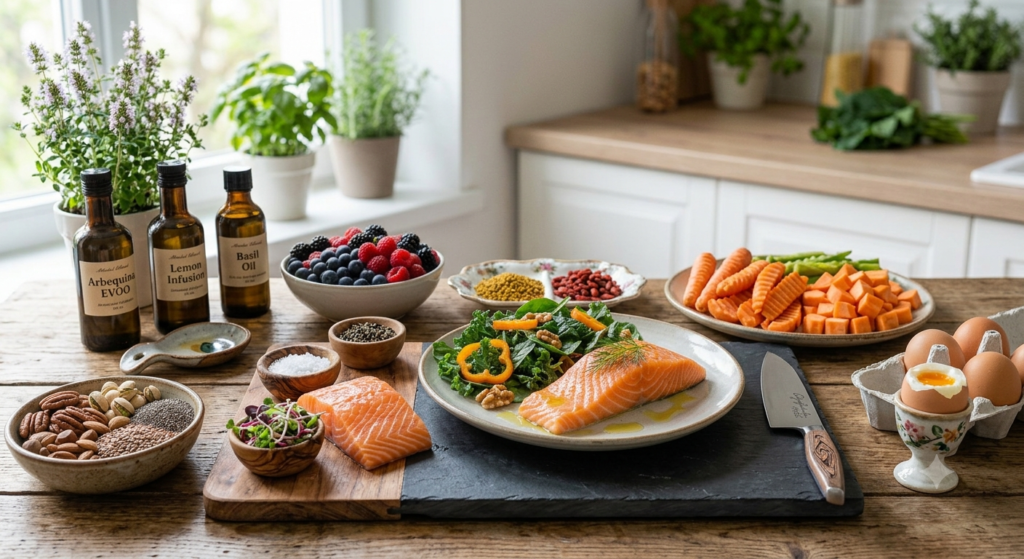
Eggs often get overlooked, but they are genuinely one of the more complete foods for eye health. The yolk contains lutein and zeaxanthin, the same protective pigments found in leafy greens, along with zinc and small amounts of vitamins C and E. Zinc plays a key role in transporting vitamin A from the liver to the retina, where it helps produce melanin, a protective pigment in the eyes. Because eggs combine several eye-friendly nutrients in one food, they are a convenient breakfast choice for anyone looking to support long-term vision.
Zinc-Rich Foods: Legumes, Seafood, and Dairy
Beans, lentils, seeds, meat, seafood, dairy products, and eggs all provide zinc, a mineral your eyes rely on heavily. Zinc helps bring vitamin A from your liver to your retina so it can produce protective pigments and support night vision. A deficiency in zinc has been linked to poor night vision and a higher risk of age-related eye disease. Including a mix of legumes and seafood in your weekly meals is a practical way to keep your zinc levels in a healthy range.
The Mediterranean Diet and Eye Health
Instead of thinking about single “superfoods,” many eye doctors now recommend an entire eating pattern: the Mediterranean diet. This diet emphasizes vegetables, fruits, whole grains, beans, nuts, and olive oil as the main source of fat, with seafood as the primary protein and only moderate amounts of dairy, red meat, and sweets. According to the American Academy of Ophthalmology, people who already have or are at risk of macular degeneration may slow disease progression by 25 percent or more by following this pattern of eating. It is also linked to lower rates of heart disease, diabetes, and other chronic conditions that can indirectly affect eye health.
Do’s and Don’ts for Healthy Eyes
The table below sums up simple daily habits that either support or work against your eye health.
| Do’s for Healthy Eyes | Don’ts for Healthy Eyes |
|---|---|
| Eat a variety of colorful fruits and vegetables daily | Don’t rely on processed or fried snacks as regular meals |
| Include fatty fish in your diet at least twice a week | Don’t skip meals for long stretches, especially breakfast |
| Stay well hydrated throughout the day | Don’t smoke or spend long periods around cigarette smoke |
| Wear sunglasses that block UV rays outdoors | Don’t ignore prolonged eye strain or blurry vision |
| Take regular breaks from screens (the 20-20-20 rule) | Don’t consume excessive added sugar or sugary drinks |
| Get a comprehensive eye exam every one to two years | Don’t self-diagnose eye problems without professional advice |
Nutrients and Their Best Food Sources
Here is a quick-reference table connecting the key eye-friendly nutrients to the foods that naturally contain them.
| Nutrient | Role in Eye Health | Best Food Sources |
|---|---|---|
| Vitamin A / Beta-carotene | Supports night vision, eye surface health | Carrots, sweet potatoes, pumpkin, mangoes |
| Vitamin C | Antioxidant, tissue repair, lowers cataract risk | Oranges, strawberries, kiwis, bell peppers |
| Vitamin E | Protects cells from oxidative damage | Almonds, sunflower seeds, avocados, olive oil |
| Lutein & Zeaxanthin | Filters blue light, protects the macula | Spinach, kale, collard greens, eggs |
| Zinc | Transports vitamin A, supports retina function | Legumes, seafood, dairy, meat, eggs |
| Omega-3 Fatty Acids | Supports retina structure, reduces dry eye | Salmon, sardines, walnuts, flaxseeds |
Foods That Can Harm Your Eyes Over Time
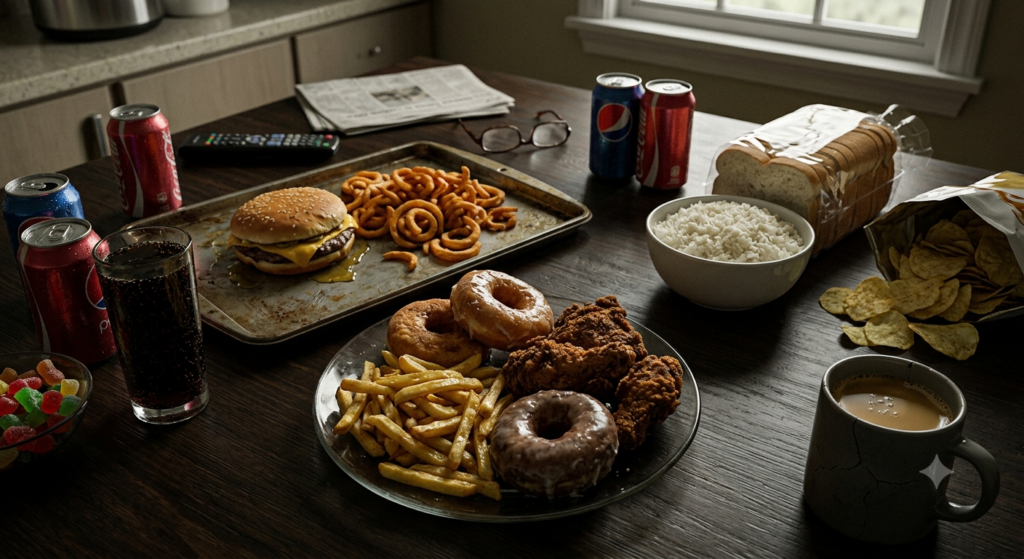
Just as some foods protect your vision, others can quietly work against it. Diets that are high in refined sugar, processed carbohydrates, and unhealthy fats are linked to a greater risk of diabetes, which remains one of the leading causes of vision loss and blindness worldwide. Excess sugar intake can also contribute to inflammation and blood vessel damage that affects the retina over time. Sugary drinks, packaged snacks, deep-fried foods, and excessive alcohol should be limited if you want to protect your eyesight for the long run. The table below highlights common culprits worth cutting back on.
| Food Category | Why It’s a Concern for Eye Health |
|---|---|
| Sugary drinks and desserts | Increases diabetes risk, a leading cause of vision loss |
| Deep-fried and processed foods | Produces free radicals that damage eye cells |
| Excessive alcohol | Can affect the optic nerve with long-term heavy use |
| High-sodium packaged foods | Linked to increased eye pressure and other health risks |
| Refined white bread and pasta | High glycemic index foods that can worsen diabetic eye risk |
Lifestyle Habits That Support a Healthy Diet
Diet is powerful, but it works best alongside a few simple daily habits. Drinking enough water keeps your eyes properly lubricated and helps prevent dryness and irritation. Limiting screen time, or at least following the well-known 20-20-20 rule — looking at something 20 feet away for 20 seconds every 20 minutes — reduces digital eye strain. Wearing sunglasses that block ultraviolet rays protects your eyes from sun damage, which can accelerate cataract formation. None of these habits replace a good diet, but together, food and lifestyle choices create a much stronger defense for your vision.
Special Considerations for People with Existing Eye Conditions
If you already have a diagnosed eye condition such as macular degeneration, your dietary needs may be more specific than general advice suggests. The Age-Related Eye Disease Study 2 (AREDS2), a major clinical trial, found that a particular combination of antioxidants and zinc can help slow the progression of macular degeneration in certain patients. People with dry eye syndrome are often advised to drink more water, cut back on caffeine and alcohol, and consider omega-3 supplements. Because these recommendations vary depending on the specific condition and its severity, it’s always best to talk to your ophthalmologist before making major changes or starting supplements, rather than relying only on general nutrition advice.
Building a Simple Eye-Healthy Meal Plan
You don’t need a complicated diet plan to protect your eyes — small, consistent choices matter far more than perfection. A practical day might start with eggs and a handful of berries for breakfast, a salad loaded with spinach, bell peppers, and grilled salmon for lunch, and a dinner featuring lentils or beans alongside a serving of roasted carrots or sweet potato. Snacking on almonds or an orange between meals adds extra vitamin E and vitamin C without much planning. Over weeks and months, these small, repeated choices are what actually shape your long-term eye health, far more than any single “superfood” ever could.
Conclusion: Small Changes, Long-Term Vision
There is no single magic food that guarantees perfect eyesight, but there is a clear, well-supported pattern: colorful fruits and vegetables, healthy fats, lean protein, and fish consistently show up as the foods experts recommend for eye health. Pairing these choices with good habits like regular eye exams, adequate hydration, and sensible screen use gives your eyes the best possible support as you age. Start with one or two changes this week, whether it’s adding a serving of leafy greens to dinner or swapping a sugary snack for a handful of almonds. Your eyes work hard for you every single day; feeding them well is one of the simplest ways to return the favor.