

When it comes to building healthy habits, eating more fruit is one of the simplest and most effective changes you can make. But which one is healthier—apples or grapes? The truth is that both are excellent choices, each offering a unique combination of fiber, vitamins, antioxidants, and other essential nutrients. In this guide, you’ll discover what makes healthy apples and grapes so nutritious, compare their health benefits, and learn why they deserve a place in a balanced daily diet.
Why Nutritionists Love Apples and Grapes
Apples and grapes aren’t popular just because they taste good. They deliver on nutrition. Both are rich in fiber, vitamins, minerals, and antioxidants that support your body in many ways. They’re low-calorie, naturally sweet, and require no prep — just wash and eat.
Part of their appeal is how easy they are to get. They’re affordable, sold year-round almost everywhere, and available at any grocery store you walk into. No supplements, no complicated recipes — just pick them up and go. That convenience is a big reason they’ve been kitchen staples for generations. Your grandmother wasn’t wrong to keep a bowl of apples on the counter.
What’s Actually in an Apple
A medium apple, roughly 182 grams, packs a surprising amount into a small package.
Calories:
About 95 calories — a solid low-calorie snack that still feels satisfying.
Fiber:
This is where apples really stand out. A medium apple has close to 4.4 grams of fiber, nearly 18% of what you need in a day. Most of it sits in the skin, which is exactly why you should eat the apple whole instead of peeling it.
Vitamin C:
Around 8.4 milligrams per apple. Not as much as citrus, but it still adds up and helps support immune function.
Potassium:
Roughly 195 milligrams, which plays a role in heart health and healthy blood pressure.
Antioxidants:
The standout compound here is quercetin, along with catechin and chlorogenic acid. These fight free radicals and are linked to lower inflammation and better brain health. Generally, the darker the skin, the higher the antioxidant content.
What’s Actually in Grapes
A cup of red or green grapes, about 160 grams, brings its own nutritional lineup.
Calories:
Around 104 calories per cup — close to apples, but with a slightly different nutrient makeup.
Vitamin K:
Grapes really shine here, offering about 22 micrograms per cup, far more than apples. Vitamin K matters for blood clotting and bone strength.
Vitamin C:
Grapes actually beat apples on this one, with about 16.3 milligrams per cup, supporting immunity and antioxidant defense.
Copper:
About 0.14 milligrams per cup. Copper helps your body absorb iron and build connective tissue.
Antioxidants:
Grapes are especially rich in resveratrol and anthocyanins, concentrated mostly in the skin. These compounds have been studied extensively for their anti-inflammatory and antioxidant effects. Red and purple grapes carry more of these than green ones.
Health Benefits of Apples
Heart health:
The pectin fiber in apples helps lower LDL (“bad”) cholesterol. People who eat apples regularly tend to show better cardiovascular markers, and the antioxidants help calm inflammation in the arteries.
Digestion:
The soluble fiber acts like a prebiotic, feeding the good bacteria in your gut. A healthier gut microbiome means better digestion, better nutrient absorption, and stronger immune support. If regularity has been an issue, apples often help.
Weight management:
Apples are filling without being calorie-dense. The fiber creates lasting fullness, so you naturally eat less over the course of the day — which is why they’re often recommended for weight loss.
Blood sugar control:
Despite their natural sugar, apples have a low glycemic index. The fiber slows down sugar absorption, keeping your energy more stable — helpful for anyone watching their blood sugar.
Immune support:
Vitamin C and antioxidants work together to help your body fend off illness and recover faster.
Brain health:
Early research suggests quercetin and related antioxidants may protect brain cells, with some studies linking regular apple consumption to better memory and a lower risk of cognitive decline over time.
Health Benefits of Grapes
Antioxidant powerhouse:
Resveratrol and anthocyanins fight oxidative stress, which is part of why grapes are often tied to anti-aging and longevity in research.
Heart health:
The antioxidants in grapes support better blood vessel function, helping lower blood pressure and improve cholesterol profiles. If you’ve wondered whether grapes are good for your heart, the research leans strongly toward yes.
Skin health:
Their antioxidant content supports collagen production, and the polyphenols help protect skin from sun damage and premature aging.
Inflammation:
Grapes contain compounds that help reduce chronic inflammation, which is connected to a long list of health problems.
Eye health:
Anthocyanins help protect the retina and may lower the risk of age-related macular degeneration — useful for preserving vision as you get older.
Brain function:
Resveratrol can cross the blood-brain barrier, potentially protect brain cells, and support memory and processing speed.

Apples vs. Grapes: A Side-by-Side Comparison
| Nutrient | Medium Apple | 1 Cup Grapes | Winner | Best For |
| Calories | 95 | 104 | Apples (slightly) | Weight Management |
| Fiber (g) | 4.4 | 1.4 | Apples (3x more) | Digestion & Satiety |
| Vitamin C (mg) | 8.4 | 16.3 | Grapes | Immune Support |
| Vitamin K (mcg) | 4 | 22 | Grapes | Bone Health |
| Potassium (mg) | 195 | 288 | Grapes | Heart Health |
| Antioxidant Type | Quercetin | Resveratrol | Different | Different Benefits |
| Glycemic Index | 38 (Low) | 46 (Low-Med) | Apples | Blood Sugar Control |
So, Which One Is Healthier?
Honestly, both. They just excel in different areas. If digestion and weight management are your priority, apples pull ahead thanks to their fiber. If you’re more focused on antioxidant protection and heart health, grapes have a slight edge with their resveratrol and anthocyanin content.
The smartest move isn’t picking a side — it’s eating both. Each fruit brings something the other doesn’t. Stick to only apples, and you miss out on grapes’ unique antioxidants. Stick to only grapes, and you lose apples’ fiber advantage.
For weight loss, apples’ fiber gives them a slight lead. For heart health, grapes’ potassium and antioxidants take the edge. For overall wellness, the real winner is variety.
Best Varieties Worth Trying
Not every apple or grape variety is created equal.
Apple Variety:
| Apple Variety | Taste & Texture | Key Health Benefit |
|---|
| Honeycrisp | Sweet and crisp | Moderate antioxidants; easy to enjoy as a daily snack |
| Granny Smith | Tart and crisp | Lower in sugar, making it a good choice for blood sugar management |
| Fuji | Sweet and firm | Provides a good balance of flavor and antioxidants |
| Gala | Mildly sweet and firm | A nutritious, versatile apple for everyday eating |
| Pink Lady | Tart-sweet and crisp | Rich in antioxidants compared to many other varieties |
| Red Delicious | Mildly sweet with soft-crisp texture | Deep red skin contains higher antioxidant levels, though flavor can vary |
Graphs Variety:
| Grape Variety | Taste | Key Health Benefit |
|---|
| Red Grapes | Sweet with a balanced flavor | Rich in antioxidants and widely available, making them a great everyday choice |
| Purple/Black Grapes | Sweet and bold | Highest antioxidant content, especially resveratrol, which supports heart health |
| Green Grapes | Mildly sweet and refreshing | Provide vitamins, hydration, and antioxidants, though slightly lower than darker varieties |
Are Apples and Grapes Good for Weight Loss?
Yes, and there’s a real reason why.
High water and fiber content:
Apples are about 86% water, grapes about 82%. Combined with fiber, that creates real satiety — you feel full and satisfied, not deprived.
Hunger control:
The fiber keeps you satisfied for hours, not just minutes, which cuts down on snacking later.
A smarter swap:
Reaching for an apple or a handful of grapes instead of chips or cookies means real nutrients instead of empty calories. Over time, that swap adds up.
Metabolic support:
The antioxidants and fiber in both fruits support metabolism and gut health, both of which play into successful weight management. They’re not magic, but they genuinely help.
Can People with Diabetes Eat Apples and Grapes?
This is a common concern, and the short answer is yes, with some care.
Natural vs. added sugar:
The sugar in apples and grapes is natural, meaning it comes bundled with fiber, vitamins, and minerals — unlike the added sugar in processed foods.
Portion control matters:
One apple, not three. A measured cup of grapes, not an unlimited bowl. Moderation is the key word.
Glycemic impact:
Apples sit around 38 on the glycemic index (low), while grapes are around 46 (low-to-medium). The fiber in both slows sugar absorption significantly, which is why whole fruit beats juice every time.
Whole fruit over juice:
Juice strips out the fiber and leaves you with concentrated sugar, which can spike blood sugar fast. Whole fruit doesn’t have that problem.
If you have diabetes, it’s worth checking with your doctor or a nutritionist about portions specific to you, but most healthcare providers agree whole apples and grapes fit fine into a balanced diet in moderation.
Easy Ways to Add Them to Your Diet
Snack on them as-is:
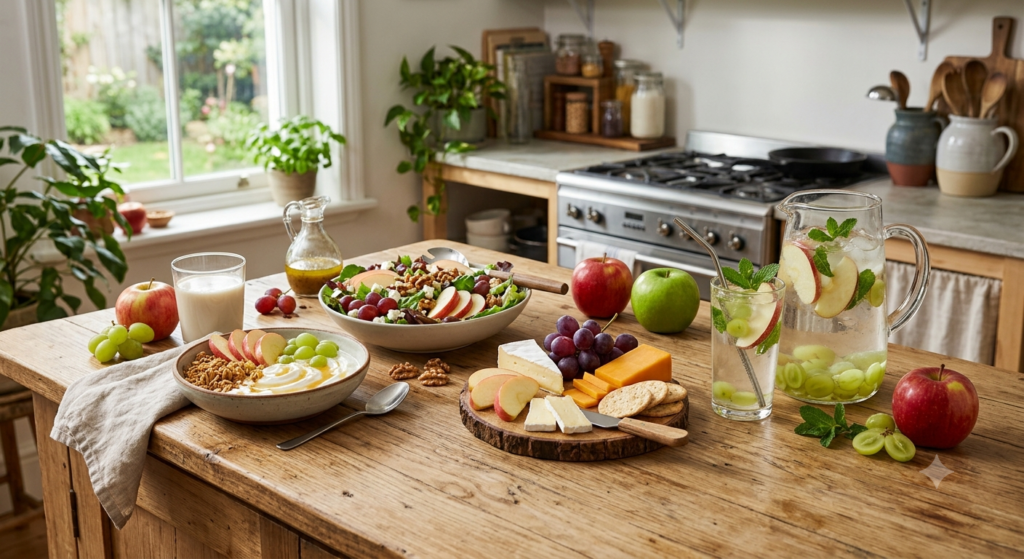
Grab an apple when hunger hits. Keep grapes washed and ready in the fridge for easy snacking.
Toss them in salads:
Sliced apples add crunch and sweetness to greens. Halved grapes work beautifully with leafy greens and nuts.
Add to yogurt or oatmeal:
Diced apple in your morning oatmeal, or grapes on top of yogurt, makes for a balanced breakfast or snack.
Blend into smoothies:
Both fruits work well blended with yogurt, spinach, or other fruit for a quick, nutritious drink.
Pack them for lunch:
Whole apples or a container of grapes travel well and don’t need refrigeration for a few hours.
Cook with them:
Sliced apples add sweetness to chicken or pork dishes. Grapes pair well in salads with nuts and cheese for extra flavor complexity.
Find what fits your routine so these fruits actually get eaten, rather than going soft in the crisper drawer.
Picking and Storing Them Right
Choosing apples:
Look for firm fruit with no soft spots or bruising. It should feel heavy for its size, with smooth, unwrinkled skin. A gentle thumb press that leaves a dent means it’s past its best.
Choosing grapes:
Go for plump, firm, deeply colored grapes that are still firmly attached to the stem. Skip shriveled ones or any that fall off easily. A faint sweet smell is a good sign of freshness.
Storage:
Keep apples in the crisper drawer, where they’ll stay fresh for weeks — but store them away from other produce since they release ethylene gas that speeds up ripening in nearby fruit. Grapes also belong in the crisper, ideally in a sealed container, and will keep for about a week.
Washing:
Rinse under cool running water before eating — a vegetable brush works well on apples. Plain water is enough; you don’t need special produce washes.
Timing:
Eat apples within about a week for the best flavor and texture. Grapes are best within a few days, though they can last up to two weeks refrigerated.
Frequently Asked Questions
Are apples healthier than grapes?
Not exactly — they’re healthy in different ways. Apples lead in fiber and blood sugar control; grapes lead in antioxidants and certain vitamins. Eating both covers more ground.
Which grapes have the most antioxidants?
Purple and black grapes, generally. The darker the color, the higher the antioxidant content.
Can I eat an apple every day?
Yes — one apple a day is a perfectly reasonable habit. If you’re not used to that much fiber, your body may need a little time to adjust.
Are grapes good for weight loss?
Yes. Their water and fiber content make them filling despite being low in calories, which makes them a smart snack choice in reasonable portions.
How many apples or grapes should I eat daily?
One to two apples a day is a good target. For grapes, a cup (about 160 grams) is a solid serving. Your ideal amount depends on your overall diet and goals.
When’s the best time to eat them?
Anytime works. Many people prefer them as a mid-morning or mid-afternoon snack, but they’re fine with meals too.
Should I eat the apple skin?
Yes — it holds about 30% of the apple’s total fiber along with a good share of the antioxidants. Just wash it well first; no need to peel.
Can I eat grape seeds?
Yes. Grape seeds contain proanthocyanidins, powerful antioxidant compounds. If your grapes have seeds, there’s no need to spit them out.
The Bottom Line
Apples and grapes are accessible, affordable fruits that deliver real, measurable nutritional benefits. They support heart health, aid digestion, help with weight management, and offer antioxidant protection. Apples lead with fiber and blood sugar control; grapes bring strong antioxidant power and heart-supporting minerals.
The real key to getting the most out of them is consistency and variety — don’t pick one over the other, mix up the varieties you buy, work them into meals in different ways, and store them properly so they don’t go to waste.
Start today: grab an apple, or portion out a cup of grapes, and build the habit from there. Over time, your digestion, energy, and overall health are likely to notice the difference. Variety and moderation are what make these two fruits genuinely worth keeping in your