

Millions of people around the world wear contact lenses every day to improve their vision or enhance their appearance. Contact lenses offer convenience, comfort, and freedom from traditional eyeglasses. However, these benefits come with responsibilities. Poor contact lens hygiene can lead to eye infections, irritation, corneal ulcers, and even permanent vision loss. Developing safe contact lens habits is one of the most effective ways to maintain healthy eyes and enjoy comfortable vision.
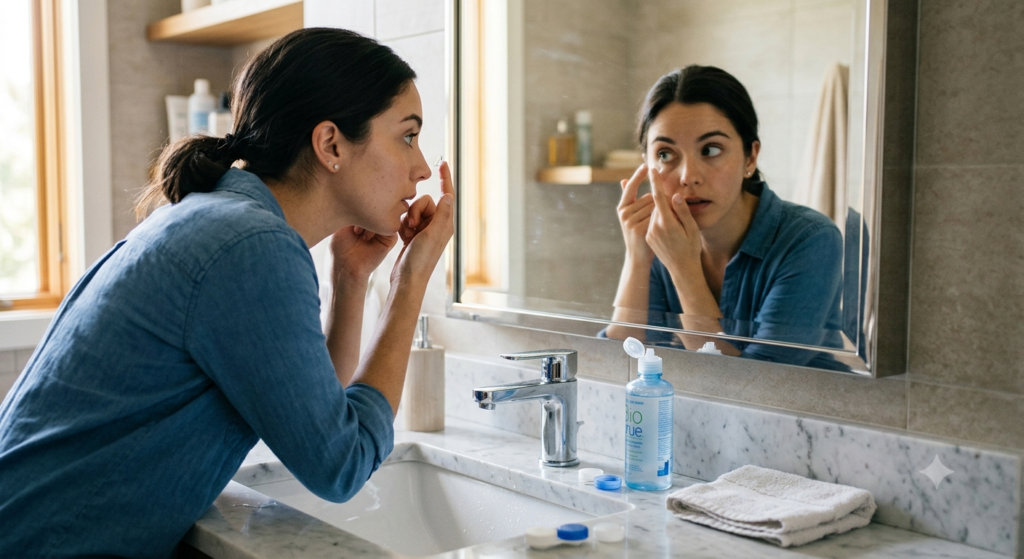
Whether you wear daily disposable lenses, monthly lenses, or specialty lenses, following proper hygiene and care practices is essential. Many contact lens-related eye problems occur because users ignore cleaning instructions, sleep while wearing lenses, or fail to replace them on time. Fortunately, most of these issues are preventable through good habits and regular eye care.
Why Safe Contact Lens Habits Matter
Contact lenses sit directly on the surface of the eye, making them highly effective for vision correction but also increasing the risk of bacterial contamination if not handled properly. Every time a lens touches your fingers, storage case, or cleaning solution, microorganisms can transfer onto its surface. If these germs enter the eye, they may cause infections that range from mild irritation to severe corneal damage.
Poor lens hygiene has been linked to conditions such as microbial keratitis, conjunctivitis, and corneal ulcers. Some infections develop quickly and require immediate medical treatment. People who ignore proper cleaning routines or wear lenses longer than recommended are significantly more likely to experience complications. Safe contact lens habits are not complicated. They simply involve cleaning your hands, using approved disinfecting solutions, replacing lenses as directed, and attending regular eye examinations. These small daily actions greatly reduce the chances of serious eye problems.
Understanding Different Types of Contact Lenses
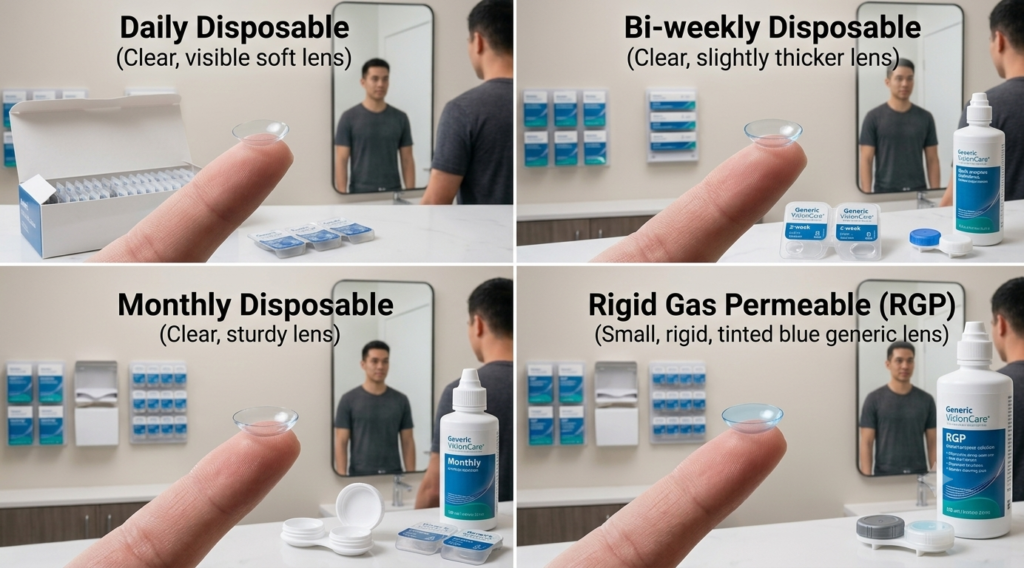
Before discussing safety practices, it is important to understand the different types of contact lenses available. Each type has its own wearing schedule and maintenance requirements.
| Contact Lens Type | Replacement Schedule | Maintenance Required | Best For |
| Daily Disposable | Single use | None | Busy individuals and allergy sufferers |
| Bi-weekly Disposable | Every 2 weeks | Daily cleaning | Regular users |
| Monthly Disposable | Every month | Daily cleaning | Long-term wearers |
| Rigid Gas Permeable (RGP) | 1–2 years | Special cleaning | People with specific vision conditions |
Choosing the correct lens type depends on your lifestyle, eye condition, and your eye care professional’s recommendation. Daily disposable lenses generally have the lowest infection risk because they are discarded after each use, eliminating the need for storage and cleaning.
Wash Your Hands Before Handling Contact Lenses
One of the simplest yet most important habits are washing your hands before touching your contact lenses. Your hands naturally carry bacteria, viruses, oils, dirt, and other contaminants. If these substances transfer onto your lenses, they can easily reach your eyes and increase the risk of infection.
Always wash your hands with soap and clean running water before inserting or removing contact lenses. After washing, dry your hands using a clean, lint-free towel. Avoid using heavily scented soaps, moisturizing soaps, or oily lotions because they may leave residue on your fingers that can stick to your lenses.Never handle contact lenses after touching raw food, gardening, or using household cleaning chemicals without washing your hands again.
Clean and Disinfect Contact Lenses Properly
Cleaning contact lenses removes protein deposits, bacteria, dust particles, and debris that accumulate throughout the day. Even if your cleaning solution is labeled “No Rub,” many eye care professionals still recommend gently rubbing the lenses before rinsing because this method removes significantly more deposits.
Only use commercially approved contact lens disinfecting solutions recommended by your eye doctor. Never use tap water, bottled water, homemade saline, or saliva to clean your lenses. Water can contain harmful microorganisms such as Acanthamoeba, a microscopic organism capable of causing severe eye infections that may threaten vision.After cleaning, place your lenses into a clean storage case filled with fresh disinfecting solution. Never reuse old solutions because its disinfecting ability decreases after use.
Never Sleep While Wearing Contact Lenses Unless Approved
Many people accidentally fall asleep while wearing their contact lenses. Although this may seem harmless, it significantly increases the risk of eye infections because the cornea receives less oxygen during sleep. Reduced oxygen creates an environment where bacteria can multiply more easily.
Some contact lenses are specifically approved for overnight wear, but even these lenses carry a higher infection risk than lenses removed before sleeping. Unless your eye care professional specifically recommends overnight wear, always remove your contact lenses before taking a nap or going to bed.People who regularly sleep in their contact lenses are several times more likely to develop serious eye complications compared to those who remove them each night.
Replace Contact Lenses According to Schedule
Every contact lens is designed for a specific replacement schedule. Wearing lenses beyond their intended lifespan allows protein deposits, bacteria, and microscopic damage to accumulate on the lens surface. These changes reduce oxygen flow and increase the likelihood of eye irritation.
Do not try to save money by extending the life of your contact lenses. Monthly lenses should be replaced every month, bi-weekly lenses every two weeks, and daily disposable lenses should never be reused.Using calendar reminders or smartphone notifications can help you remember replacement dates and maintain healthier contact lens habits.
Keep Your Contact Lens Case Clean
Many users focus on cleaning their contact lenses but forget about the storage case. Unfortunately, the lens case is one of the most common places where bacteria grow. A contaminated case can quickly transfer harmful microorganisms back onto clean lenses. After inserting your lenses, empty the old solution from the case. Rinse the case only with fresh contact lens solution—not water—and leave it open to air dry upside down on a clean tissue. Replace your storage case every three months or sooner if it becomes damaged or dirty. Keeping the storage case clean is just as important as cleaning the lenses themselves.
Recognizing the Early Signs of an Eye Infection
Even if you follow good contact lens hygiene, it is important to recognize the warning signs of an eye infection. Ignoring early symptoms can allow a minor problem to become a serious condition that may affect your vision.
Common symptoms include persistent redness, eye pain, blurred vision, excessive tearing, unusual discharge, sensitivity to light, or the feeling that something is stuck in your eye. Some people may also notice swelling around the eyelids or increased discomfort while wearing their lenses.
If you experience any of these symptoms, remove your contact lenses immediately and avoid wearing them again until you have consulted an eye care professional. Never try to treat an eye infection on your own by continuing to wear lenses or using old eye drops.
Replace Your Contact Lens Case Regularly
Many contact lens users focus on cleaning their lenses but forget about the lens case. Over time, the storage case can become contaminated with bacteria, fungi, and other microorganisms, even if it looks perfectly clean.
To keep your eyes safe, empty the old solution after each use, rinse the case with fresh contact lens solution (not tap water), and allow it to air dry with the caps open. Eye care professionals recommend replacing the lens case approximately every three months.A clean lens case is just as important as clean lenses because contaminated cases are a common source of eye infections.
Wear Makeup Carefully When Using Contact Lenses
People who wear makeup can continue using contact lenses safely by following a few simple precautions. Always insert your contact lenses before applying makeup and remove them before taking your makeup off.
Avoid applying eyeliner on the inner edge of the eyelid because it may block the oil glands and contaminate the lenses. Replace eye makeup regularly, especially mascara, to reduce bacterial growth. Never share eye makeup with others, as this increases the risk of infection.
If makeup particles enter the eye, remove the contact lens, clean it if reusable, or replace it if it is a disposable lens.
Protect Your Eyes During Screen Time
Modern lifestyles involve spending many hours looking at computers, tablets, and smartphones. During screen use, people naturally blink less often, which can cause dryness and discomfort while wearing contact lenses.
To reduce eye strain, follow the 20-20-20 rule. Every 20 minutes, look at something about 20 feet away for at least 20 seconds. This simple habit helps relax the eye muscles and encourages normal blinking.
If your eyes often feel dry, ask your eye care professional whether lubricating eye drops that are safe for contact lens users are appropriate for you. Staying well hydrated and taking short breaks from screens can also improve comfort.
Visit Your Eye Care Professional Regularly
Routine eye examinations are essential, even if your vision seems normal. Regular check-ups allow your optometrist or ophthalmologist to evaluate the health of your eyes, ensure your lenses fit correctly, and detect problems before they become serious.
Your eye care provider may adjust your prescription or recommend a different type of contact lens based on changes in your eye health or lifestyle. These visits also provide an opportunity to discuss any discomfort, dryness, or vision changes you may be experiencing.
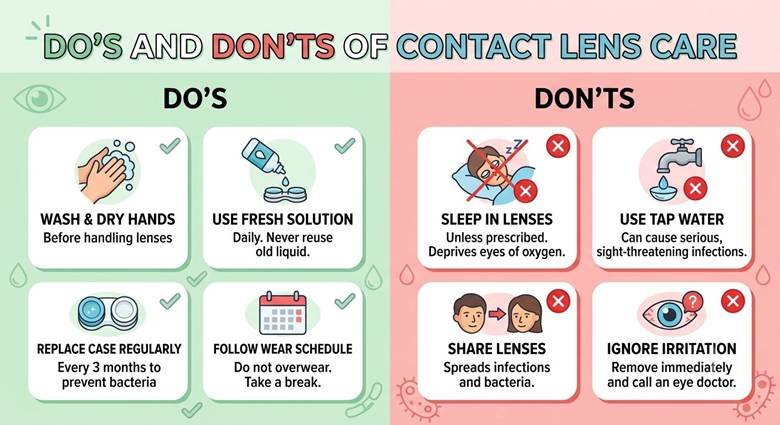
Contact Lens Do’s and Don’ts
| Do’s | Don’ts |
|---|
| Wash and dry your hands before handling contact lenses. | Never touch your lenses with dirty hands. |
| Use fresh contact lens solution every day. | Do not reuse old contact lens solution. |
| Replace your contact lenses according to your eye care provider’s recommended schedule. | Do not wear expired or overdue contact lenses. |
| Clean and replace your lens case regularly to reduce the risk of contamination. | Never rinse or store your lenses with tap water. |
| Remove your lenses before sleeping unless your eye doctor has specifically approved overnight wear. | Never sleep in lenses that are not designed for overnight use. |
| Schedule regular eye exams to ensure your lenses continue to fit properly and your eyes remain healthy. | Do not ignore redness, eye pain, irritation, or blurred vision. Remove your lenses and consult an eye doctor if symptoms persist. |
Travel Tips for Contact Lens Users
Travelling with contact lenses requires extra preparation. Always carry enough lenses, cleaning solution, and a spare pair of glasses. Pack your supplies in your hand luggage to avoid losing them if checked baggage is delayed.
During flights, cabin air can become very dry, making your eyes feel uncomfortable. Using lubricating eye drops approved for contact lens wearers and drinking enough water can help reduce dryness.
If you are travelling to places where clean water is not easily available, take extra care to avoid exposing your lenses to contaminated water.
Healthy Daily Habits That Support Eye Health
Good eye health depends on more than just proper contact lens care. A healthy lifestyle also plays an important role in maintaining clear vision.
Eating foods rich in vitamins A, C, E, omega-3 fatty acids, and zinc supports healthy eyes. Leafy green vegetables, carrots, sweet potatoes, citrus fruits, fish, eggs, and nuts are excellent choices.
Getting enough sleep allows your eyes to recover after a busy day, while staying hydrated helps maintain a healthy tear film. Avoid smoking whenever possible, as smoking increases the risk of several serious eye diseases.
Common Contact Lens Myths vs Facts
| Myth | Fact |
| Tap water is safe for cleaning contact lenses. | Only sterile contact lens solution should be used. |
| If lenses feel comfortable, they are safe to keep wearing. | Lenses can accumulate bacteria even when they feel normal. |
| Sleeping in contact lenses is always safe. | Sleeping in lenses greatly increases the risk of eye infection unless specifically approved by your eye care professional. |
| Lens cases last forever. | Lens cases should be replaced approximately every three months. |
Eye check-ups are Regular examinations help detect hidden eye problems unnecessary if vision is clear. early.
Common Mistakes Contact Lens Wearers Should Avoid
Many contact lens-related problems result from simple mistakes that can easily be prevented. Some of the most common errors include wearing lenses beyond their replacement date, forgetting to wash hands before handling lenses, topping off old cleaning solution instead of replacing it, sharing contact lenses with another person, and ignoring mild eye irritation.
Another mistake is purchasing decorative or cosmetic contact lenses without a proper prescription. Even non-corrective lenses should be fitted by a qualified eye care professional to ensure they are safe for your eyes.
By avoiding these habits, users can significantly lower the risk of infections and maintain comfortable, healthy vision.
Conclusion
Safe contact lens habits are essential for maintaining healthy eyes and protecting your vision. Although contact lenses are a convenient and effective method of vision correction, they require consistent care and responsible use. Simple daily practices—such as washing your hands, cleaning and disinfecting lenses properly, replacing them on schedule, and attending regular eye examinations—can greatly reduce the risk of infections and other eye-related complications.
Eye health should never be taken for granted. Developing proper contact lens hygiene today can prevent serious problems in the future. By following expert recommendations and maintaining a healthy lifestyle, contact lens users can enjoy clear, comfortable vision while protecting one of their most valuable senses.