

What is Glaucoma and How Does It Develop
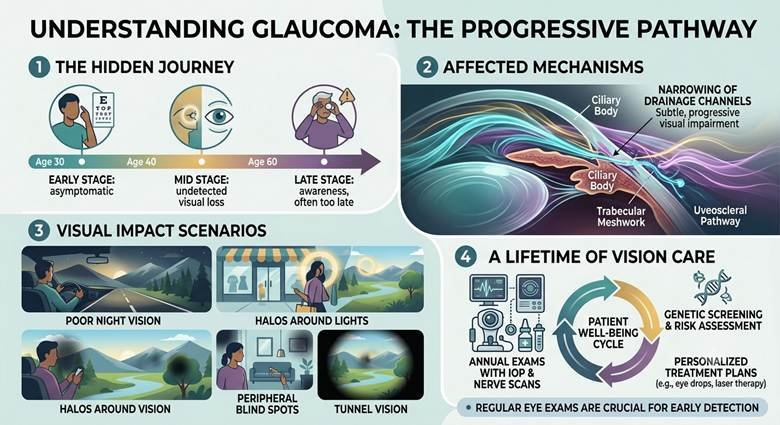
Understanding Glaucoma is essential because this common eye disease often develops without noticeable symptoms until permanent vision loss has already occurred. That’s why glaucoma is widely known as the silent thief of sight. It gradually damages the optic nerve—the part of the eye responsible for sending visual information to the brain—and the vision lost from glaucoma cannot be restored.
Glaucoma characterized by increased intraocular pressure that progressively damages the optic nerve, leading to vision loss and potential blindness if left untreated. The optic nerve contains approximately one million nerve fibers that carry visual signals from the eye to the brain, allowing us to see the world around us. When intraocular pressure rises above normal levels, it exerts pressure on these delicate nerve fibers, gradually damaging them and compromising their ability to transmit visual information effectively.

The eye naturally produces a clear fluid called aqueous humor that maintains the eye’s shape and provides nutrients to its structures. Glaucoma typically develops when the drainage system that allows this fluid to exit the eye becomes impaired, causing fluid to accumulate and pressure to increase. Unlike cataracts or refractive errors, glaucoma damage is permanent and irreversible. This is why early detection and prompt treatment are so critical—they can slow or halt the progression of the disease and preserve remaining vision, but they cannot restore vision that has already been lost.
The Mechanism of Vision Loss in Glaucoma
Understanding how glaucoma causes vision loss helps emphasize the importance of early detection and treatment. Vision loss in glaucoma typically begins in the peripheral visual field—the outer edges of what you can see. Many people don’t notice this peripheral vision loss initially because our eyes often compensate by focusing on central vision. The blind spots gradually expand inward over time, and if the condition remains untreated, it eventually affects central vision as well, resulting in complete blindness.
The damage to the optic nerve in glaucoma is directly related to elevated intraocular pressure. The exact mechanism of how increased pressure damages the nerve fibers isn’t fully understood, but researchers believe it occurs through both mechanical compression and reduced blood flow to the optic nerve. The sustained pressure gradually kills the nerve cells, leading to permanent vision loss. This progressive nature of the disease makes it particularly insidious—by the time patients notice vision problems, they may have already lost 40 percent of their peripheral vision. The damaged optic nerve cannot be repaired, making prevention and early detection not just helpful but absolutely essential for maintaining vision.
Types of Glaucoma Explained
There are several different types of glaucoma, each with distinct characteristics and underlying causes. Understanding the type of glaucoma you have is essential for appropriate treatment and management.
Open-Angle Glaucoma
The most common form, accounting for approximately 90 percent of all glaucoma cases in Western populations. In this type, the drainage angle of the eye appears normal when examined, but the drainage system itself functions inefficiently, causing intraocular pressure to gradually increase over time. Open-angle glaucoma typically develops slowly and painlessly, with no early warning signs, making it particularly dangerous.
Angle-Closure Glaucoma
A less common but potentially more acute form of the disease. This type occurs when the drainage angle of the eye becomes physically obstructed, preventing fluid from draining and causing rapid increases in intraocular pressure. Angle-closure glaucoma can develop suddenly and may present with acute symptoms including eye pain, blurred vision, and halos around lights—symptoms that require immediate medical attention to prevent permanent vision loss.
Normal-Tension Glaucoma
Also called low-tension glaucoma, is a unique form of the disease where the optic nerve is damaged despite intraocular pressure remaining within the normal range. This suggests that some individuals have a particularly vulnerable optic nerve that is susceptible to damage at lower pressure levels.
Secondary Glaucomas
Develop as a result of another eye condition or disease, such as eye inflammation, advanced cataracts, or retinal detachment.
Risk Factors and Who Should Be Tested
Certain individuals face significantly higher risks of developing glaucoma and should receive regular screening and monitoring. Age is one of the most significant risk factors, with glaucoma becoming increasingly common in individuals over 60 years old. African Americans and individuals of Hispanic descent face substantially higher risks of developing glaucoma at earlier ages and experiencing more severe vision loss compared to individuals of European descent. This disparity emphasizes the importance of culturally sensitive eye care and regular screening in at-risk populations.
Family history is another crucial risk factor. If you have a close relative with glaucoma, your risk of developing the disease increases significantly, and you should undergo regular eye examinations starting in your 40s or earlier if recommended by your eye care professional. Medical conditions including diabetes, hypertension, and heart disease can increase glaucoma risk. Additionally, individuals who have sustained eye trauma, those with high myopia (nearsightedness), and those taking certain medications, particularly corticosteroids, face elevated risks.
The American Academy of Ophthalmology recommends that all adults without eye disease have a baseline comprehensive dilated eye exam by age 40. Those with risk factors should be screened more frequently. Early detection through regular eye examinations remains the most effective strategy for preventing glaucoma-related vision loss.
Early Detection and Diagnostic Methods
Early detection of glaucoma is essential for preventing vision loss, which is why comprehensive eye examinations are so important. Several diagnostic methods allow eye care professionals to detect glaucoma in its early stages, before significant vision loss occurs.
Intraocular Pressure Measurement (Tonometry)
The most basic screening tool. This quick, painless test measures the pressure inside your eye using specialized equipment. While elevated intraocular pressure doesn’t automatically mean you have glaucoma, it is a significant risk indicator that warrants further evaluation and monitoring.
Optic Nerve Examination
Involves the eye care professional carefully examining the appearance of your optic nerve using specialized lenses. Changes in the shape or color of the optic nerve can indicate glaucoma-related damage. The optic nerve is photographed during comprehensive eye exams to create a baseline for comparison with future images.
Visual Field Testing (Perimetry)
A crucial diagnostic tool that measures your entire visual field, identifying any areas of vision loss. This test helps detect peripheral vision loss that might not be noticeable to you. Automated visual field testing presents light stimuli in different areas of your visual field while you look straight ahead, and the results create a map of your vision.
Optical Coherence Tomography (OCT)
An advanced imaging technique that creates detailed cross-sectional images of the optic nerve and retinal nerve fiber layer. This technology allows eye care professionals to detect subtle structural changes that might indicate early glaucoma damage.
Gonioscopy
A specialized examination that allows your eye care professional to directly visualize the drainage angle of your eye, determining whether you have open-angle or angle-closure glaucoma.
Symptoms and Warning Signs to Watch
One of the most challenging aspects of glaucoma is that most people experience no symptoms in the early stages. By the time noticeable symptoms develop, significant irreversible damage has usually already occurred, which is why regular screening is so essential. However, being aware of potential warning signs can help you seek prompt medical attention if they develop.
Early Warning Signs
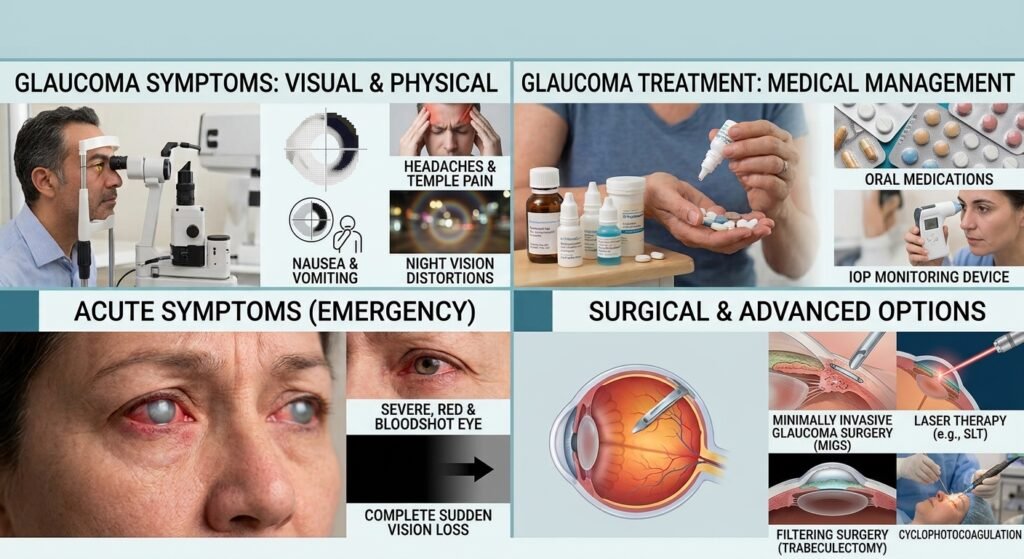
Glaucoma include blind spots in your peripheral vision that you may not immediately notice, difficulty adjusting to dark rooms, and halos around lights, particularly in dim lighting. Some individuals experience eye discomfort or pain, though this is less common in open-angle glaucoma. If you notice any of these symptoms, schedule an eye examination with an eye care professional as soon as possible.
Acute Symptoms
It is associated with angle-closure glaucoma and constitutes a medical emergency. These include sudden eye pain, blurred or hazy vision, halos around lights, nausea and vomiting, and redness in the eyes. Acute angle-closure glaucoma requires immediate medical attention, typically within hours of symptom onset, to prevent permanent vision loss. If you experience these symptoms, go to the nearest emergency room or urgent care facility immediately.
It’s important to note that many people with glaucoma have no symptoms and discover they have the disease only during a comprehensive eye examination. This reinforces the critical importance of regular eye exams, particularly for those with risk factors.
Treatment Options for Glaucoma Management
While glaucoma cannot be cured, various treatment options can effectively manage the disease and prevent or slow vision loss. The goal of treatment is to lower intraocular pressure to a level that protects the optic nerve from further damage. The specific treatment approach depends on the type of glaucoma, the severity of the disease, and individual patient factors.
Medicated Eye Drops
They are typically the first line of treatment for glaucoma. Several classes of medications can effectively lower intraocular pressure. Prostaglandin analogs, beta-blockers, alpha-adrenergic agonists, and carbonic anhydrase inhibitors all work through different mechanisms to either increase fluid drainage or decrease fluid production. These medications must be used consistently and as prescribed to be effective. Many patients require multiple eye drop medications to achieve adequate pressure control.
Laser Treatments
Offer an effective intermediate option between medicated eye drops and surgery. Selective laser trabeculoplasty (SLT) uses a low-energy laser to stimulate the drainage system, improving fluid outflow and lowering intraocular pressure. This procedure can often delay or eliminate the need for more invasive surgical intervention.
Surgical Interventions
May become necessary if medications and laser treatment fail to adequately control intraocular pressure. Trabeculectomy is a surgical procedure that creates a new drainage pathway for fluid to exit the eye. Glaucoma drainage devices, such as tubes or shunts, can be surgically implanted to facilitate better fluid drainage.
Minimally Invasive Glaucoma Surgery (MIGS)
Represents newer surgical approaches that are less invasive than traditional surgeries while still effectively lowering intraocular pressure. These procedures typically involve smaller incisions and result in less tissue trauma compared to conventional surgery.
Lifestyle Changes and Prevention Strategies
While you cannot prevent glaucoma if you’re genetically predisposed to develop it, certain lifestyle changes and preventive strategies can help protect your eye health and potentially slow disease progression.
Regular Exercise
Has been shown to help lower intraocular pressure. Studies indicate that moderate aerobic exercise performed most days of the week can help reduce eye pressure. Activities such as brisk walking, jogging, swimming, and cycling are all beneficial for both general health and eye health.
Dietary Modifications
That support eye health includes consuming foods rich in antioxidants, omega-3 fatty acids, and vitamins. Green leafy vegetables, fatty fish, citrus fruits, and nuts are all excellent choices for supporting ocular health. Some research suggests that avoiding excessive caffeine intake may be beneficial for some individuals with glaucoma.
Stress Reduction
Techniques such as meditation, deep breathing exercises, and yoga may help lower intraocular pressure. Chronic stress can contribute to elevated eye pressure, so implementing stress management strategies is valuable.
Proper Use of Medications and Supplements
It’s important. If you take corticosteroids for other health conditions, discuss this with your eye care professional, as these medications can increase glaucoma risk. Similarly, consult your eye care provider before starting new supplements, as some may affect intraocular pressure.
Avoiding Smoking and Limiting Alcohol
Are important for overall health and may also benefit eye health. Smoking has been associated with increased glaucoma risk in some studies.
Do’s and Don’ts for Glaucoma Patients
| Do’s | Don’ts |
| ✓ Use prescribed eye drops exactly as directed | ✗ Don’t skip doses of your glaucoma medications |
| ✓ Attend regular eye examinations and monitoring appointments | ✗ Don’t wait for symptoms to develop before seeking eye care |
| ✓ Keep a list of all medications and supplements you take | ✗ Don’t start new medications without consulting your eye doctor |
| ✓ Report any vision changes to your eye care professional | ✗ Don’t assume mild vision changes are normal |
| ✓ Maintain a healthy blood pressure and manage other health conditions | ✗ Don’t neglect treatment of diabetes and hypertension |
| ✓ Exercise regularly (30 minutes most days) | ✗ Don’t engage in strenuous activities that spike eye pressure acutely |
| ✓ Practice good eye hygiene when using medications | ✗ Don’t share eye drop bottles with others |
| ✓ Stay informed about your condition and treatment options | ✗ Don’t rely solely on folk remedies or unproven treatments |
| ✓ Get screened if you have family history of glaucoma | ✗ Don’t assume you’re safe without regular eye examinations |
| ✓ Inform healthcare providers about your glaucoma diagnosis | ✗ Don’t take medications that can increase eye pressure |
Types of Glaucoma: Comparison and Characteristics
| Glaucoma Type | Prevalence | Onset | Key Characteristics | Treatment Priority |
| Open-Angle Glaucoma | 90% of cases | Slow, gradual | Normal drainage angle, elevated IOP, asymptomatic early | Medical therapy first |
| Angle-Closure Glaucoma | 10% of cases | Sudden (acute) | Blocked drainage angle, rapid IOP rise, acute symptoms | Emergency medical/laser |
| Normal-Tensio n Glaucoma | 5-15% of open-angle | Slow, gradual | Normal IOP, optic nerve damage, vulnerable nerves | Careful monitoring |
| Secondary Glaucomas | Varies | Depends on cause | Related to other eye diseases or trauma | Treat underlying cause |
| Congenital Glaucoma | Rare | Birth to early childhood | Present at birth, excessive tearing, light sensitivity | Early surgical intervention |
Living Well with Glaucoma
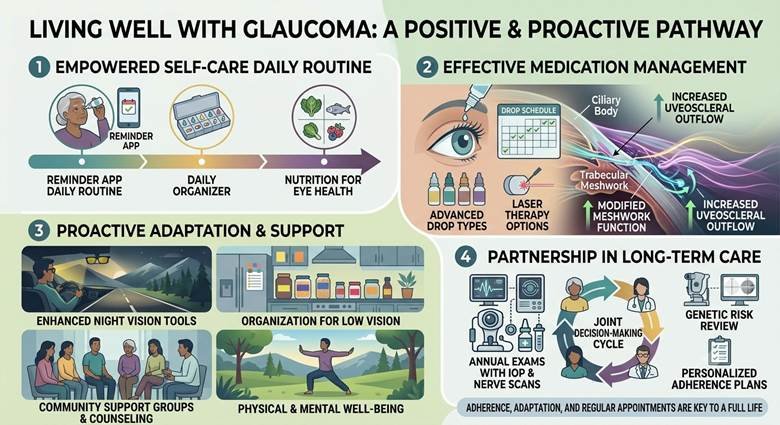
A glaucoma diagnosis doesn’t have to significantly diminish your quality of life. Many people with well-managed glaucoma maintain excellent vision and active lifestyles for decades. The key to living well with glaucoma is understanding your condition, adhering to your treatment plan, and maintaining regular communication with your eye care team.
Medication Adherence
It is absolutely critical for successful glaucoma management. Studies show that many patients don’t consistently use their prescribed eye drops, which significantly increases the risk of disease progression. Setting reminders on your phone, using pill organizers labeled with times, or establishing routines linked to daily activities can help ensure you use your medications as directed. If you’re struggling with medication adherence due to side effects or difficulty with the administration process, discuss this with your eye care professional—alternative medications or delivery methods may be available.
Adaptation to Vision Changes
It may be necessary if glaucoma has affected your vision. Low-vision aids, improved lighting, and modifications to your home environment can help maintain independence and safety. Many communities offer rehabilitation services specifically designed to help people with vision loss adapt to and manage their daily activities effectively.
Emotional Support and Mental Health
Are important aspects of living with a chronic eye condition. Joining support groups, either in-person or online, can connect you with others who understand the challenges of living with glaucoma. Many people find it helpful to talk with counselors or therapists about the emotional impact of a vision-threatening condition.
Frequently Asked Questions About Glaucoma
Q: Can glaucoma be prevented? A: While you cannot prevent glaucoma if you’re genetically predisposed, you can reduce your risk through regular eye examinations, maintaining a healthy lifestyle, and managing other health conditions. Early detection is the best prevention strategy.
Q: Does elevated eye pressure always mean you have glaucoma? A: No. Elevated intraocular pressure is a significant risk factor but doesn’t automatically indicate glaucoma. Some people have high eye pressure for years without developing the disease, while others develop glaucoma with normal pressures.
Q: Can glaucoma medication cause side effects? A: Yes, some glaucoma medications can cause side effects ranging from mild (slightly darkened iris color) to more bothersome (itching, redness, or dry eyes). If you experience side effects, discuss them with your eye care provider—alternative medications may be available.
Q: Is glaucoma hereditary? A: Yes, glaucoma does tend to run in families. If you have a family history of glaucoma, you should undergo regular eye screenings starting in your 40s or earlier if recommended by your eye care professional.
Q: Will I become blind from glaucoma? A: With early detection and proper treatment, most people with glaucoma can preserve useful vision throughout their lifetime. Blindness from glaucoma is preventable with appropriate care.
Q: How often should I have my eyes examined if I have glaucoma? A: The frequency depends on your specific situation, but typically glaucoma patients require eye examinations every 3-6 months initially. Once pressure is controlled, examinations may be scheduled less frequently.
Conclusion
Glaucoma truly is the “silent thief of sight,” gradually stealing vision without warning and leaving no room for complacency when it comes to eye health. Understanding what glaucoma is, recognizing risk factors, and knowing the importance of early detection are the first steps toward protecting your vision and preventing devastating vision loss. The good news is that glaucoma can be effectively managed when detected early and treated appropriately. With modern treatment options ranging from medicated eye drops to advanced surgical techniques, the vast majority of people with glaucoma can preserve their vision and maintain their quality of life.
The most important action you can take is to ensure you receive regular comprehensive eye examinations, particularly if you have risk factors for glaucoma. Your eye care professional can detect glaucoma before you experience any symptoms or vision loss, allowing for early intervention when treatment is most effective. If you’ve been diagnosed with glaucoma, commit to your treatment plan, use your medications consistently, maintain regular follow-up appointments, and don’t hesitate to ask questions about your condition and treatment options.
Remember, the vision you save through early detection and proper management is your own. Don’t let glaucoma steal your sight silently. Take action today to protect your eyes and preserve your vision for a lifetime of clear, healthy sight.