

Red Skin Around Nose:
If you have ever looked in the mirror and noticed red skin around your nose that just will not go away, you are far from alone. This is one of the most common skin complaints people bring up with dermatologists, and it can show up as anything from a light pink flush to angry, flaky, irritated patches that sting when you touch them. The redness around nostrils can appear overnight after a cold, or it can build up slowly over months without any obvious trigger. Either way, it tends to be frustrating because the nose sits right in the middle of your face, so nothing about it goes unnoticed. This article walks through the most common causes of nose redness, the symptoms you should pay attention to, and the treatments that actually help, so you can figure out what is going on with your skin and what to do about it.
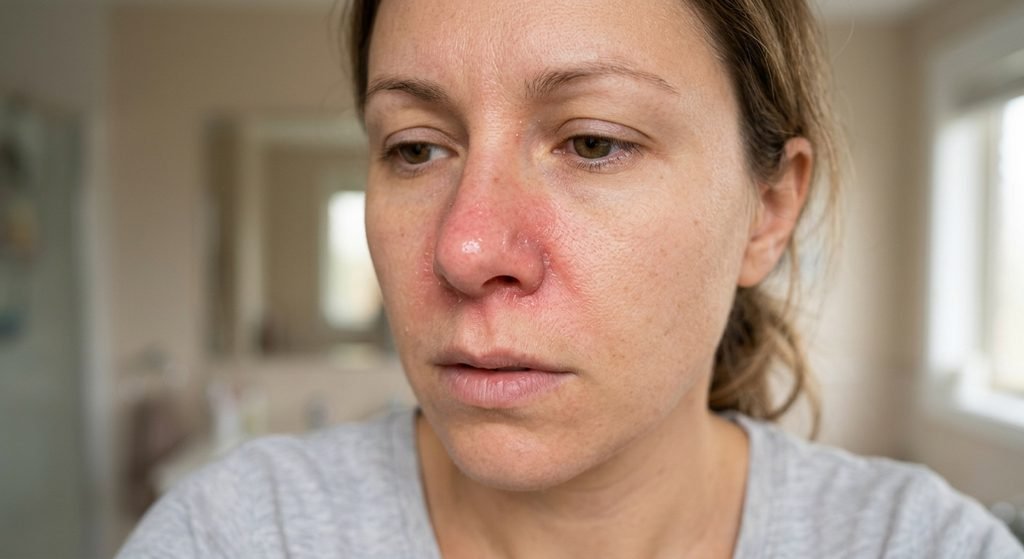
Why the Skin Around Your Nose Turns Red
The skin around the nose is thinner and more sensitive than most other parts of the face, and it also has a higher concentration of oil glands and blood vessels close to the surface. That combination makes it more prone to irritation, inflammation, and visible redness whenever something disrupts the skin barrier. Cold weather, harsh skincare products, constant rubbing from tissues during a cold, or an underlying skin condition can all set off a reaction in this area faster than almost anywhere else on the face. Because the nose also flushes easily in response to temperature, spicy food, or emotional stress, it is often the first place where skin sensitivity becomes visible. Understanding what triggers your specific case is the first step toward calming it down for good.
Common Medical Conditions Behind Nose Redness
Not all nose redness is the same, and figuring out the underlying condition matters a lot for treatment. Rosacea on the nose, sometimes described by dermatologists as erythematotelangiectatic rosacea, is one of the most frequent causes in adults, especially those with fair skin. It shows up as persistent redness, visible broken capillaries on the nose, and a tendency to flush easily with heat, alcohol, or spicy food. Seborrheic dermatitis on the face is another common culprit, causing red, flaky patches around the nose, eyebrows, and hairline due to an overgrowth of yeast on oily skin.
Perioral dermatitis, also called periorificial dermatitis, tends to affect the skin around the nose and mouth with small red bumps that can look like acne but behave very differently, often flaring up after using steroid creams. Contact dermatitis around the nostrils happens when something you are applying, like a fragranced moisturizer or a new sunscreen, irritates the skin directly. In rarer cases, a butterfly-shaped rash across the nose and cheeks can be a sign of lupus, which is why redness that does not improve with basic care deserves a proper medical opinion. Nasal vestibulitis, an infection just inside the nostrils, can also cause redness, tenderness, and swelling right at the base of the nose.
| Condition | Typical Appearance | Common Trigger |
|---|---|---|
| Rosacea on nose | Persistent redness, visible blood vessels | Heat, alcohol, spicy food, sun |
| Seborrheic dermatitis face | Red, flaky, greasy-looking patches | Yeast overgrowth, stress, cold weather |
| Perioral dermatitis nose | Small red bumps around nose and mouth | Steroid cream overuse, heavy moisturizers |
| Contact dermatitis nostrils | Localized redness, itching, burning | New skincare product, fragrance, metal jewelry |
| Nasal vestibulitis | Redness and swelling inside nostrils | Bacterial infection, nose picking |
| Lupus butterfly rash | Red rash across nose and cheeks | Autoimmune flare, sun exposure |
Everyday Triggers That Make It Worse
Beyond diagnosed skin conditions, plenty of everyday habits can bring on or worsen red skin around the nose. A red nose from blowing it too often during a cold is extremely common, since repeated friction from tissues strips away the protective oils on the skin. Windburn on the nose happens after long exposure to cold, dry wind, leaving the skin raw and flushed. Alcohol nose flushing is another familiar pattern, where blood vessels dilate temporarily after drinking, and in people prone to rosacea this can become a lasting redness rather than a passing flush. Facial flushing and blushing triggered by heat, exercise, or emotional stress can also settle around the nose more than other areas because the skin there reacts quickly to changes in blood flow.
Weather changes are a big factor too. Dry red patches on the face, especially around the nose, often appear in winter when indoor heating and cold outdoor air both pull moisture out of the skin. Over-exfoliating, using too many active ingredients at once, or switching skincare products too frequently can damage the skin barrier and lead to irritated skin next to the nose that takes weeks to calm down.
Recognizing the Symptoms
Red skin around the nose does not always look the same from person to person, so it helps to know what symptoms typically go together. Peeling skin around the nose is often a sign that the outer barrier has been compromised, whether from harsh products, weather, or an underlying condition like seborrheic dermatitis. Red bumps on the nose that feel tender or look pus-filled may point toward perioral dermatitis or a related inflammatory issue rather than ordinary acne. A rash around the nose that spreads gradually, especially if it itches or burns, often signals contact dermatitis from something the skin has recently been exposed to.
Skin barrier damage symptoms generally include tightness, stinging when products are applied, visible flaking, and redness that seems to get worse rather than better with regular moisturizing. If the redness comes with swelling, warmth, or pain, especially inside the nostrils, that combination is worth getting checked for a possible infection rather than treating as ordinary dryness.
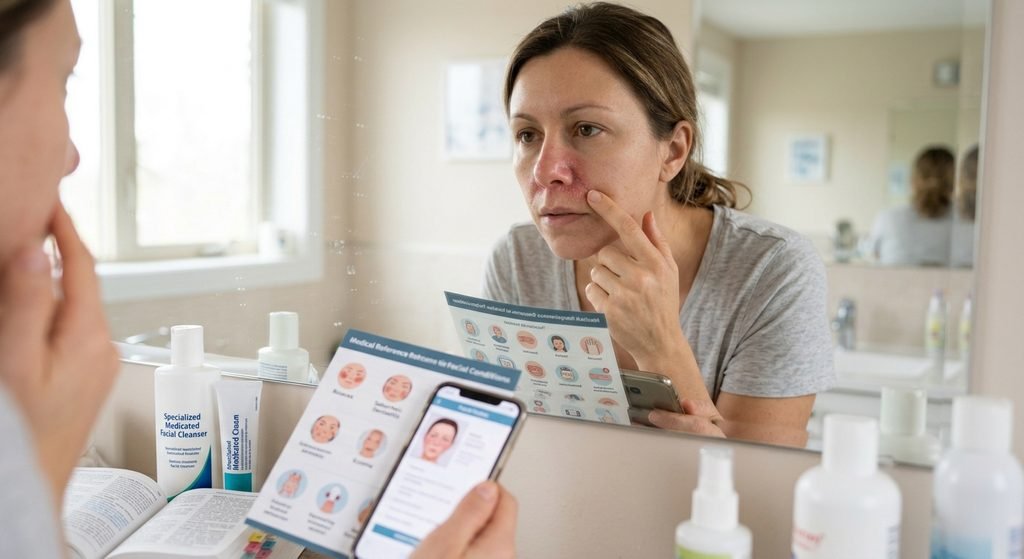
Do’s and Don’ts for Managing Red Skin Around the Nose
Knowing what helps and what to avoid can make a real difference in how quickly the redness settles down. The table below breaks down the basics.
| Do | Don’t |
|---|---|
| Use a fragrance-free, gentle cleanser twice a day | Scrub the area with hot water or rough cloths |
| Apply a soothing cream for nasal redness with ceramides | Layer multiple new active ingredients at once |
| Choose hypoallergenic skincare for rosacea-prone skin | Use alcohol-based toners or astringents |
| Wear a broad-spectrum sunscreen daily | Skip sun protection, even on cloudy days |
| Pat the skin dry gently after washing | Rub the nose repeatedly with tissues when sick |
| See a dermatologist for persistent redness | Self-diagnose and use leftover steroid creams |
How to Get Rid of Redness Around the Nose
For most people, calming down red skin around the nose starts with simplifying the skincare routine rather than adding more products. A gentle, fragrance-free cleanser followed by a good moisturizer is usually the foundation. The best moisturizer for red irritated skin typically contains ceramides, niacinamide, or colloidal oatmeal, all of which help repair the skin barrier without causing further irritation. Avoiding hot water, harsh scrubs, and any product with alcohol or strong fragrance gives the skin a chance to heal.
Sun protection plays a bigger role than most people expect, since UV exposure can worsen rosacea-related redness and slow down healing in any inflamed area. A broad-spectrum sunscreen, ideally a mineral one with zinc oxide, is gentler on already irritated skin and doubles as a way to prevent further flare-ups. Zinc oxide for perioral dermatitis is also commonly recommended by dermatologists because it is soothing and less likely to trigger a reaction compared with chemical sunscreen filters or heavy occlusive creams.
If the redness is linked to a cold, switching to soft, lotion-infused tissues and applying a thin layer of a gentle barrier ointment can prevent the raw, chapped look that comes from constant wiping. For redness tied to weather, using a humidifier indoors during dry months and layering a slightly richer moisturizer before going outside can reduce windburn and dryness significantly.
Medical and Clinical Treatment Options
When home care is not enough, especially for conditions like rosacea or perioral dermatitis, a dermatologist can offer more targeted treatment. Topical treatments such as metronidazole, azelaic acid, or low-dose topical antibiotics are frequently prescribed for rosacea-related redness and bumps. For perioral dermatitis, the first step is often stopping any steroid cream use, since these products can worsen the condition despite initially calming redness, followed by a course of oral or topical antibiotics.
Laser treatment for facial redness has become a popular option for people dealing with visible broken capillaries or long-standing rosacea flushing that does not respond well to creams alone. Pulsed dye lasers and intense pulsed light treatments work by targeting the dilated blood vessels beneath the skin, reducing their visibility over a series of sessions. These treatments are typically done in a dermatologist’s office and can noticeably reduce redness, though results vary depending on skin type and the severity of the condition.
For seborrheic dermatitis, antifungal creams or shampoos used on the face can control the yeast overgrowth that drives the flaking and redness. In cases where lupus or another autoimmune condition is suspected, treatment moves beyond skincare entirely and requires a rheumatologist or specialist to manage the underlying disease alongside any skin symptoms.
Advantages and Disadvantages of Common Treatment Approaches
Different treatment paths come with their own trade-offs, and it helps to weigh them before deciding what to try first.
| Treatment Approach | Advantages | Disadvantages |
|---|---|---|
| Gentle skincare routine | Low cost, low risk, easy to maintain | Slower results, may not fix underlying condition |
| Topical prescription creams | Targets inflammation directly, dermatologist-guided | Can take weeks to show visible improvement |
| Zinc oxide sunscreen | Soothing, protects from sun, low irritation risk | Can leave a slight white cast on skin |
| Laser treatment for facial redness | Longer-lasting results, reduces visible vessels | Costs more, requires multiple sessions |
| Oral antibiotics | Effective for perioral dermatitis and rosacea bumps | Possible side effects, not for long-term daily use |
When to See a Dermatologist
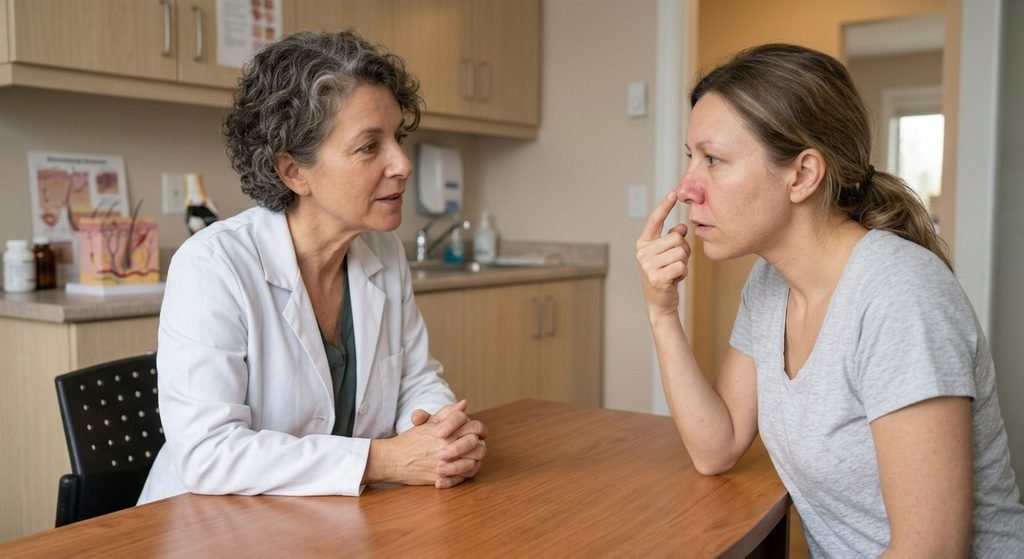
Mild, occasional redness around the nose from weather or a cold usually clears up on its own with basic care. However, persistent redness that lasts more than a few weeks, spreads to other parts of the face, or comes with pain, swelling, or pus deserves a proper evaluation. A dermatologist can tell the difference between rosacea, seborrheic dermatitis, perioral dermatitis, and other look-alike conditions through a physical exam and, if needed, further testing. This matters because treatments that help one condition, like a steroid cream for eczema, can actually make perioral dermatitis worse, so an accurate diagnosis saves time and prevents accidental damage to the skin.
If you notice a butterfly-shaped rash across your nose and cheeks along with joint pain, fatigue, or sensitivity to sunlight, it is worth bringing up with a doctor sooner rather than later, since these can be signs of a broader autoimmune issue rather than a simple skin problem. According to the American Academy of Dermatology, rosacea in particular tends to worsen over time without treatment, which is why early evaluation generally leads to better long-term control of symptoms. The Mayo Clinic also notes that identifying your specific triggers is one of the most effective ways to manage recurring facial redness long term.
Building a Long-Term Skincare Routine
Once the initial redness has calmed down, the goal shifts to preventing it from coming back. This usually means sticking to a consistent, minimal routine rather than experimenting with new products often. A gentle cleanser, a barrier-repairing moisturizer, and daily sunscreen form the core of most dermatologist-recommended routines for sensitive, redness-prone skin. Introducing any new product one at a time, waiting a couple of weeks between changes, makes it much easier to spot what works and what triggers a flare-up.
Keeping a simple log of flare-ups, noting what you ate, the weather, and any new products used, can help identify personal triggers over time, whether that is alcohol, spicy food, sun exposure, or a specific ingredient. For those with rosacea or chronic sensitivity, many dermatologists suggest patch-testing any new product on the inner arm before applying it to the face, since the skin around the nose reacts faster and more visibly than most other areas.
Final Thoughts
Red skin around the nose can come from something as simple as a cold and a box of rough tissues, or it can be a sign of an ongoing condition like rosacea, seborrheic dermatitis, or perioral dermatitis that needs proper treatment. Paying attention to when the redness shows up, what makes it worse, and how it responds to basic care goes a long way toward figuring out the cause. Simple changes, like switching to a gentle skincare routine, protecting the skin from sun and wind, and avoiding harsh products, resolve many mild cases on their own. For redness that lingers, spreads, or comes with other symptoms, seeing a dermatologist is the most reliable way to get an accurate diagnosis and a treatment plan that actually addresses what is causing it, rather than just covering it up.
1 Comment