

Have You Ever Retrained Yourself to Have Better Dental Hygiene?
There’s a strange kind of moment that changes how you brush your teeth for the rest of your life. For some people it’s a dentist quietly pointing out a pocket of bleeding gum. For others it’s a filling they didn’t see coming, or a mouthwash bottle that says “for gingivitis” sitting awkwardly in their bathroom cabinet. Whatever the trigger, the realization is the same: the way you’ve been caring for your teeth simply hasn’t been enough. Retraining dental habits isn’t about willpower alone — it’s about rebuilding a routine from the ground up; the same way you’d rebuild any habit that quietly went wrong for years without you noticing.
Why Most People Never Actually Learn Proper Dental Hygiene Habits
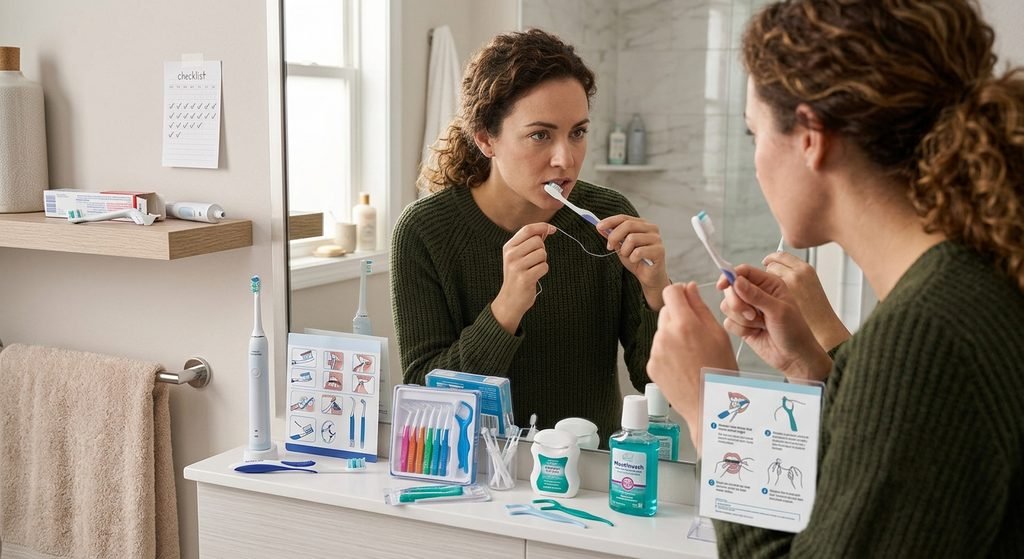
Here’s an uncomfortable truth: almost nobody is formally taught how to brush their teeth as an adult. Most of us learned as toddlers, picked up a technique that was “good enough” to pass a childhood dentist visit, and never revisited it again. Dental hygiene habits, unlike many other health routines, rarely get corrected later in life because brushing feels like something you either “know” or you don’t — there’s no obvious moment where someone sits you down and says, “actually, you’ve been doing this wrong for twenty years.”
That’s exactly what makes retraining so necessary for so many adults. The habits we build early tend to be efficient rather than effective — quick enough to get us out the door, but not thorough enough to actually protect the mouth long-term. Improving oral care later in life usually starts with the humbling discovery that “brushing for a while” isn’t the same as brushing correctly.
The Moment I Realized My Routine Wasn’t Working
For a lot of people, the wake-up call isn’t dramatic. It’s a hygienist mentioning “some inflammation here” during a routine cleaning, or a filling appearing in a tooth that never hurt. It’s the kind of quiet bad news that doesn’t feel like an emergency, but still lingers. That moment is usually what pushes someone to actually look at how to brush teeth correctly instead of just assuming their method was fine because it always had been.
Looking back, my own routine had all the classic gaps: brushing too fast, skipping the back molars, never really flossing consistently, and treating mouthwash as optional rather than functional. None of it felt like negligence in the moment — it just felt like a routine I’d never questioned. That’s usually how poor dental hygiene habits survive for years: not through carelessness, but through simply not knowing there was a better way.
How to Brush Teeth Correctly (Most People Get This Wrong)
Brushing seems too basic to get wrong, which is exactly why so many people do. Proper technique isn’t about scrubbing harder or longer — it’s about angle, coverage, and consistency. The generally recommended approach involves holding the brush at roughly a 45-degree angle to the gumline, using small, gentle circular motions rather than harsh back-and-forth scrubbing, and spending a full two minutes covering every surface — outer, inner, and chewing surfaces alike.
Most people, when timed, brush for closer to 45 seconds and focus almost entirely on the front teeth, simply because that’s what they see in the mirror. The back molars, the inner surfaces facing the tongue, and the gumline itself often get rushed or skipped entirely. Retraining this habit typically means slowing down, using a timer, and consciously moving through each section of the mouth rather than brushing on autopilot.
Building a Flossing Routine That Actually Sticks
If brushing is the habit people do wrong, flossing is the habit people skip altogether. A proper flossing routine guide usually starts with addressing the biggest excuse: “it makes my gums bleed.” Bleeding during flossing is often a sign of inflammation from plaque buildup — the very thing flossing is meant to remove — and it typically improves within one to two weeks of consistent flossing rather than being a reason to stop.
The trick to making flossing stick isn’t motivation, it’s placement. Keeping floss somewhere visible, right next to the toothbrush, removes the extra step of hunting for it in a drawer. Pre-threaded floss picks work well for people who find traditional floss fiddly. The goal isn’t perfection on day one — it’s consistency, even if the technique feels clumsy at first.
Electric Toothbrush Benefits Worth Considering
One of the simplest upgrades in the retraining process is switching tools. Electric toothbrush benefits are backed by more than just marketing — many models use built-in timers and pressure sensors that correct two of the most common brushing mistakes automatically: brushing too briefly and brushing too hard.
| Manual Toothbrush | Electric Toothbrush |
|---|---|
| Relies entirely on personal technique | Built-in timer encourages full 2-minute brushing |
| No feedback on brushing pressure | Pressure sensors often alert if brushing too hard |
| Plaque removal depends on manual motion | Oscillating/vibrating heads can remove plaque more consistently |
| Lower upfront cost | Higher upfront cost, replacement heads needed |
| Fully portable, no charging required | Requires charging or battery replacement |
Neither option is inherently “wrong” — a manual brush used correctly can be just as effective as an electric one used poorly. But for people specifically retraining old habits, the built-in feedback of an electric brush often makes the new routine easier to maintain.
Plaque Removal Techniques Beyond the Toothbrush
Brushing alone removes a large portion of plaque, but not all of it. Effective plaque removal techniques usually combine three tools rather than relying on one: brushing, flossing, and an antimicrobial rinse. Plaque that’s missed consistently in the same spots — often between teeth and along the gumline — is exactly where cavities and gum disease tend to start.
Tongue scraping is another technique that gets overlooked in most routines. The surface of the tongue harbours a significant amount of bacteria, and tongue scraping benefits include fresher breath and a modest reduction in overall bacterial load in the mouth. It takes about ten seconds and pairs naturally with an existing brushing routine, which makes it an easy habit to bolt onto a retraining plan rather than a separate chore.
Choosing the Best Mouthwash for Gingivitis and Gum Health
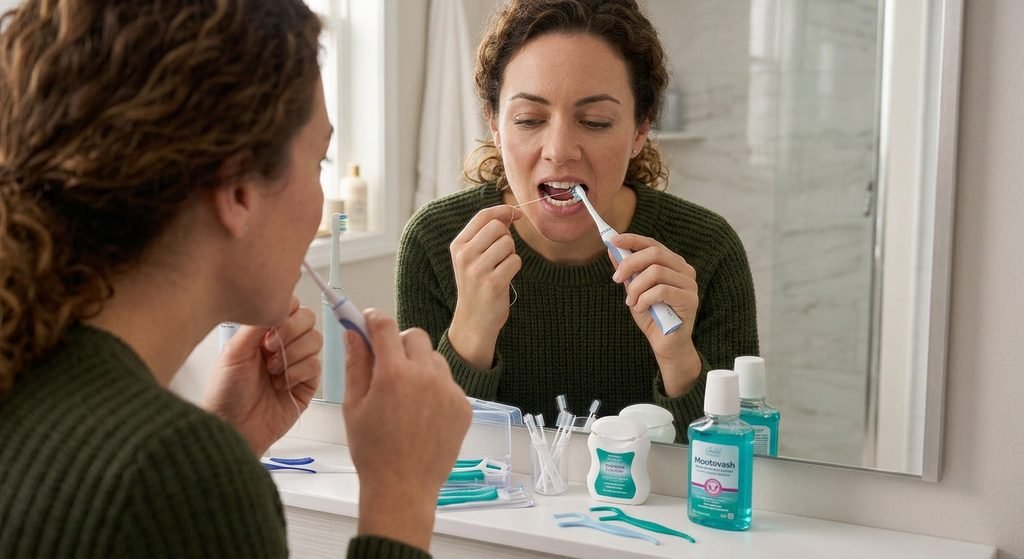
Not all mouthwash is created equal, and picking randomly from a drugstore shelf often means choosing a cosmetic rinse rather than a therapeutic one. When gum health improvement is the goal, dentists typically point toward mouthwashes containing chlorhexidine (short-term, prescription-strength use) or cetylpyridinium chloride and essential oils for everyday antimicrobial use. The best mouthwash for gingivitis is generally one specifically labelled as antigingivitic or antiplaque, rather than one marketed purely for fresh breath.
According to the Cleveland Clinic’s overview of gum disease, consistent plaque control through brushing, flossing, and the right supporting products is one of the most effective ways to reverse early gum inflammation before it progresses into something more serious. That reversal window is exactly why gingivitis, unlike more advanced gum disease, responds so well to a retrained routine.
Building a Morning and Night Routine That Doesn’t Feel Like a Chore
Retraining dental habits rarely fails because people don’t know what to do — it fails because the new routine feels like an extra burden bolted onto an already busy day. Building a morning and night routine that sticks usually means anchoring dental care to something you’re already doing rather than treating it as a separate task to remember.
This is where habit stacking for health becomes genuinely useful. Instead of trying to “remember to floss,” the habit gets attached to something automatic — flossing right after removing your work clothes at night, or tongue scraping immediately after your morning coffee. The dental task borrows momentum from an existing habit instead of needing its own willpower.
| Time of Day | Old Habit | Retrained Habit |
|---|---|---|
| Morning | Quick 30-second brush | Full 2-minute brush + tongue scrape |
| After breakfast | Nothing | Rinse with water or mouthwash |
| Evening | Brush only, floss “sometimes” | Floss first, then brush, then mouthwash |
| Before bed | Skip mouthwash | Antimicrobial rinse for gum health |
Overcoming Dental Anxiety That Keeps People From Checkups
For a meaningful number of adults, poor dental hygiene isn’t about laziness at all — it’s tangled up with genuine fear. Overcoming dental anxiety is often the missing piece in someone’s retraining journey, because no home routine fully replaces professional cleanings and checkups. Anxiety can stem from a bad childhood experience, sensitivity to pain, or simply the sound of dental equipment.
Small, practical steps tend to help more than trying to “power through” the fear: booking the first appointment back as a short consultation rather than a full cleaning, asking the office about sedation options if anxiety is severe, or bringing headphones to have something familiar to focus on. Dental anxiety rarely disappears overnight, but it does shrink with repeated, manageable exposure — and avoiding the dentist altogether almost always makes the underlying fear, and the dental problems themselves, worse over time.
Dental Checkup Frequency and Why It Still Matters
Even a perfectly retrained home routine doesn’t replace professional care. Dental checkup frequency is generally recommended at every six months, though this can shift based on individual risk factors like gum disease history, smoking, or a tendency toward cavities. Preventative dental care works best as a partnership: your daily habits handle the day-to-day plaque control, while your dentist and hygienist catch what home care can’t reach — tartar buildup, early decay between teeth, and shifts in gum health that aren’t visible in a bathroom mirror.
As the Mayo Clinic notes in its guidance on oral health, regular checkups combined with consistent daily care are what actually prevent most common dental problems, rather than either approach working well on its own [2]. Skipping checkups while assuming a good home routine is “enough” is one of the more common gaps in an otherwise well-intentioned retraining effort.
The Real Effects of Poor Dental Hygiene Over Time
It’s worth being honest about what happens when habits never get retrained. The effects of poor dental hygiene rarely show up immediately, which is part of why the problem persists for so long in the first place. Plaque that isn’t removed hardens into tartar. Gums that stay inflamed for months or years can progress from reversible gingivitis into periodontitis, which involves actual bone loss around the teeth. Untreated decay can progress from a small, painless weak spot into a cavity requiring a filling, then a root canal, and eventually an extraction.
| Stage | Home Care Habits | Likely Outcome Over Time |
|---|---|---|
| Consistent daily care + regular checkups | Good technique, flossing, checkups every 6 months | Healthy gums, minimal decay, low long-term cost |
| Inconsistent care, checkups skipped | Rushed brushing, occasional flossing, no professional cleanings | Plaque hardens to tartar, early gum inflammation |
| Poor care, no checkups for years | Minimal brushing, no flossing, no professional visits | Gum disease progression, higher cavity risk, costlier treatment |
Beyond the mouth itself, research has increasingly connected gum inflammation to broader health concerns, including cardiovascular issues and complications related to diabetes. That wider picture is often what finally convinces someone that dental hygiene habits aren’t a cosmetic afterthought — they’re part of general health maintenance, the same as diet or exercise.
Do’s and Don’ts While Retraining Your Dental Routine
Retraining any habit works better with clear guardrails rather than vague intentions. Here’s a simple breakdown that applies to almost anyone starting fresh.
| Do | Don’t |
|---|---|
| Brush for a full two minutes, twice daily | Rush through brushing in under a minute |
| Floss daily, even if gums bleed at first | Stop flossing the moment gums bleed |
| Use an antimicrobial mouthwash consistently | Rely on mouthwash as a substitute for brushing |
| Replace your toothbrush every 3 months | Keep using a frayed, worn-out brush |
| Book checkups every six months | Wait for pain before seeing a dentist |
| Attach new habits to an existing routine | Rely on willpower alone to remember tasks |
What Actually Sticks Once the Routine Becomes Automatic
The interesting part of retraining any habit is how quickly it stops feeling like effort. Somewhere around the three-to-four-week mark, flossing stops feeling like an extra task and starts feeling like part of brushing itself. The two-minute timer stops feeling long. Tongue scraping becomes automatic rather than something to remember. This is the same pattern seen in most behaviour change — the first few weeks require deliberate attention, and after that, the routine runs largely on autopilot.
What makes dental retraining a little different from other habits is the feedback loop. Unlike exercise, where results take weeks to show, gum health can visibly improve within days — less bleeding, a cleaner feeling in the mouth, a noticeable difference at the next checkup. That relatively fast feedback is part of what makes the new habit easier to stick with than habits tied to slower, less visible results.
Bringing It All Together
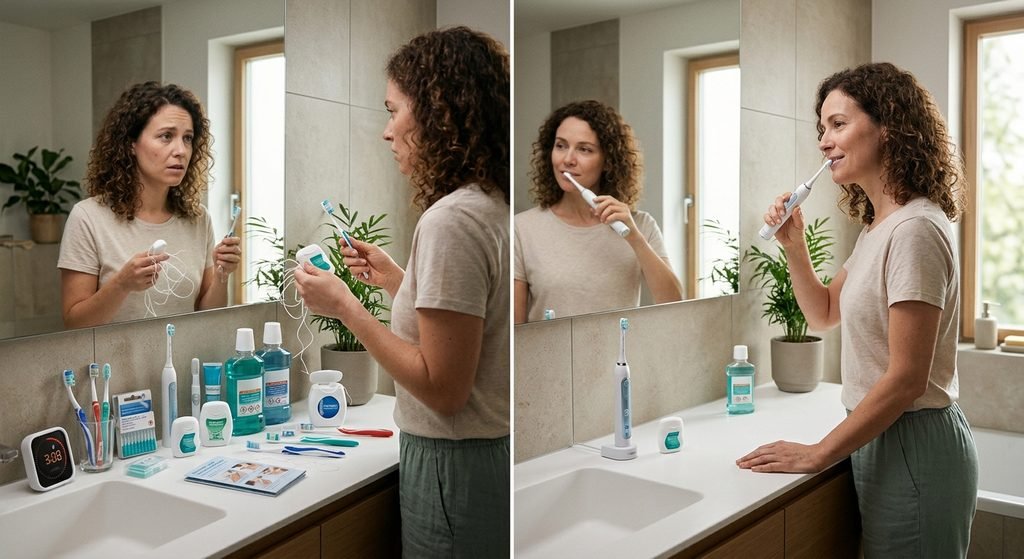
Retraining dental hygiene habits isn’t about discovering some dramatic new secret — it’s about correcting small, invisible gaps that built up over years of doing things “well enough” instead of properly. Brushing at the right angle for the full two minutes, flossing daily even when it’s uncomfortable at first, choosing the right mouthwash, and keeping up with regular checkups all sound simple individually. Stacked together into a consistent morning and night routine, they add up to a genuinely different level of oral health.
The mouth is forgiving in one important way: gum tissue can heal, plaque habits can be corrected, and early damage can often be stopped before it becomes something bigger. Whether the trigger was a hygienist’s comment, an unexpected filling, or simply reading something that made the gaps in your routine a little too obvious to ignore, retraining your dental habits is one of those rare health changes that pays off faster than almost anything else you could start doing today.
1 Comment