

Are Dental Issues a Common Side Effect of Chemotherapy?
Nobody really warns you about your mouth. When people picture chemotherapy, they think of nausea, exhaustion, hair loss — the side effects everybody talks about. What actually catches so many patients off guard is waking up one morning mid-treatment with a mouth full of sores, gums that won’t stop bleeding, or a dryness so intense that eating a simple sandwich suddenly feels like a challenge. If this has happened to you, take a breath: you’re not imagining it, and you’re not alone in it. Chemotherapy dental side effects aren’t some rare, unlucky complication. They’re one of the most common parts of cancer treatment, and also one of the least talked about — which is exactly why knowing what to expect makes such a difference.
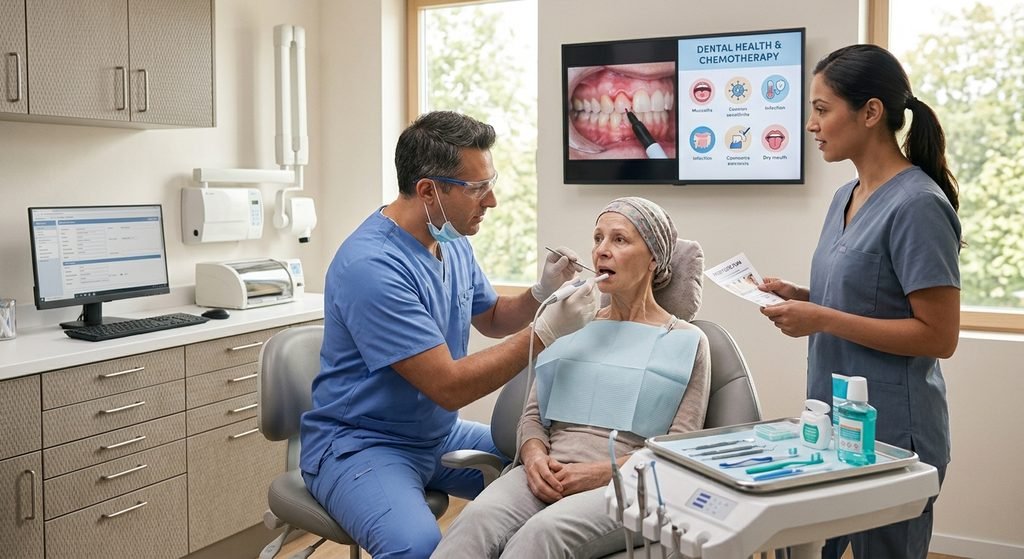
Why Dental Problems During Chemotherapy Catch So Many People Off Guard
Think about how much time gets spent preparing patients for nausea, fatigue, or hair loss, and how little gets said about the mouth. It’s a strange gap, considering chemotherapy drugs work by targeting fast-dividing cells — and the tissue lining your mouth happens to divide just as quickly as cancer cells do. Your mouth, in other words, ends up caught in the crossfire almost every time.
Once you understand that, managing dental issues during chemo starts to feel a lot less frightening. These symptoms aren’t a sign that something has gone wrong or that your body is reacting badly to treatment. They’re simply how these medications behave in a body — predictable, well-documented, and something your care team has almost certainly seen many times before, even if it feels brand new to you.
Are Dental Side Effects Really That Common During Chemo?
Honestly, yes — far more common than most people expect. A lot of patients quietly assume their mouth pain or bleeding gums must be some separate problem, unrelated to treatment, and end up worrying in silence instead of asking about it. The reality is that oral complications affect a large share of people going through chemotherapy, and according to the National Institute of Dental and Craniofacial Research, they’re common enough that many oncology teams now build dental evaluation directly into the treatment plan from the start [1].
The numbers climb even higher for certain situations — high-dose chemotherapy before a stem cell or bone marrow transplant, or head and neck cancers where radiation and chemo are combined. So if you’re dealing with sores, dryness, or tender gums right now, you’re not the exception. You’re experiencing one of the most well-documented sides of this whole process.
Understanding Oral Mucositis in Cancer Treatment
Of everything on this list, oral mucositis tends to be the one people find hardest to cope with. Oral mucositis in cancer treatment describes inflammation and breakdown of the soft tissue lining your mouth, throat, and sometimes further down the esophagus. It usually starts subtly — a bit of redness, some tenderness — before it can turn into genuinely painful ulcers that make eating, drinking, or even talking uncomfortable.
Most people notice it creeping in about one to two weeks after a chemo cycle starts, often getting worse before it gets better as healthy cells slowly regenerate. Some people barely notice more than mild soreness; others end up with widespread ulceration that needs real pain management, and occasionally a short pause in treatment. However it shows up for you, it’s tied directly to how the chemotherapy drugs work — not to anything you did or didn’t do.
Chemo Mouth Sores Treatment: What Actually Helps
Once sores show up, the priority shifts to comfort first, infection prevention second. There’s rarely a single fix here — chemo mouth sores treatment tends to work best as a combination of small things. Gentle saltwater or baking soda rinses, a numbing gel before meals, and a temporary switch to soft, bland foods that won’t aggravate already-raw tissue all tend to be part of the picture.
For rougher cases, some cancer centres offer what’s often nicknamed “magic mouthwash” — a blend of an antihistamine, an antacid, and a local anesthetic that numbs things just enough to make eating bearable again. In certain situations, especially with head and neck radiation layered on top of chemo, low-level laser therapy has also shown real promise in easing mucositis. One thing worth saying clearly: please don’t reach for random products off a pharmacy shelf without checking first. What helps one patient’s specific regimen might not be right for yours, and your oncology team would genuinely rather you ask than guess.
The Baking Soda Rinse for Chemo Mouth Sores: A Simple, Trusted Remedy
If there’s one home remedy that comes up again and again, it’s this one. The baking soda rinse for chemo mouth sores has stuck around as a go-to recommendation for a good reason — it’s cheap, gentle, and it actually works to keep the mouth cleaner without irritating already-sensitive tissue further. A typical version is nothing fancy: a small amount of baking soda dissolved in warm water, sometimes with a pinch of salt, swished gently a few times a day, especially after meals.
The logic behind it is simple. Baking soda helps neutralize the acid sitting in your mouth and makes life harder for the bacteria that could otherwise turn a sore spot into an infected one. It won’t stop sores from happening in the first place, and it’s not a miracle cure — but as a low-cost, low-risk way to feel a bit more comfortable and support healing, it’s earned its place as a staple recommendation across cancer centres.
Dry Mouth Chemotherapy (Xerostomia): The Overlooked Discomfort
Mucositis gets most of the attention because it’s visibly painful, but dry mouth chemotherapy — the clinical term is xerostomia — can be just as miserable, in a quieter way. Saliva does far more work than most of us ever think about. It neutralizes acid, clears away food debris, protects against cavities, and makes chewing and swallowing feel normal. Chemotherapy can knock that production down significantly.
When it does, you might notice a sticky, dry sensation, trouble swallowing certain foods, a burning feeling on your tongue, or breath that just won’t stay fresh no matter what you do. It’s not only uncomfortable — with less saliva around to fight acid and bacteria, new cavities can form surprisingly fast. Sipping water throughout the day, chewing sugar-free gum or sucking on sugar-free lozenges to coax out whatever saliva you still have, and using an alcohol-free saliva substitute can all take the edge off.
Bleeding Gums, Chemotherapy, and Platelet Count: Why It Happens
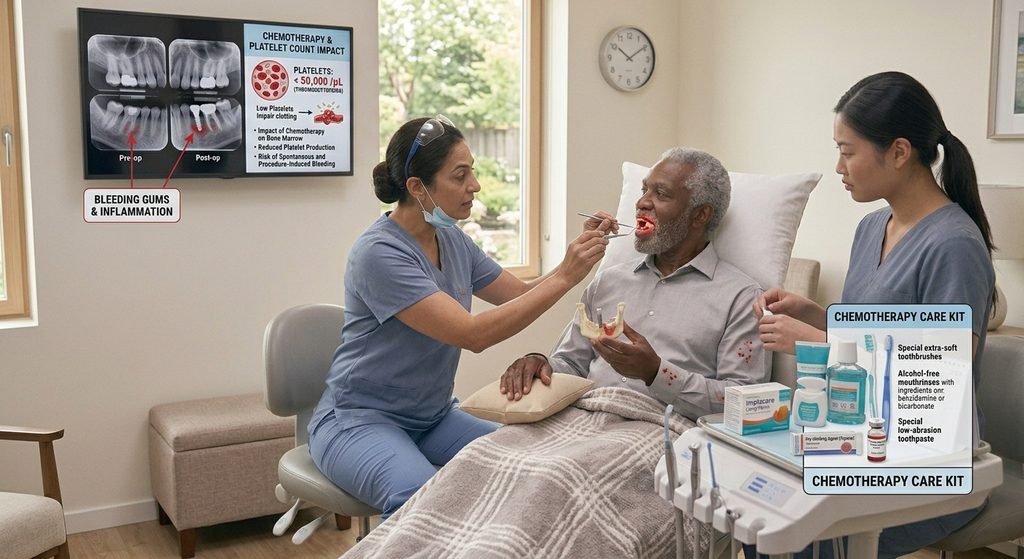
This one tends to scare people the most, understandably — gums that bleed seemingly out of nowhere, even with the gentlest brushing. It comes down to bleeding gums, chemotherapy, and platelet count: chemo can suppress bone marrow activity, which lowers your platelet count, and platelets are what your blood relies on to clot. When those counts drop low enough — a condition called thrombocytopenia — even minor gum irritation from brushing or flossing can bleed more, and take longer to stop, than you’re used to.
This is exactly why your oncology team keeps such a close eye on blood counts and why they might suggest swapping to an extra-soft toothbrush, or even a foam swab, when your platelets are especially low. If bleeding feels heavier than usual or just won’t ease up, please mention it to your care team rather than brushing it off. Sometimes it’s a small clue that your platelet levels need a closer look.
Visiting the Dentist Before Chemotherapy Starts
If there’s one thing dental and oncology professionals seem to agree on without hesitation, it’s this: visiting the dentist before chemotherapy begins, whenever there’s time for it, changes the entire experience for the better. A pre-treatment exam catches the things that would otherwise turn into bigger problems later — cavities, gum disease, infections, dentures that don’t quite fit right — while your immune system is still strong enough to handle treating them safely.
Ideally, this visit happens around two to four weeks before chemo starts, giving any needed dental work enough time to heal. The American Cancer Society specifically encourages finishing up dental work before treatment, when possible, since an untreated infection becomes a lot more dangerous once your immune defenses are lowered. Not everyone gets this window — sometimes treatment simply can’t wait — but if you have even a couple of weeks, that dental visit is one of the most protective things you can do for yourself.
| Pre-Chemo Dental Visit | Skipping the Pre-Chemo Visit |
|---|---|
| Existing cavities and infections treated early | Hidden infections can flare up during immune suppression |
| Ill-fitting dentures or appliances adjusted | Irritation from appliances worsens once mucositis sets in |
| Baseline oral health recorded for comparison | No baseline to compare new symptoms against |
| Lower risk of needing emergency dental work mid-treatment | Higher chance of urgent dental issues during low immunity |
| Oncology and dental teams can coordinate timing | Dental problems may delay or complicate the chemo schedule |
How to Protect Teeth During Chemo on a Daily Basis
Beyond that first visit, day-to-day habits matter just as much. Learning how to protect teeth during chemo usually comes down to a handful of small, consistent choices, adjusted as symptoms come and go. A soft-bristled brush, fluoride toothpaste, and a gentler hand than usual all matter more now, since your gums are more fragile and prone to bleeding than before.
A fluoride mouthwash helps, and it’s worth steering clear of alcohol-based rinses, which can dry out and irritate tissue that’s already struggling. Staying hydrated supports your mouth’s natural defenses too, especially with saliva production already reduced. And cutting back on sugary or acidic foods, even temporarily, takes some pressure off a mouth that’s not neutralizing acid the way it normally would.
Building a Chemo Oral Hygiene Routine That Adapts
One thing worth accepting early on: a single fixed routine probably won’t carry you through an entire course of chemo, because symptoms shift from one cycle to the next. A chemo oral hygiene routine that flexes with how you’re feeling tends to work far better than one that stays rigid — gentler on the rough days, closer to normal once your tissue has had a chance to recover between cycles.
| Symptom Present | Recommended Adjustment |
|---|---|
| Mild mouth sensitivity | Continue soft-bristle brushing, gentle flossing |
| Active mouth sores (mucositis) | Switch to foam swabs, saltwater/baking soda rinses |
| Low platelet count / gum bleeding | Extra-soft brush, avoid flossing if advised by care team |
| Severe dry mouth | Frequent sips of water, alcohol-free saliva substitutes |
| Recovery between cycles | Return to normal brushing/flossing routine as tolerated |
Emergency Dental Work During Cancer Treatment: What to Know
Even with the best preparation, sometimes things go sideways — a tooth breaks, an abscess flares up, or pain shows up that clearly can’t wait. Emergency dental work during cancer treatment is more delicate than a routine visit, mostly because timing matters so much relative to your chemo cycle and blood counts.
Dentists usually coordinate closely with your oncology team before doing anything, checking that your platelet and white blood cell counts are high enough to make a procedure safe. Often, minor work gets scheduled during the “nadir recovery” window — the stretch between chemo cycles when your counts have had a chance to bounce back. Antibiotics are frequently given as a precaution, just given how much more vulnerable you are to infection right now. If there’s one thing worth remembering here, it’s this: don’t sit on dental pain out of fear it’ll disrupt your treatment. An untreated infection is almost always more dangerous than the visit it would take to fix it.
Do’s and Don’ts for Managing Dental Health During Chemo
Here’s a quick, practical reference for the everyday decisions that tend to come up most during treatment.
| Do | Don’t |
|---|---|
| See a dentist before starting chemo if timing allows | Ignore mouth pain, assuming it’ll pass on its own |
| Use a soft-bristled brush and a gentle touch | Brush hard or aggressively while sores are active |
| Rinse with saltwater or baking soda solutions | Reach for alcohol-based mouthwash during active mucositis |
| Tell your care team about heavy or persistent gum bleeding | Assume all bleeding is minor and not worth mentioning |
| Sip water often to manage dryness | Wait until you’re badly dehydrated to address it |
| Coordinate any dental work with your oncology team first | Book dental procedures without checking your blood counts |
Coping Emotionally with an Unexpected Side Effect
There’s a real emotional weight to all of this that doesn’t get talked about enough. Dealing with mouth pain on top of appointments, fatigue, and everything else chemo already asks of you can feel like one thing too many, especially when it interferes with something as basic as eating a meal or having a normal conversation. It’s okay to feel frustrated about that. You don’t have to push the feeling aside to keep managing your care — in fact, acknowledging it often makes it easier to stay consistent with the daily habits that actually help.

You don’t have to figure any of this out alone, either. A quick call to your oncology nurse line, a check-in with your dental team, or simply knowing that what you’re going through is common and usually temporary can make it feel a lot less isolating. Most of these symptoms genuinely do ease up once a cycle ends, or once treatment wraps up altogether.
Bringing It All Together
Dental issues during chemotherapy are far from rare — if anything, they’re one of the most predictable, well-documented parts of the whole process, even though they rarely get mentioned in the same breath as nausea or fatigue. Mucositis, dry mouth, gum bleeding tied to platelet counts, a heightened cavity risk — none of it means something has gone unusually wrong. It’s simply how chemotherapy interacts with a part of the body that doesn’t get talked about nearly enough. A pre-treatment dental visit, a daily routine that flexes with your symptoms, and staying in close touch with both your dental and oncology teams can turn something that feels overwhelming into something you can actually manage, one day at a time. Your mouth might not be the first thing anyone pictures when they think of chemotherapy, but it deserves just as much care and attention as everything else on your treatment plan.
1 Comment