

Orthodontist and Orthodontics have transformed millions of smiles, making teeth straightening more comfortable, effective, and accessible than ever before. If you’ve ever looked in the mirror and wondered whether it’s finally time to fix a crooked tooth, close a gap, or improve your bite, you’re certainly not alone. Today, more adults than ever are choosing orthodontic treatment, proving that braces and aligners aren’t just for teenagers. Before starting your smile journey, it’s also important to understand orthodontist cost, available treatment options, and whether you should visit a general dentist or a specialist orthodontist.
This comprehensive guide explains everything you need to know about orthodontist and orthodontics, including how an orthodontist differs from a general dentist, the most popular teeth straightening treatments available today, what affects orthodontist cost, and how to choose the right specialist for your needs. Whether you’re considering traditional braces, clear aligners, or simply exploring your options, this guide will help you make a confident, informed decision about your smile and long-term oral health.
What Is Orthodontics, exactly?
Orthodontics is a specialized branch of dentistry focused on diagnosing, preventing, and correcting misaligned teeth and jaws. According to Merriam-Webster, orthodontics is defined as a branch of dentistry dealing with the prevention and correction of irregular teeth, most commonly through the use of braces. But in practice, it goes well beyond just straightening a crooked smile. Proper orthodontic treatment can fix bite problems, close gaps, correct overcrowding, and even help with speech and chewing difficulties that stem from misaligned jaws.
The word itself comes from Greek roots, “ortho” meaning straight or correct, and “Odon” meaning tooth. So, at its core, orthodontics is simply the science of making teeth sit where they are supposed to sit, in a way that supports both function and appearance.
Orthodontist vs Dentist: What Is the Difference?
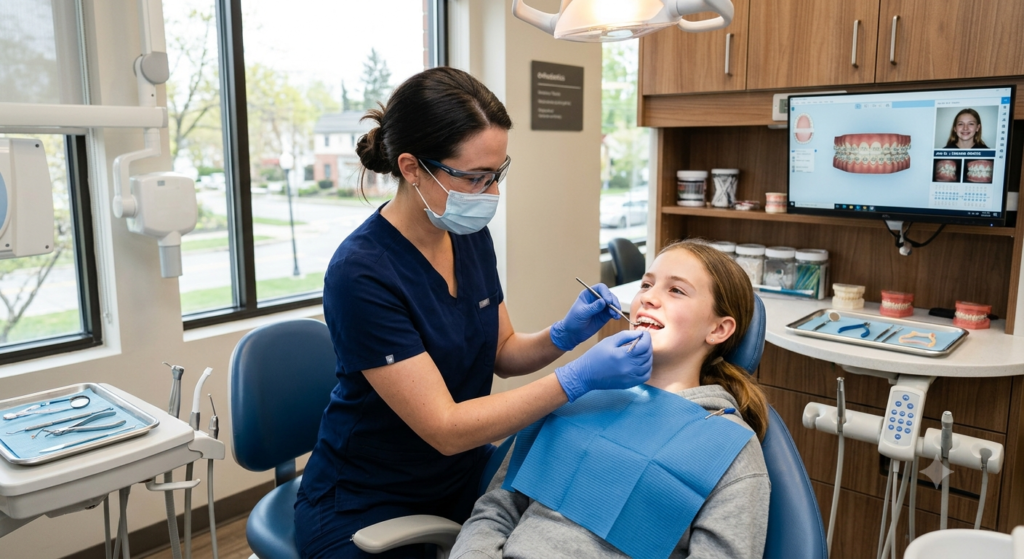
This is one of the most common points of confusion, and honestly, it is a fair question. Every orthodontist is a dentist, but not every dentist is an orthodontist. After completing dental school, a general dentist can choose to pursue additional specialized training, typically two to three more years, focused entirely on tooth movement and bite correction. Only after finishing this extra training do they become qualified to call themselves an orthodontist.
This distinction matters more than people realize. General dentists can offer basic orthodontic services, including some clear aligner systems, but for complex cases involving jaw alignment, severe crowding, or significant bite issues, a specialist typically brings a level of precision that is hard to replicate without that extra training. If you want board-certified expertise, look for a Diplomate of the American Board of Orthodontics, a credential held by fewer than half of all practicing orthodontists.
Common Orthodontic Problems Orthodontists Treat
People often assume orthodontics is only about crooked teeth, but the list of issues an orthodontist can address is actually much longer. Some of the most frequently treated conditions include:
- Overcrowded or overlapping teeth
- Gaps or spacing issues between teeth
- Overbite, where the upper teeth extend too far over the lower teeth
- Underbite, where the lower jaw protrudes past the upper jaw
- Crossbite, where upper and lower teeth do not align properly when biting down
- Open bite, where front teeth do not touch when the mouth is closed
- Jaw misalignment that affects chewing, speaking, or breathing
Left untreated, some of these issues can lead to uneven wear on the teeth, jaw pain, headaches, and even difficulty maintaining proper oral hygiene, since crowded teeth are simply harder to clean thoroughly.
Braces for Adults: Is It Ever Too Late?
There is a persistent myth that braces are only for kids and teenagers, but that could not be further from the truth today. Braces for adults have become increasingly common, and orthodontists routinely treat patients well into their forties, fifties, and beyond. Teeth can move at almost any age, as long as the gums and supporting bone are healthy enough to handle the movement.
That said, adult treatment does come with a few differences compared to treating a teenager. Adult jawbones have finished growing and are fully mature, which generally means tooth movement happens a bit more slowly than it would in a younger patient with bones still developing. This is often why adult treatment can take somewhat longer and, in some cases, cost a little more than the same treatment would for a teenager. Existing dental work, such as crowns, bridges, or missing teeth, can also add complexity to treatment planning for adult patients.
Despite this, plenty of adults find the results well worth it.
Traditional Braces vs Clear Aligners
One of the biggest decisions patients face today is choosing between traditional metal braces and modern clear aligners. Both approaches can produce excellent results, but they work quite differently and suit different lifestyles and cases.
Traditional braces use metal or ceramic brackets bonded to each tooth, connected by an archwire that the orthodontist tightens at regular visits. Because the hardware stays on your teeth around the clock, there is no daily compliance required from the patient, the appliance simply does its job continuously. This makes braces especially effective for severe crowding, major bite corrections, and complex rotations that are difficult for aligners to manage predictably.
Clear aligners, on the other hand, are a series of custom, removable plastic trays that gradually shift teeth into position. They are far less noticeable than metal braces, can be taken out for eating and brushing, and tend to be more comfortable for many patients. The tradeoff is that they require real discipline, since aligners generally need to be worn for around twenty to twenty-two hours a day to stay on schedule. Skipping days or losing trays can quietly extend your treatment timeline.

Advantages and Disadvantages: Braces vs Clear Aligners
Since this comparison comes up in almost every orthodontic consultation, it helps to see the tradeoffs laid out clearly side by side.
| Factor | Traditional Braces | Clear Aligners |
| Visibility | Noticeable, especially metal brackets | Nearly invisible |
| Removability | Fixed, cannot be removed by the patient | Removable for eating and brushing |
| Best for | Severe crowding, complex bite issues | Mild to moderate misalignment |
| Compliance needed | Low, works continuously | High, requires 20-22 hours of daily wear |
| Comfort | Can cause irritation from brackets and wires | Generally smoother, fewer sore spots |
| Diet restrictions | Sticky and hard foods should be avoided | No food restrictions since trays are removed to eat |
| Average cost | $3,000 to $7,000 | $3,500 to $8,000 |
| Maintenance | Cannot lose it, but harder to clean around brackets | Easy to clean but easy to misplace |
Understanding Orthodontist Cost
Let us talk about the question almost everyone actually cares about most: orthodontist cost. Pricing varies quite a bit depending on where you live, the complexity of your case, the type of appliance you choose, and how experienced your provider is, but there are some general national averages worth knowing.
Traditional metal braces typically range from about $3,000 to $7,000, making them one of the more budget-friendly options available. Ceramic braces, which use tooth-colored brackets for a less noticeable look, usually run a bit higher, somewhere between $4,000 and $8,500, largely because the material is more delicate and requires extra care during adjustments. Lingual braces, which are attached to the back of the teeth and are essentially invisible from the front, sit at the top of the price range, often between $8,000 and $13,000.
Several factors influence what you will ultimately pay:
- The complexity of your case and how much correction is needed
- The length of your treatment plan
- The type of appliance you choose
- Your geographic location and the specific practice you visit
- Whether your dental insurance includes orthodontic benefits
Many dental insurance plans offer some level of orthodontic coverage, often capping benefits somewhere between $1,000 and $3,000 over a lifetime, though coverage for adult treatment is sometimes more limited than coverage for children. Health savings accounts and flexible spending accounts can also be used to offset costs, and most orthodontic offices offer interest-free monthly payment plans, so you rarely need to pay the full amount upfront.
Invisalign Cost: A Closer Look
Invisalign deserves its own section since it is a brand name that has become almost synonymous with clear aligner treatment, much like how people say “Kleenex” instead of tissue. It is worth remembering that Invisalign is a specific product, not a generic term for all aligners, and only licensed dentists and orthodontists can prescribe it.
When it comes to Invisalign cost, national averages typically fall between $3,000 and $8,000 for a full course of treatment, though milder cases that require fewer aligner trays can sometimes cost less, closer to $1,800 to $3,500. The final price depends heavily on how much movement your teeth need, how long your treatment plan runs, and where you live.
Insurance coverage for Invisalign is generally treated the same way as coverage for traditional braces, with many plans offering somewhere between $1,000 and $3,500 toward the total cost. Combining insurance benefits with an HSA or FSA account can meaningfully reduce your out-of-pocket expense, and timing your contributions around your treatment start date can add further savings.
Orthodontic Cost Comparison Table
To make things easier to digest, here is a simplified breakdown comparing the most common treatment options.
| Treatment Type | Average Cost Range | Typical Treatment Length | Visibility |
| Metal braces | $3,000 – $7,000 | 12–24 months | Highly visible |
| Ceramic braces | $4,000 – $8,500 | 12–24 months | Less visible than metal |
| Lingual braces | $8,000 – $13,000 | 18–24+ months | Hidden behind teeth |
| Invisalign / clear aligners | $3,000 – $8,000 | 6–18 months (case dependent) | Nearly invisible |
Keep in mind these numbers are national averages and can shift depending on your location and the specific orthodontist you choose. Always ask your provider whether their quote includes initial records, retainers, and follow-up adjustments, since some practices bundle these costs while others charge separately.
Do’s and Don’ts of Orthodontic Treatment
Whether you end up with traditional braces or clear aligners, how you care for your teeth during treatment has a real impact on how smoothly things go and how quickly you finish. Here are some practical guidelines worth keeping close by.
| Do’s | Don’ts |
| Attend every scheduled adjustment appointment | Don’t skip appointments, even if things feel fine |
| Brush and floss thoroughly after every meal | Don’t neglect oral hygiene around brackets or trays |
| Wear aligners for the recommended 20-22 hours daily | Don’t leave clear aligners out for extended periods |
| Use orthodontic wax on brackets that irritate your cheeks | Don’t ignore persistent pain or sores, mention it to your orthodontist |
| Eat soft foods for the first few days after adjustments | Don’t chew hard, sticky, or crunchy foods with traditional braces |
| Store aligners properly when removed for eating | Don’t wrap aligners in napkins, they get thrown away far too often |
| Wear your retainer exactly as instructed after treatment ends | Don’t assume treatment is “done” the moment braces come off |
| Ask questions during consultations about cost, timeline, and options | Don’t choose a provider based on price alone without checking credentials |
Teeth Straightening Beyond Aesthetics
While a straighter, more confident smile is often the main motivation behind seeking treatment, teeth straightening offers benefits that go well beyond appearance. Properly aligned teeth are simply easier to clean, which reduces the risk of cavities and gum disease over time. Misaligned bites can also place uneven pressure on certain teeth, leading to premature wear, jaw discomfort, and in some cases chronic headaches.
Correcting these issues early, or even later in life as an adult, can prevent bigger and more expensive dental problems down the road. In that sense, orthodontic treatment is as much an investment in long-term oral health as it is a cosmetic choice.
How to Choose the Best Orthodontist Near You
Finding the right provider is about far more than just typing “orthodontist near me” into a search bar and picking whichever office has the flashiest website. A few things worth checking before committing to treatment include:
- Credentials and board certification. Look for orthodontists certified by a recognized board, which reflects additional training and testing beyond dental school.
- Experience with your specific case. Some orthodontists specialize more in complex bite corrections, while others focus heavily on cosmetic aligner treatment.
- Transparent pricing. A trustworthy provider will clearly explain what is included in their quoted price, including retainers and follow-up visits.
- Consultation experience. A good first consultation should feel unhurried, with plenty of room for questions rather than pressure to commit immediately.
- Patient reviews and before-and-after results. Real patient experiences can tell you a lot about communication style, comfort, and outcomes.
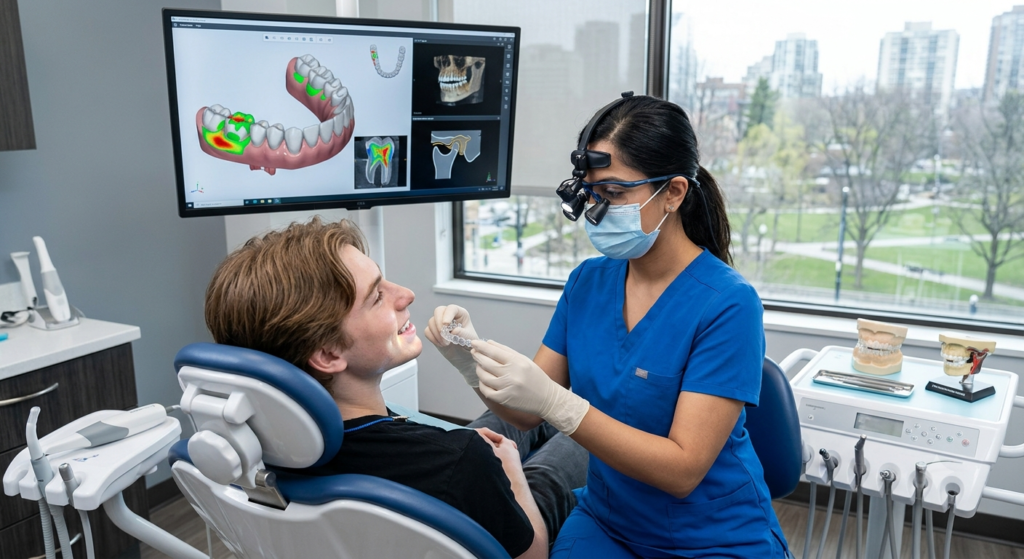
- Technology used in the practice. Digital scanning, 3D imaging, and modern treatment planning tools can make for a smoother and more predictable experience.
Most reputable practices offer a free initial consultation, which is a great opportunity to ask about cost, timeline, and treatment options before making any commitment.
The Orthodontic Treatment Process, Step by Step
Understanding what actually happens once you commit to treatment can ease a lot of first-visit anxiety. While every case is different, the general process tends to follow a similar pattern:
- Initial consultation. Your orthodontist examines your teeth, discusses your concerns, and may take X-rays or digital scans.
- Treatment planning. Based on your specific bite and alignment issues, the orthodontist designs a customized plan, whether that involves braces, aligners, or a combination approach.
- Appliance placement. Braces are bonded to your teeth, or you receive your first set of clear aligner trays.
- Regular adjustments. For braces, this means periodic wire tightening. For aligners, it means moving through a series of trays roughly every one to two weeks.
- Progress monitoring. Your orthodontist checks how your teeth are responding and makes adjustments to the plan if needed.
- Appliance removal. Once your teeth reach their target position, braces come off or aligner treatment concludes.
- Retention phase. You will be given a retainer to wear, since teeth naturally want to shift back without ongoing support after active treatment ends.
That final step is one people underestimate constantly. Skipping retainer wear is one of the most common reasons teeth drift back out of alignment.
Final Thoughts
Orthodontics has come a long way from the days of bulky metal brackets being the only option on the table. Between traditional braces, ceramic options, lingual braces, and clear aligners like Invisalign, there is genuinely a solution suited to almost every lifestyle, budget, and level of complexity. The most important step is simply starting the conversation with a qualified orthodontist who can evaluate your specific case and walk you through realistic options, timelines, and costs.
Whether you are chasing that perfectly straight smile for the first time or finally getting around to a correction you have been putting off for years, the right treatment plan can make a genuine difference in both your confidence and your long-term oral health. Do not let uncertainty about cost or timing keep you from at least booking that first consultation, most practices offer it free, and it is the best way to get answers specific to your own smile.
1 Comment