


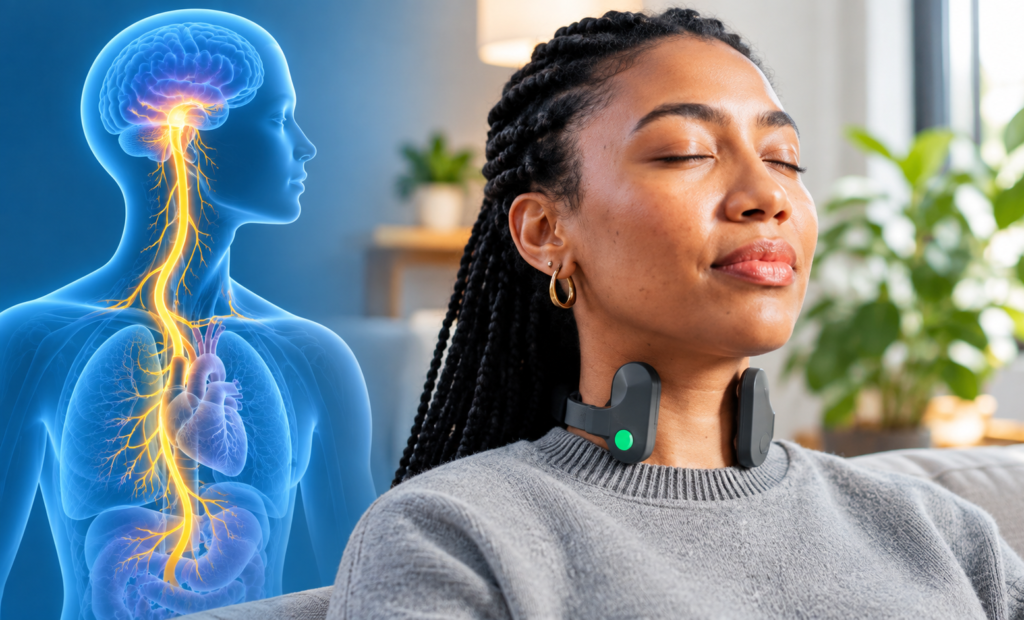
A few years ago, vagus nerve stimulation was something you’d only hear about in a neurologist’s office. Now there are consumer devices you wear around your neck or clip to your ear for a few minutes a day.
They promise calmer days and better sleep. So what’s actually going on, and are they worth it?
What the vagus nerve does
The vagus nerve is the longest cranial nerve in the body. It runs from the brainstem down through the neck to the heart, lungs, and gut.
It’s the main line of the parasympathetic nervous system, the “rest and digest” side that balances out the “fight or flight” response. When vagal activity is strong, heart rate slows, digestion runs smoothly, and the body settles.
Chronic stress tips that balance the other way. That’s the gap these devices are trying to fill.
From implants to at-home gadgets
Vagus nerve stimulation isn’t new. Surgically implanted stimulators have been FDA-approved for certain types of epilepsy since 1997, and later for treatment-resistant depression.
Non-invasive versions came next. These deliver mild electrical pulses through the skin, either at the side of the neck or at the outer ear, where a branch of the vagus nerve sits close to the surface. At least one prescription neck device is FDA-cleared for certain headache conditions.
The newest wave is consumer wellness devices. They use similar principles but are sold for relaxation and sleep rather than to treat a medical condition.
The main types you’ll see
- Neck-worn collars. A soft band sits around the front of the neck and stimulates through electrodes on either side, usually with a conductive gel. Sessions run a few minutes.
- Ear-clip devices. These target the branch of the vagus nerve in the outer ear. Research often calls this taVNS (transcutaneous auricular vagus nerve stimulation).
- Handheld devices. You hold them against the side of your neck for a set time.
Most are controlled by an app or a simple button, and all are designed for short, repeated sessions rather than all-day wear.
What the research says so far
This is the part worth being honest about.
There’s a real and growing body of research on non-invasive vagus nerve stimulation. Some sham-controlled studies have found shifts in markers linked to a calmer state, such as heart rate variability and blood pressure. Others have found smaller or inconsistent effects.
A few things to keep in mind when you read the claims:
- Many studies are small and short.
- Research on a method isn’t the same as research on a specific consumer device.
- Company-run studies are useful, but they aren’t independent.
A fair summary: the mechanism is real and the early evidence is promising, but these are relaxation tools, not proven medical treatments.
What users actually report
Owner feedback across the category tends to follow the same pattern. Many people say they feel calmer after a session, fall asleep more easily, or notice their shoulders drop. For them, it becomes a short daily ritual they look forward to.
A real minority feel nothing at all. That’s normal for this kind of device, and it’s why a return window matters when you buy.
The other practical complaints: some devices need gel every session, you have to sit still for the full session, and prices run from around $200 to several hundred dollars.
Who might want to try one
A vagus nerve stimulator might be worth a look if:
- You’ve tried breathing exercises or meditation but struggle to stick with them.
- Stress keeps you wound up in the evening and makes it hard to wind down.
- You like having a structured, guided routine.
If you’re comparing options, our Pulsetto review looks at one of the best-known neck-worn devices, including what the research does and doesn’t show and the two annoyances worth knowing before you buy.
Who should skip it or talk to a doctor first
These devices aren’t for everyone. Check with your doctor before using one if you:
- Have a pacemaker or another implanted electrical device.
- Have a heart condition, a history of fainting, or very low blood pressure.
- Are pregnant.
- Have epilepsy or another neurological condition.
And if you’re dealing with anxiety, depression, or insomnia that’s affecting daily life, a device isn’t a substitute for proper care.
Free ways to support your vagus nerve
You don’t need a gadget to lean into the “rest and digest” response. These simple habits help too:
- Slow breathing. Longer exhales than inhales, at around six breaths a minute, is one of the best-studied ways to nudge heart rate variability.
- Cold water on the face. A splash can trigger the diving reflex, which slows the heart.
- Humming or singing. The vagus nerve runs past the vocal cords.
- Regular exercise and good sleep.
A device can be a helpful add-on to these habits, especially if you like structure. It works best as one part of a routine, not a replacement for one.