

A chipped front tooth, an awkward gap, or a stain that won’t budge no matter how many whitening strips you try — these small flaws have a way of making people cover their mouths when they smile. The good news is that you don’t always need a crown or a veneer to fix them. Dental bonding has quietly become one of the most popular ways to repair minor dental issues in a single visit, without drilling down healthy tooth structure or draining your savings account. If you’ve been putting off a fix because you assumed cosmetic dentistry meant months of appointments and a hefty bill, this guide will walk you through exactly what dental bonding is, how it works, what it costs, and whether it’s the right choice for your smile.
What Is Dental Bonding, exactly?
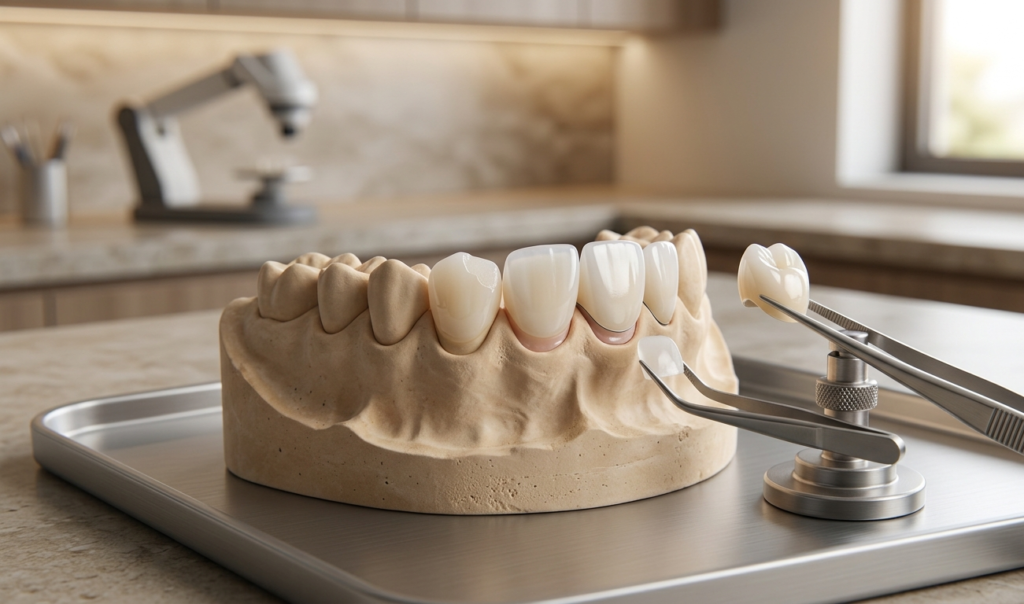
Dental bonding is a cosmetic and restorative procedure where a dentist applies a tooth-colored resin material directly onto a tooth, shapes it, and hardens it with a special light. Unlike veneers or crowns, which are custom-made in a lab and then fitted over the tooth, bonding is done freehand, chairside, by the dentist. That’s what makes it so quick — most cases are finished in 30 to 60 minutes per tooth, often in a single sitting.
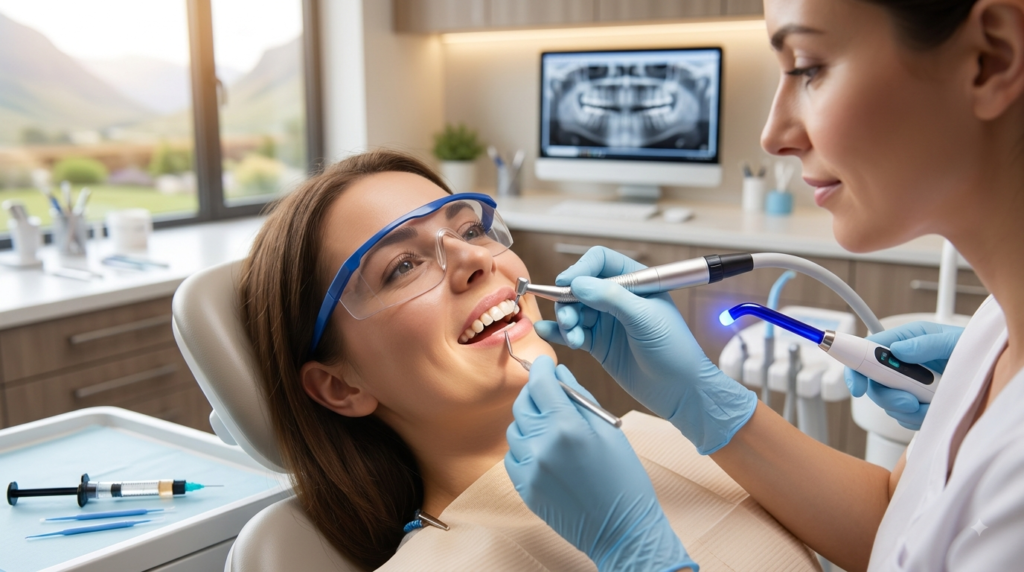
The procedure gets its name from the way the material “bonds” to the natural enamel and dentin. Once cured, the resin becomes a strong, durable layer that blends in with the surrounding teeth. It’s a conservative option, meaning very little of your natural tooth needs to be altered or removed, which is a big reason dentist often recommend it as a first step before moving to more invasive treatments.
Understanding Composite Bonding Material
The material used in this treatment is called composite resin, which is why the procedure is also referred to as composite bonding. This resin is a mixture of fine glass or quartz particles suspended in a plastic-like matrix. It was originally developed for fillings, but dentists quickly realized it could also be sculpted and polished to mimic the exact color, translucency, and texture of natural enamel.
What makes composite resin so useful is its versatility. It comes in a wide range of shades, so your dentist can match it precisely to your existing teeth — or even lighten it slightly if you’re combining bonding with a fresh whitening treatment. It also hardens almost instantly under a curing light, which is why the entire process can happen in one visit rather than requiring a lab turnaround like porcelain restorations do.
The Teeth Bonding Procedure Step by Step
If you’re nervous about what happens in the dentist’s chair, it helps to know that the teeth bonding procedure is one of the least invasive treatments in cosmetic dentistry. Here’s a general breakdown of what to expect:
- Shade selection – Your dentist picks a resin shade that matches your natural tooth color using a shade guide.
- Surface preparation – The tooth surface is lightly roughened, and a conditioning liquid is applied so the resin has something to grip onto. Anesthesia usually isn’t needed unless bonding is being used to fill a decayed area.
- Application – The putty-like resin is applied in layers directly onto the tooth.
- Shaping – The dentist molds and sculpts the material to achieve the desired shape, closing gaps, rebuilding chipped edges, or covering discoloration.
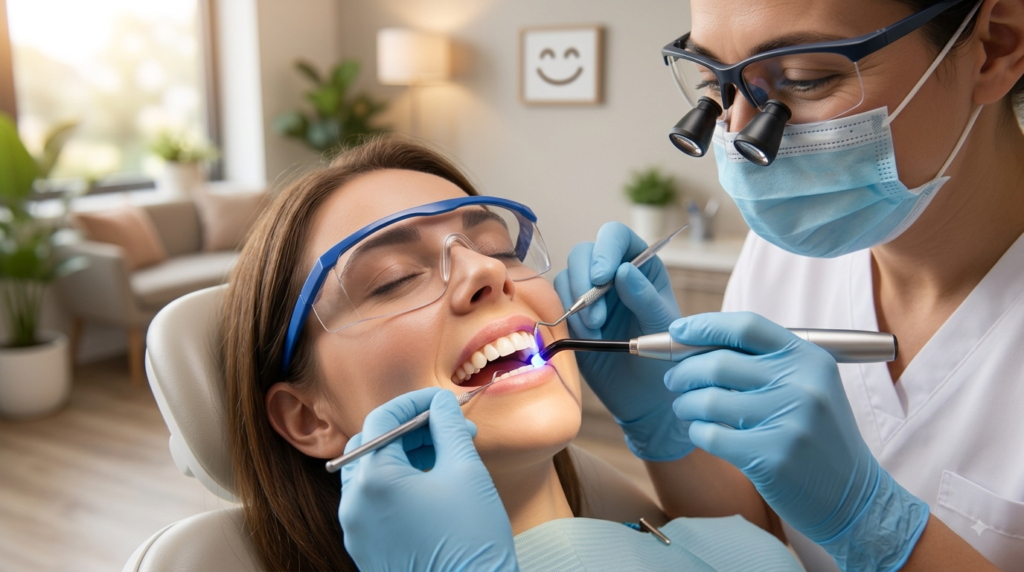
- Curing – A UV or blue light is used to harden each layer within seconds.
- Polishing – Once the final layer is set, the tooth is trimmed and polished until it matches the sheen of your natural enamel.
Most patients describe the experience as comfortable, and many walk out the same day with a noticeably improved smile.
What Problems Can Dental Bonding Actually Fix?
Bonding is remarkably flexible, which is part of why it’s so widely used. Some of the most common reasons people choose it include:
- Chipped tooth bonding – Repairing small chips or cracks from an accident, biting something hard, or general wear.
- Closing small gaps between teeth without orthodontic treatment.
- Covering stubborn stains or discoloration that whitening treatments can’t fully remove.
- Reshaping a tooth that looks slightly too short, pointed, or uneven compared to its neighbors.
- Protecting an exposed tooth root when gums have receded.
- Filling small cavities as a tooth-colored alternative to metal fillings.
It’s worth noting that bonding is best suited for minor to moderate cosmetic concerns. If a tooth is severely broken, has a large old filling, or needs structural reinforcement, a crown or veneer is usually the more durable long-term choice.
Cosmetic Dental Bonding vs. Veneers vs. Crowns
One of the most common questions dentists hear is how bonding stacks up against other popular restorations. Here’s a side-by-side comparison to make the decision easier.
| Feature | Dental Bonding | Porcelain Veneers | Dental Crowns |
| Tooth structure removed | Minimal to none | Thin layer of enamel | Significant reduction |
| Number of visits | Usually 1 | Typically 2–3 | Typically 2 |
| Average lifespan | 4–8 years | 10–15 years | 10–15+ years |
| Relative cost | Lowest | Mid to high | Mid to high |
| Stain resistance | Lower (can discolor over time) | Higher | Higher |
| Reversibility | Reversible | Mostly irreversible | Irreversible |
| Best for | Minor chips, gaps, discoloration | Multiple cosmetic issues, longer-lasting results | Severely damaged or weakened teeth |
As the table shows, cosmetic dental bonding wins on speed, cost, and conservation of natural tooth structure, while veneers and crowns tend to last longer and resist staining better. Many dentists recommend bonding for people who want a quick, affordable improvement, and reserve veneers or crowns for cases that need a more permanent solution.
Tooth Bonding Cost: What You Should Budget For
Cost is usually the first question people ask, and understandably so. The tooth bonding cost varies depending on your location, the dentist’s experience, and how many teeth need treatment. On average, bonding tends to run noticeably cheaper than veneers or crowns, which is a major reason it remains so popular for small fixes.
| Factor | Typical Impact on Cost |
| Number of teeth treated | More teeth = higher total cost, though per-tooth price often drops slightly |
| Complexity of the repair | Simple chip repair costs less than reshaping or closing a wide gap |
| Geographic location | Bonding tends to cost more in major cities than in smaller towns |
| Dentist’s experience level | Specialists or highly rated cosmetic dentists may charge a premium |
| Insurance coverage | Bonding for decay/damage is often partially covered; purely cosmetic bonding usually isn’t |
As a general estimate, per-tooth bonding often falls somewhere between the cost of a basic filling and a fraction of what a veneer would cost, though prices differ by clinic and region. Because bonding is sometimes considered cosmetic, it’s worth checking with your insurance provider beforehand to see what, if anything, is covered. According to the American Dental Association, bonding remains one of the more budget-friendly restorative options available, especially compared to lab-fabricated restorations.
Advantages and Disadvantages of Dental Bonding
Like any dental treatment, bonding has trade-offs. Weighing the pros and cons can help you decide if it fits your needs.
| Advantages | Disadvantages |
| Fast, often completed in a single visit | Less durable than veneers or crowns |
| Minimal to no removal of healthy tooth enamel | More prone to staining over time, especially with coffee, tea, or wine |
| More affordable than most cosmetic alternatives | Can chip or wear down faster with heavy biting force |
| No lab work or waiting period required | Not ideal for large or heavily damaged teeth |
| Can usually be done without anesthesia | Requires occasional touch-ups or replacement |
| Reversible if you change your mind later | Color match may shift slightly compared to natural teeth as it ages |
Understanding these trade-offs upfront helps set realistic expectations, so you’re not caught off guard a few years down the line when a touch-up is needed.
Dental Bonding Before and After: What Kind of Results Can You Expect
Looking at dental bonding before and after photos is one of the best ways to understand what this treatment can realistically achieve. In most cases, the transformation is subtle but meaningful — a chipped edge becomes smooth again, a gap disappears, or a discolored tooth suddenly blends in with the rest of your smile. Bonding isn’t designed to create a dramatic Hollywood-white makeover; it’s meant to correct specific flaws while keeping your smile looking natural.
Many dental practices post before-and-after galleries on their websites, which can be genuinely helpful when you’re trying to gauge a dentist’s skill level and artistic eye. Since bonding is done freehand rather than fabricated in a lab, the dentist’s technique plays a bigger role in the final result compared to something like a veneer. It’s one of the reasons experience matters so much when picking a provider.
Do’s and Don’ts After Getting Dental Bonding
Aftercare plays a big role in how long your bonding lasts. Since composite resin isn’t quite as strong as natural enamel, a little extra care goes a long way.
| Do’s | Don’ts |
| Brush and floss gently but consistently | Don’t bite down on hard objects like ice, pens, or fingernails |
| Rinse with water after consuming staining drinks like coffee or wine | Don’t use your bonded teeth to open packages or bottles |
| Visit your dentist for regular checkups and polishing | Don’t skip touch-up appointments if you notice chipping or discoloration |
| Use a mouthguard if you play contact sports or grind your teeth at night | Don’t smoke, as it accelerates staining on bonded surfaces |
| Maintain a balanced diet and limit sugary snacks | Don’t assume bonding is permanent — plan for eventual maintenance or replacement |
Following these simple habits can help your bonding stay looking fresh for years instead of needing early repairs.
How Long Does Dental Bonding Really Last?
On average, dental bonding lasts anywhere from four to eight years before it needs touching up or replacing, though this depends heavily on how well it’s cared for and how much wear the treated tooth endures. Front teeth used mainly for biting into softer foods tend to hold up longer than teeth that take on heavier chewing forces. Regular dental visits allow your dentist to spot early signs of chipping or wear and address them before they become bigger problems. Unlike veneers or crowns, touch-ups for bonding are usually quick and inexpensive, which is part of what makes it such a low-commitment option for people testing out a cosmetic change.
Is Dental Bonding Painful?
One of the more reassuring aspects of this treatment is how comfortable it tends to be. Since bonding for purely cosmetic reasons doesn’t usually involve removing significant tooth structure, most patients don’t need any anesthesia at all. If bonding is being used to fill a cavity or repair a tooth close to a nerve, your dentist may use a local anesthetic for comfort, similar to a standard filling. Either way, most people report little to no discomfort during or after the procedure, aside from mild sensitivity to hot or cold for a day or two.
Finding the Right Dentist for Dental Bonding Near Me
Searching for “dental bonding near me” will likely bring up a long list of general and cosmetic dentists, but not all of them have equal experience with freehand composite work. Since bonding relies heavily on the dentist’s artistic skill rather than a lab technician’s, it’s worth doing a bit of homework before booking an appointment. A few tips:
- Ask to see before-and-after photos of the dentist’s previous bonding work.
- Check reviews specifically mentioning cosmetic bonding, not just general dentistry.
- Ask how many years of experience they have with composite artistry.
- Confirm whether they offer a shade-matching consultation before the procedure.
- Ask about their policy on touch-ups if the bonding chips within the first year.
A dentist who regularly performs cosmetic bonding will typically have a sharper eye for shade matching and natural-looking contouring, which makes a noticeable difference in the final result.
Is Dental Bonding Right for You?
Dental bonding sits in a sweet spot between doing nothing and committing to a more permanent, expensive restoration. It’s ideal for people who have one or two minor imperfections, want a same-day fix, and aren’t necessarily looking for a decade-long guarantee. If you have more extensive damage, deep discoloration across many teeth, or you’re after a long-term investment in your smile, it may be worth discussing veneers or crowns with your dentist instead.
The best way to know for sure is to book a consultation. A dentist can look at your specific teeth, talk through your goals, and tell you honestly whether tooth colored bonding will get you the result you’re picturing, or whether another option would serve you better. For more general information on restorative options, the Cleveland Clinic’s overview of dental bonding is a reliable resource to read through before your appointment.
Final Thoughts
Dental bonding has earned its popularity for good reason. It’s fast, relatively affordable, minimally invasive, and capable of fixing a surprising range of cosmetic and minor structural issues in a single office visit. It won’t replace veneers or crowns for every situation, but for chips, gaps, stains, and small imperfections, it’s often the simplest path back to a smile you feel comfortable showing off. If a small flaw has been bothering you, a conversation with your dentist about bonding might be a lot shorter — and a lot cheaper — than you expect.