

What Is Cradle Cap? If you’re wondering why those flaky scales appear on your baby’s scalp, you’re not alone. Cradle cap, medically known as infantile seborrheic dermatitis, is a common condition that causes flaky, sometimes greasy patches on a baby’s scalp. It’s often called baby dandruff or milk crust by parents who notice those yellowish scales clinging to their little one’s head and wonder if something’s wrong. Here’s the reassuring part: it almost always isn’t. Cradle cap is harmless, incredibly common, and in most cases clears up on its own within the first year of life. Still, when you’re staring at your baby’s scalp wondering whether those crusty patches mean something serious, a clear explanation helps a lot more than vague reassurance. This guide walks through everything worth knowing, what causes it, what it looks like, how to treat it at home, and when it’s actually worth a call to the pediatrician.
What Exactly Does Cradle Cap Look Like?
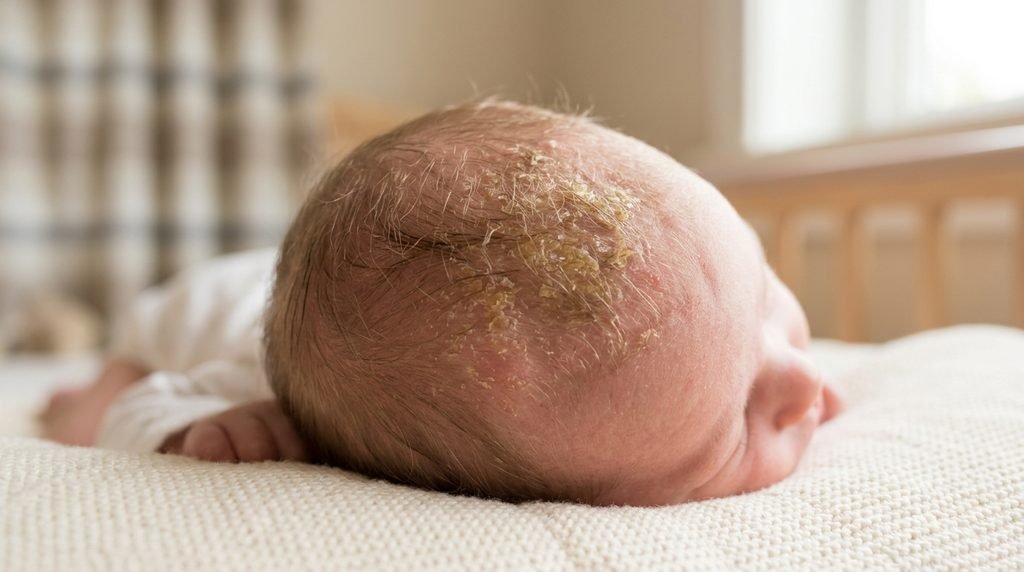
Cradle cap usually shows up as patches of yellow crusts on a baby’s scalp, sometimes thick and scaly, sometimes thin and barely noticeable. The texture tends to be greasy baby scales rather than dry, powdery flakes, which is one of the ways it differs from regular dry skin. Underneath those crusts, you might spot some redness under infant scalp scales, though the skin itself usually isn’t sore or itchy to the baby, even if it looks a little alarming to you. It doesn’t always stay confined to the top of the head either. Cradle cap on eyebrows is fairly common, and some babies develop cradle cap on face too, particularly around the nose, behind the ears, or in skin folds. Wherever it shows up, the pattern is usually the same: patches of flaky baby skin with a slightly oily sheen, not painful, not itchy, just visually a bit rough around the edges.
What Causes Cradle Cap in the First Place?
Parents almost always want to know what causes cradle cap, especially because it can feel like it came out of nowhere. The honest answer is that researchers don’t have one single, tidy explanation, but a few factors seem to play a real role. One major piece of the puzzle is overactive sebaceous glands in babies. These are the oil-producing glands in the skin, and in newborns, they can go into overdrive for a while, producing extra oil that mixes with dead skin cells and forms those crusty patches. Another factor is maternal hormones and baby skin. Babies are born carrying some of their mother’s hormones, and those hormones can stimulate the baby’s oil glands in the weeks right after birth, which is part of why cradle cap tends to show up so early in life. There’s also a yeast called Malassezia yeast newborn skin naturally hosts in small amounts. This yeast lives on most people’s skin without causing any trouble, but in some babies it seems to interact with the excess oil in a way that contributes to the scaling and irritation seen with cradle cap. None of these causes have anything to do with poor hygiene, so if you’ve been quietly blaming yourself for not washing your baby’s hair often enough, you can let that go.
Is Cradle Cap Contagious?
This is one of the most common worries parents bring up, especially if there are older siblings or other babies around. Is cradle cap contagious? No, it isn’t. It’s not caused by an infection that spreads from one person to another, and it’s not something your baby picked up from daycare, a sibling, or a cuddle with a relative. It’s simply a reaction happening within your baby’s own skin, driven by their own oil glands, hormones, and the yeast that naturally lives there. You don’t need to isolate your baby, avoid physical contact, or worry about “catching” it yourself. The only thing spreading here is the crust across the scalp, and even that usually stays contained to one area rather than expanding aggressively.
How Long Does Cradle Cap Actually Last?
Most cases of cradle cap show up within the first three months of life and clear up on their own by around eight to twelve months, though the exact timeline varies quite a bit from baby to baby. Some infants have a mild dusting of scales for a few weeks and never think about it again. Others deal with more persistent patches that come and go throughout the first year. It’s rarely something that drags on into toddlerhood, and when it does linger past the first birthday, it’s worth mentioning to a pediatrician just to rule out other skin conditions that can look similar.
Home Remedies That Actually Help
Cradle cap home remedies tend to be simple, low-risk, and something you probably already have around the house. One of the most popular options is coconut oil for baby scalp care. Massaging a small amount of coconut oil into the scalp and letting it sit for ten to fifteen minutes before a bath can soften the crusts, making them much easier to gently loosen and wash away. Mineral oil and plain baby oil work in a similar way, though coconut oil tends to be a favorite because of its mild, skin-friendly reputation. After softening the scales, a soft brush for cradle cap, like a silicone scalp brush or a very soft-bristled baby brush, can help gently lift the flakes away without scratching or irritating the delicate skin underneath. The key word here is gentle. Baby scalps are thin and sensitive, and aggressive scrubbing can cause irritation or even small breaks in the skin, which isn’t worth risking for a cosmetic issue that will resolve on its own anyway.
Table 1: Do’s and Don’ts for Managing Cradle Cap at Home
| Do This | Avoid This |
|---|---|
| Massage a small amount of coconut oil onto the scalp before bath time | Using strong oils or products with added fragrance |
| Use a soft brush for cradle cap to gently loosen flakes | Scratching or picking at the crusts with fingernails |
| Wash your baby’s hair a few times a week with a mild shampoo | Skipping hair washing entirely out of fear of making it worse |
| Let oil sit for ten to fifteen minutes before rinsing | Leaving oil on for hours or overnight without rinsing |
| Be patient, since most cases clear up within months | Expecting instant results after one treatment |
| Ask your pediatrician if patches spread or look infected | Trying random home remedies without checking ingredients first |
Choosing the Best Cradle Cap Shampoo
If oil massages and gentle brushing aren’t quite doing the trick, the best cradle cap shampoo is usually a mild, baby-specific formula designed to loosen scales without drying out the scalp further. Some parents find success with shampoos containing a small amount of salicylic acid or mild anti-fungal ingredients, since these can target the Malassezia yeast newborn skin sometimes carries in excess. That said, anything stronger than a standard baby shampoo should really be run past a pediatrician first, because baby skin absorbs products differently than adult skin, and what’s safe for grown-up dandruff isn’t automatically safe for a three-month-old. Regular, gentle washing, even with a basic tear-free baby shampoo, often does more good over time than people expect. The goal isn’t to attack the scales aggressively in one session, it’s to keep loosening them gradually until they clear up.

How to Get Rid of Cradle Cap Step by Step
Wondering how to get rid of cradle cap without overcomplicating things? The process really comes down to a simple, repeatable routine. Start by applying a small amount of oil to the affected areas and letting it soak in for about ten minutes. Then, during bath time, use a mild baby shampoo and gently massage the scalp with your fingertips or a soft brush for cradle cap, working in small circles rather than scrubbing back and forth. Rinse thoroughly, making sure no oil or shampoo residue is left behind, since leftover product can sometimes make the scales stick around longer. Repeat this two to three times a week rather than daily, since over-washing can dry out the scalp and potentially make things worse rather than better. Most parents notice gradual improvement over several weeks, with the crusts becoming looser and less noticeable each time.
Table 2: Common Cradle Cap Remedies Compared
| Remedy | How It Works | Best For |
|---|---|---|
| Coconut oil massage | Softens crusts before washing | Mild to moderate cases |
| Mild baby shampoo | Gently cleanses and loosens flakes | Everyday maintenance |
| Soft-bristle scalp brush | Physically lifts loosened scales | Removing softened flakes |
| Medicated anti-fungal shampoo | Targets Malassezia yeast overgrowth | Persistent or thicker patches |
| Pediatrician-prescribed treatment | Addresses stubborn or spreading cases | Cases that don’t improve at home |
Cradle Cap vs. Other Baby Skin Conditions
Because cradle cap can show up on the face, eyebrows, and skin folds, it sometimes gets confused with other skin conditions like eczema, cradle cap contagious? No, cradle cap contagious question, or even dry skin. Knowing the difference matters because the treatment approach isn’t identical.
Table 3: Cradle Cap vs. Eczema vs. Dry Skin
| Feature | Cradle Cap | Eczema | Dry Skin |
|---|---|---|---|
| Texture | Greasy, yellowish scales | Red, rough, sometimes weepy patches | Flaky, dry, non-greasy |
| Itchiness | Usually not itchy | Often very itchy | Mildly itchy |
| Common location | Scalp, eyebrows, face, skin folds | Cheeks, elbows, knees, scalp | Anywhere, often cheeks and body |
| Typical age of onset | First three months | Can appear anytime in infancy | Any age, often seasonal |
| Usual treatment | Oil, gentle washing, mild shampoo | Moisturizers, sometimes prescribed creams | Regular moisturizing |
When Cradle Cap Needs a Doctor’s Attention
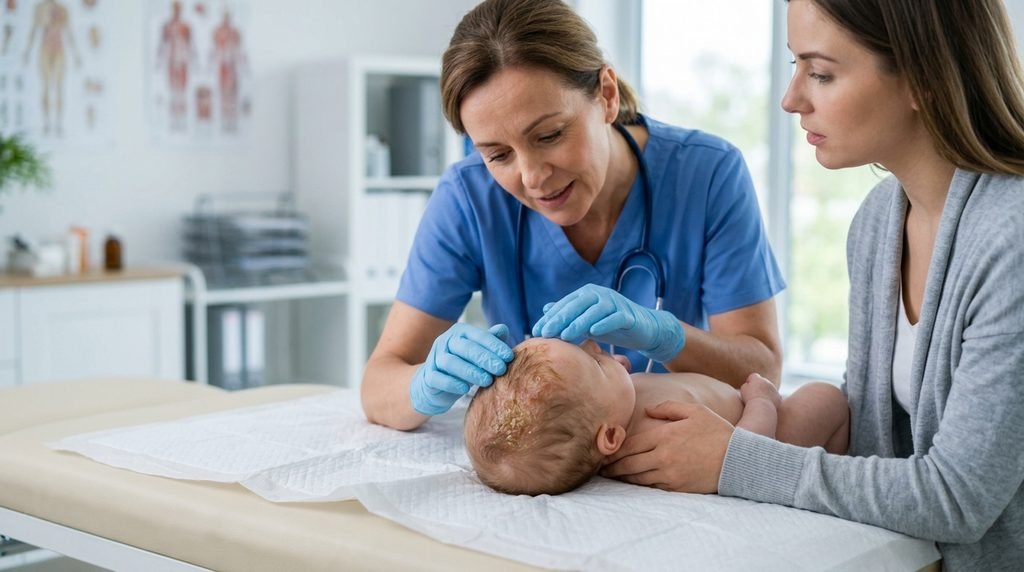
Most cradle cap cases are purely a cosmetic nuisance rather than a medical concern, but there are moments when it’s smart to check in with a pediatrician. If the patches spread beyond the scalp and face into large areas of the body, if the skin looks significantly red, swollen, or seems to be oozing, or if your baby appears uncomfortable, unusually fussy, or has a fever alongside the skin changes, those are signs worth having checked out. Occasionally what looks like cradle cap turns out to be something else entirely, like a fungal infection or a different form of dermatitis that needs a specific treatment plan. Trusted resources like the “https://www.healthychildren.org” and the “https://www.mayoclinic.org” offer reliable, medically reviewed guidance if you want a second opinion before your next pediatrician visit, or if you simply want to read more before deciding whether a home remedy is enough.
A Few Reassurances Worth Repeating
It’s easy to spiral a little when you notice something unfamiliar on your newborn’s skin, especially in those early sleep-deprived weeks when everything feels high-stakes. But cradle cap really is one of the more forgiving skin conditions babies deal with. It doesn’t hurt, it doesn’t spread to other people, and it doesn’t reflect anything you did or didn’t do as a parent. It’s simply a temporary side effect of a newborn’s oil glands adjusting to life outside the womb, occasionally paired with a yeast that lives harmlessly on most people’s skin anyway. Gentle care, a little patience, and consistent washing usually take care of it without any drama.
Final Thoughts
Cradle cap might look a little unsettling the first time you notice those yellow, greasy patches on your baby’s scalp, but it’s overwhelmingly common, entirely harmless, and manageable with simple home care. Understanding what causes it, from overactive sebaceous glands to lingering maternal hormones to a naturally occurring yeast, takes a lot of the mystery and worry out of the equation. With a bit of coconut oil, a soft brush, a mild shampoo, and a little patience, most babies see their scalp clear up well before their first birthday. And if things ever look worse than typical cradle cap, or your gut tells you something’s off, a quick conversation with your pediatrician is always the right move. Trust your instincts but also give your baby’s skin the grace to work through this completely normal phase.