

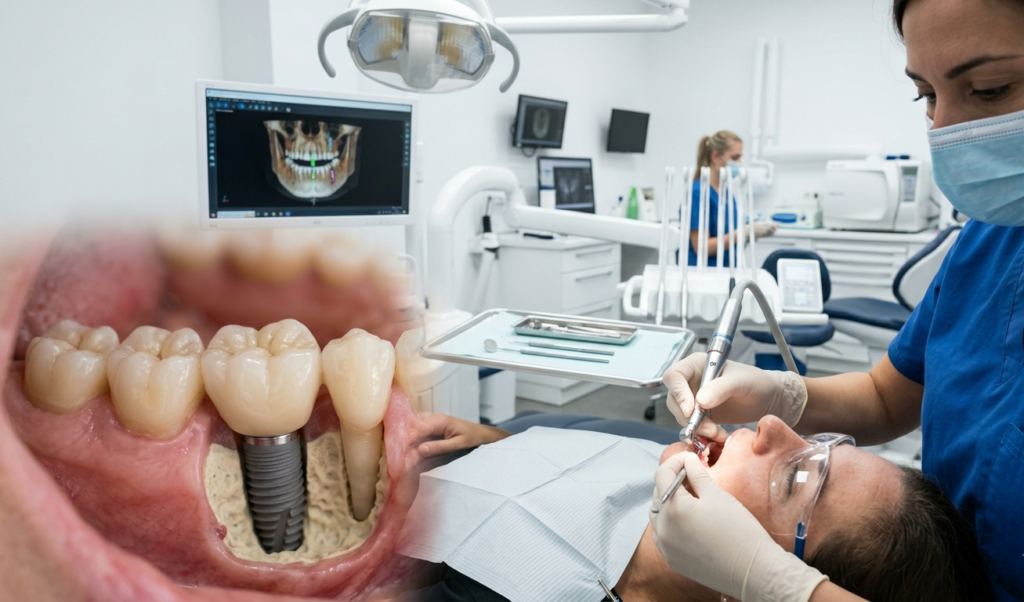
Losing a tooth, or several, is stressful enough without having to guess what it will cost to restore your smile. If you have started researching dental implants, you may have noticed that implant pricing can vary significantly from one clinic to another. Understanding your potential dental expenses in advance can make the treatment planning process much easier. That is where a Dental Implants Cost Calculator and price calculator can help. These tools give you a clearer estimate of potential treatment costs based on factors such as the number of implants, procedure type, and additional treatments. In this guide, we will explain how dental implant pricing works, what affects your total dental expenses, and how to use a Dental Implants Cost Calculator to estimate your potential costs before visiting a dentist.
Why the Cost of Dental Implants Varies So Much
One of the most confusing parts of researching implant dentistry cost is that no two quotes ever seem to match. This happens because dental implants are not a single product with a fixed price tag. The final bill depends on the materials used, the number of implants placed, whether bone grafting is needed, the experience level of the surgeon, and even the geographic location of the clinic. A dentist working in a major metropolitan area typically charges more than one in a smaller town, simply because of overhead costs like rent, staff salaries, and equipment. On top of that, some clinics bundle the consultation, imaging, and follow-up visits into one price, while others charge for each step separately. This is precisely the gap that a good teeth implant cost calculator tries to close, by asking you a series of questions about your specific situation and giving you an estimate based on real pricing data rather than a generic average.
How a Dental Implant Cost Estimator Works
A typical dental implant cost estimator asks for basic information such as how many teeth need replacing, whether you already have enough jawbone density, your general location, and whether you want a single implant, a bridge supported by implants, or a full-arch solution. Based on your answers, the tool calculates a price range rather than one exact figure, because dentists still need to examine your mouth in person before confirming a final quote. Even so, these calculators are genuinely useful for budgeting purposes. They help you avoid the shock of an unexpectedly high bill and give you a starting point for comparing quotes from different providers. Many reputable dental associations, including the American Dental Association, offer general guidance on typical procedure costs, which is a good place to cross-check any calculator result you receive online.
Average Cost of Dental Implants by Type
The price of an implant procedure changes significantly depending on the type of restoration you choose. Below is a general breakdown to help you understand where your treatment might fall.
| Implant Type | Typical Price Range (Per Arch or Tooth) | Best Suited For |
|---|---|---|
| Single tooth implant | $1,500 – $6,000 per tooth | Replacing one missing tooth |
| Mini dental implants | $500 – $1,500 per implant | Patients with lower bone density or smaller budgets |
| All-on-4 implants | $15,000 – $30,000 per arch | Full arch replacement with fewer implants |
| Full mouth dental implants | $24,000 – $50,000+ (both arches) | Patients missing most or all teeth |
| Same-day implants | $3,000 – $6,000 per tooth | Patients wanting immediate results in one visit |
These numbers are only a starting reference. Your actual quote will depend on your dentist’s experience, the implant brand used, and whether additional procedures like bone grafts or sinus lifts are necessary.
Mini Dental Implants Cost and Who They Suit
If your budget is tight or your jawbone has thinned over the years, mini dental implants cost considerably less than traditional implants, which makes them an attractive option for many patients. These smaller implants are often used to stabilize dentures or replace narrow teeth like lower incisors. Because they require less invasive surgery and often skip the need for bone grafting, both the procedure time and the final bill tend to be lower. That said, mini implants are not always suitable for every situation, particularly for molars that bear heavy chewing forces. A dentist will usually recommend a CT scan first to confirm whether your jawbone can support this option before moving forward.
Same Day Dental Implants Cost Explained
Patients who do not want to wait months for a finished tooth often ask about same day dental implants cost, since the idea of walking out with a functional tooth in a single visit is appealing. This method, sometimes called immediate load implants, places both the implant post and a temporary crown on the same day, with a permanent crown fitted later once healing is complete. Because it requires advanced planning, digital imaging, and often guided surgery technology, same-day implants generally cost more per tooth than the traditional staged approach. However, many patients feel the convenience and reduced downtime justify the higher price, especially if they have a busy schedule or live far from the clinic and cannot make multiple trips.
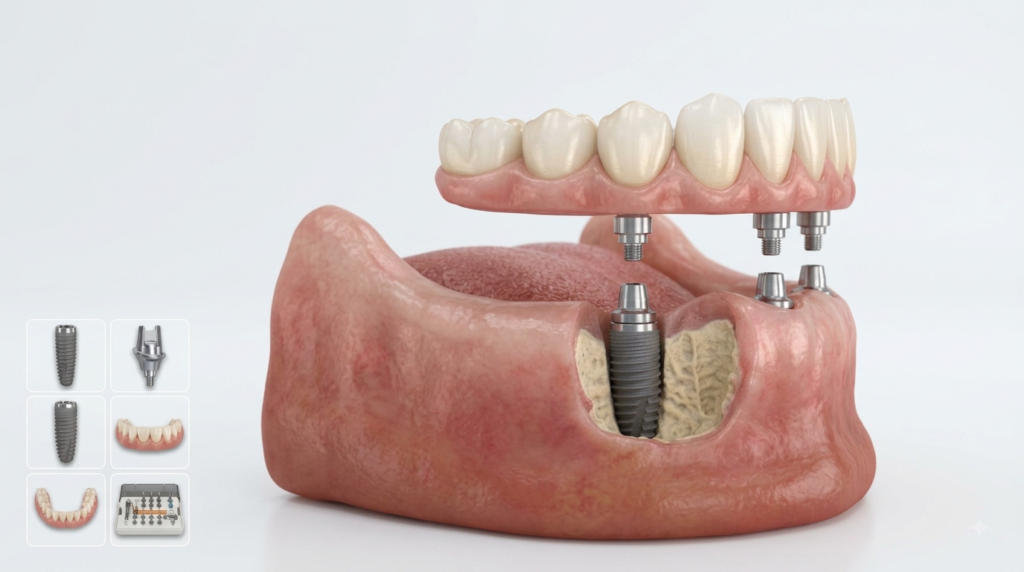
All-on-4 Dental Implants Price Breakdown
For people missing most or all of their teeth in one jaw, the all-on-4 dental implants price is usually far more economical than replacing every single tooth individually. This technique uses only four strategically angled implants to support a full arch of replacement teeth, reducing both the number of surgical sites and the overall treatment time. While the number “four” suggests simplicity, the actual price reflects the complexity of the prosthetic arch, the lab work involved in crafting a natural-looking bridge, and the specialized surgical skill needed to angle the implants correctly to avoid nerves and sinus cavities. Many clinics offer package pricing for All-on-4 because it is a standardized protocol, which can actually make it easier to budget for compared to piecemeal single-tooth procedures.
Cost of Full Mouth Dental Implants
When someone needs to replace every tooth in both the upper and lower jaw, the cost of full mouth dental implants becomes the biggest financial decision in the entire process. This typically involves either two All-on-4 arches or a combination of individual implants and bridges, depending on bone health and the patient’s chewing needs. Full mouth restoration is a major undertaking that often spans several months and multiple procedures, including extractions, bone grafting, temporary prosthetics, and finally the permanent restoration. Because of the scope involved, many patients choose to break this cost down using a dental implant cost estimator so they can plan payments across the different treatment phases rather than facing one enormous invoice.
Dental Implants Cost Without Insurance
A common concern for many patients is dental implants cost without insurance, since most dental insurance plans classify implants as a cosmetic or elective procedure and either exclude them entirely or cover only a small portion. Without any insurance assistance, patients are responsible for the full price of the surgery, the abutment, and the crown, which together can easily add up to several thousand dollars per tooth. Some insurance plans do cover portions related to medical necessity, such as bone grafting after an accident or disease, so it is always worth checking your specific policy details rather than assuming implants are entirely excluded. If your plan does not cover implants at all, that is where financing and discount dental plans become especially valuable.
Dental Implant Financing Options Worth Considering
Because so few insurance plans fully cover implants, exploring dental implant financing options is often necessary for making treatment affordable. Many dental offices now partner with third-party financing companies that offer monthly payment plans, sometimes with zero-interest promotional periods if paid off within a set timeframe. Health savings accounts (HSAs) and flexible spending accounts (FSAs) can also be used to cover implant costs, since they are considered a qualified medical expense. Additionally, some dental schools offer implant procedures at reduced rates performed by supervised students, which can be a budget-friendly alternative for patients willing to be flexible with their treatment timeline. Credit unions and personal loans are another route, though it is worth comparing interest rates carefully before committing.
Advantages and Disadvantages of Using a Cost Calculator
Before relying entirely on an online estimator, it helps to understand both the strengths and the limitations of these tools.
| Advantages | Disadvantages |
|---|---|
| Gives a quick ballpark figure before visiting a dentist | Cannot account for unique anatomy or bone loss until an exam is done |
| Helps compare pricing across multiple clinics | Estimates may not include hidden fees like anesthesia or follow-ups |
| Useful for budgeting and financing planning | Regional pricing data may be outdated or generalized |
| Saves time by narrowing down realistic options | Cannot replace a professional consultation or X-ray |
| Often free and available online at any time | Some calculators are marketing tools that push you toward one provider |
Using a calculator as a first step, rather than a final answer, is generally the smartest approach. Treat the number it gives you as a starting point for conversations with real dental providers in your area.
How to Find Affordable Dental Implants Near Me
Searching for affordable dental implants near me can feel overwhelming because pricing is rarely listed clearly on clinic websites. A good strategy is to request written quotes from at least three different providers, since prices for the same procedure can differ by thousands of dollars even within the same city. It also helps to ask whether the clinic offers package deals that bundle the implant, abutment, and crown into one price, since this is usually cheaper than paying for each component separately. Dental tourism, where patients travel to countries with lower labor and material costs, has also become popular for major procedures like All-on-4, though it comes with its own risks around follow-up care and quality control that should be carefully weighed.
Getting Dental Implant Quotes Online
Requesting dental implant quotes online has become much easier thanks to virtual consultations offered by many clinics. You typically upload a recent dental X-ray or photo, answer a short questionnaire about your medical history, and receive a preliminary estimate within a day or two. While this process is convenient, remember that any online quote is provisional until a dentist physically examines your mouth and confirms bone density and gum health. Reputable clinics will always clarify that the number you receive online is an estimate, not a guaranteed price, and they should be transparent about what additional costs might apply once the in-person exam is complete.
How to Compare Dental Implant Costs Effectively
When you compare dental implant costs between providers, it is easy to focus only on the headline number, but that can be misleading. A lower quote might exclude the abutment or crown, require a separate payment for sedation, or use a lesser-known implant brand with a shorter warranty. To make a fair comparison, ask each clinic for an itemized breakdown that includes the surgical fee, the implant post, the abutment, the crown, any necessary bone grafting, and follow-up visits. It is also worth asking about the brand of implant being used, since well-established brands with decades of clinical research, like Straumann or Nobel Biocare, often come with better long-term outcomes and warranty support compared to unfamiliar budget alternatives.
Do’s and Don’ts When Budgeting for Dental Implants
| Do | Don’t |
|---|---|
| Get quotes from at least three dental providers | Assume the cheapest option is automatically the best value |
| Ask for an itemized cost breakdown in writing | Skip asking about warranty and aftercare costs |
| Check if your dentist is a certified implant specialist | Choose a provider based on price alone without checking credentials |
| Explore financing and payment plan options early | Wait until the day of surgery to think about payment |
| Confirm what your insurance actually covers | Assume implants are automatically excluded without checking your policy |
| Factor in travel and recovery time if traveling for treatment | Ignore the cost of follow-up visits after dental tourism |
Dental Implant Cost Per Tooth: What Really Goes into It
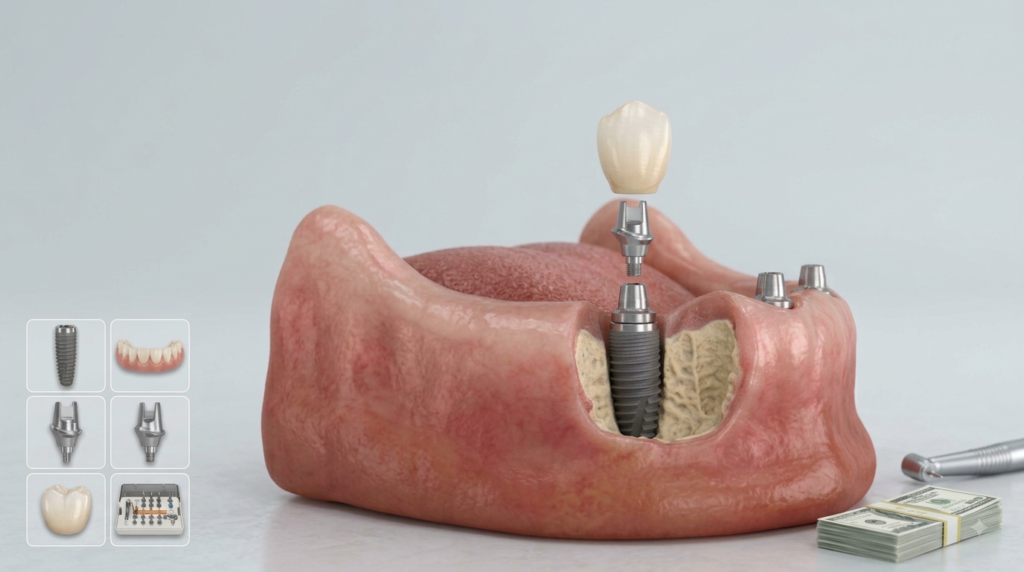
Understanding the dental implant cost per tooth requires breaking the procedure into its three core components: the titanium or zirconia implant post that fuses with the jawbone, the abutment that connects the post to the visible tooth, and the crown itself, which is custom made to match your natural teeth. Each of these pieces is priced separately by most clinics, even if they present you with one combined number. On average, the surgical placement of the implant post tends to be the most expensive single component, largely because it requires specialized training, imaging technology, and sterile surgical conditions. Knowing this breakdown helps you understand why a “cheap” quote for just the crown portion is not the full picture of what you will eventually pay.
Average Cost of Dental Implants in My Area
Many patients search specifically for the average cost of dental implants in my area, since national averages rarely reflect local realities. Urban centers with a high cost of living, along with regions with a shortage of qualified implant dentists, tend to have higher prices, while suburban or rural clinics may offer more competitive rates due to lower overhead. Checking local dental society directories or asking your general dentist for a referral to a trusted implant specialist nearby is often more reliable than relying purely on national statistics. Resources such as the <a href=”https://www.aaid.com/” target=”_blank” rel=”noopener noreferrer”>American Academy of Implant Dentistry</a> can also help you locate qualified specialists and get a sense of standard practice fees in your region.
Dental Implant Surgery Price Estimate: Setting Realistic Expectations
Getting an accurate dental implant surgery price estimate ultimately comes down to a proper clinical evaluation, including X-rays or a 3D CT scan to assess bone density and the position of nerves and sinus cavities. Patients who need bone grafting or a sinus lift before implant placement should expect an additional cost, sometimes ranging from a few hundred to a couple thousand dollars, depending on the extent of the grafting required. It is worth budgeting for these possibilities in advance rather than being caught off guard mid-treatment. A thorough consultation with a qualified implant dentist remains the only way to get a truly accurate number, and any calculator or online tool should be treated as a helpful starting point rather than the final word.
Final Thoughts on Planning Your Dental Implant Budget
Understanding how much dental implants do cost takes some research, but it does not have to be overwhelming if you approach it step by step. Start with an online dental implant treatment price guide or calculator to get a general sense of what to expect, then narrow down your options by requesting itemized quotes from local providers. Factor in financing options, check your insurance coverage carefully, and always prioritize a dentist’s qualifications over the lowest possible price. Dental implants are a long-term investment in your health and confidence, and taking the time to plan the financial side properly will help you avoid unpleasant surprises down the road.