

Operation Bunionette is a surgical procedure used to treat a painful bony bump that develops on the outside of the little toe. This condition, known as a bunionette or “tailor’s bunion,” may start as a minor irritation but can gradually cause pain and discomfort when walking or wearing shoes. When wider shoes, padding, and other non-surgical treatments no longer provide relief, doctors may recommend an operation for bunionette. This guide explains the causes and symptoms of bunionettes, available treatment options, bunionette pain management, the surgical procedure, and what to expect during recovery.
What Exactly Is a Bunionette?
A bunionette is a bony bump that forms on the outside edge of the foot, right at the base of the fifth toe (your pinky toe). It happens when the fifth metatarsal bone shifts outward, pushing the small toe inward and creating a protrusion that constantly rubs against the side of your shoe. It’s essentially the smaller cousin of a regular bunion, which forms on the big toe side of the foot, except this one shows up on the opposite edge.
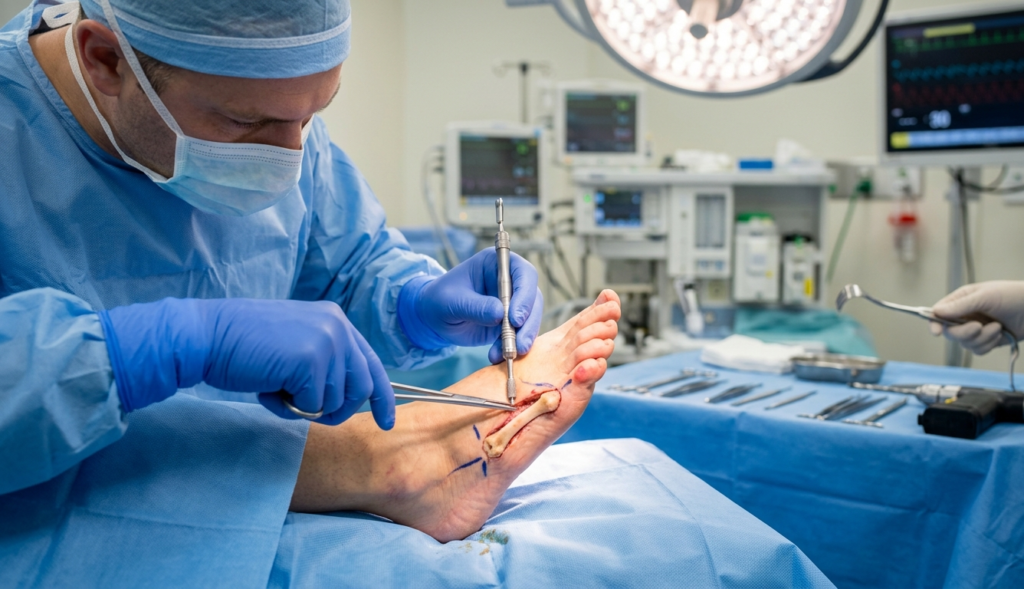
While it might look like a small cosmetic issue at first, a bunionette can become genuinely disruptive. The skin over the bump often turns red, thickens, or develops a painful corn from constant friction. Walking, running, or even just standing for long periods can become uncomfortable, especially in narrow or pointed shoes.
Bunionette Causes and Symptoms You Shouldn’t Ignore
Understanding bunionette causes and symptoms helps explain why this condition develops in the first place and why it tends to get worse rather than better on its own. Common causes include:
- An inherited foot shape or structure that makes the fifth metatarsal more prone to angling outward
- Years of wearing narrow, pointed, or tight-fitting shoes that squeeze the toes together
- An abnormally curved or unusually long fifth metatarsal bone
- Repetitive pressure on the foot from certain sports or occupations that involve a lot of standing or walking
- Underlying conditions like rheumatoid arthritis, which can affect joint alignment over time
As for symptoms, most people notice a firm, visible bump on the outside of the foot near the little toe. This is usually accompanied by redness, swelling, tenderness, and sometimes a callus or corn where the skin rubs against footwear. In more advanced cases, the little toe may start to angle inward, and pain can persist even when you’re not wearing shoes at all.
Conservative Treatment for Bunionette Before Considering Surgery
Surgery isn’t usually the first recommendation. Most foot specialists start with conservative treatment for bunionette and only suggest an operation if these methods fail to bring relief after a reasonable trial period. Non-surgical approaches typically include:
- Switching to wider, roomier shoes with a soft upper that doesn’t press against the bump
- Using protective pads or moleskin over the bunionette to reduce friction
- Applying ice to calm down swelling and inflammation after a long day on your feet
- Taking over-the-counter anti-inflammatory medication to manage discomfort
- Trying custom orthotics that redistribute pressure away from the fifth metatarsal
Bunionette Braces or Splints as a Non-Surgical Option
Many patients ask about bunionette braces or splints before committing to anything more invasive, and it’s a reasonable question. These devices are designed to gently hold the little toe in a straighter position and reduce the outward pressure on the joint. Some are worn only at night, while others are slim enough to wear inside a shoe during the day.
Braces and splints won’t reverse the bone’s structural position, but they can meaningfully reduce pain and slow down further progression in mild to moderate cases. They tend to work best when combined with proper footwear and activity modification, rather than as a standalone fix. For more advanced bunionettes, though, a brace alone usually isn’t enough to eliminate the pain long-term.
When Bunionette Pain Management Isn’t Enough
For a while, many people manage just fine with basic bunionette pain management strategies like padding, icing, and shoe changes. But once the bump becomes structurally pronounced, or the pain starts interfering with everyday walking, these strategies tend to lose their effectiveness. This is usually the point where a foot surgeon starts discussing whether surgical correction makes sense.
It’s worth noting that a bunionette rarely fixes itself. Without some form of intervention, whether conservative or surgical, the bump generally continues to worsen slowly over the years, particularly if narrow footwear remains part of your daily routine.
Understanding Bunionette Surgery and How It Works
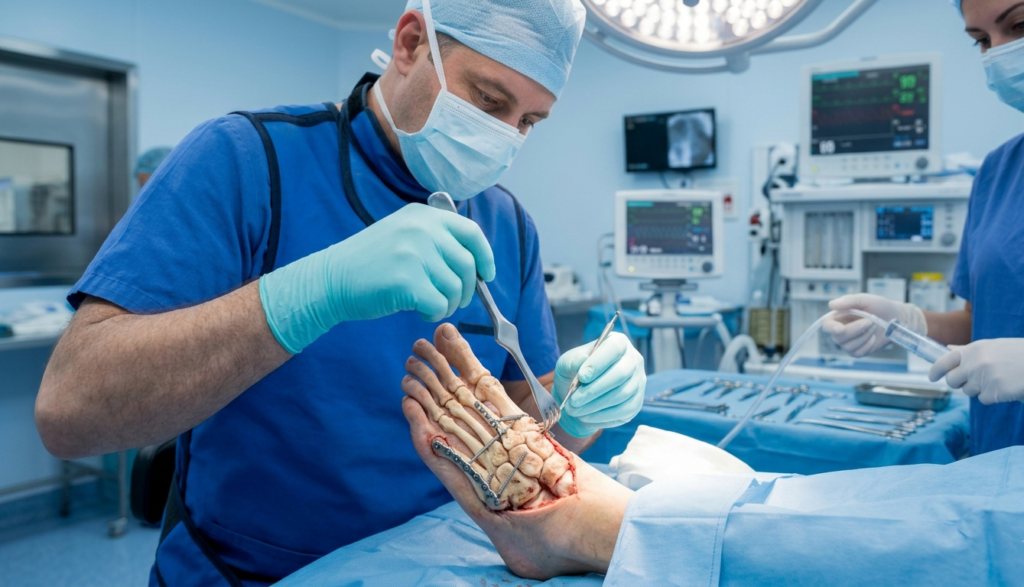
Bunionette surgery, sometimes referred to as the operation for bunionette, is a procedure designed to realign the fifth metatarsal bone and remove the bony prominence causing pain and irritation. The exact surgical technique depends on the severity of the deformity, but most procedures fall into a few general categories.
In mild cases, the surgeon may simply shave down the bony bump, a procedure sometimes called an exostectomy. In more significant cases, an osteotomy is performed, where the surgeon cuts and repositions the metatarsal bone itself, then secures it with small screws or pins so it heals in a straighter, corrected position. The goal in every case is the same: relieve pressure on the joint, straighten the toe’s alignment, and eliminate the pain caused by shoes rubbing against the bump.
Understanding Bunionette Correction Surgery Techniques
Bunionette correction surgery isn’t a one-size-fits-all operation, and your surgeon will choose the approach based on your specific anatomy and how severe the deformity has become. Below is a simple breakdown of the most common surgical techniques used today.
| Surgical Technique | What It Involves | Best Suited For |
|---|---|---|
| Exostectomy | Shaving down the bony bump without cutting the bone | Mild cases with minimal bone misalignment |
| Distal osteotomy | Cutting and repositioning the end of the metatarsal bone closest to the toe | Moderate deformities |
| Diaphyseal osteotomy | Cutting the bone shaft and shifting it into a straighter position | Larger or more angled deformities |
| Minimally invasive osteotomy | Small incisions with specialized instruments to reposition the bone | Patients wanting less scarring and a potentially faster recovery |
Minimally Invasive Bunionette Surgery: A Modern Alternative
One of the more recent advances in this field is minimally invasive bunionette surgery, which uses much smaller incisions compared to traditional open surgery. Instead of a long cut along the side of the foot, the surgeon works through tiny keyhole-sized openings using specialized micro-instruments and X-ray guidance.
The appeal is obvious: smaller incisions generally mean less scarring, reduced soft tissue trauma, and for many patients, a somewhat quicker return to daily activities. That said, minimally invasive techniques require a surgeon with specific training and experience in this approach, so not every foot and ankle specialist offers it. It’s worth asking directly whether your surgeon performs this technique if it’s something you’re interested in.
Bunionette Removal: What Happens During the Procedure
On the day of your bunionette removal, the process typically follows a fairly predictable pattern. You’ll usually receive local or regional anesthesia, sometimes combined with light sedation, so you’re comfortable but not necessarily fully unconscious. The surgeon makes an incision near the affected area, removes or reshapes the bony prominence, and if needed, cuts and repositions the metatarsal bone before securing it with hardware.
The entire procedure is generally performed on an outpatient basis, meaning you go home the same day rather than staying overnight in a hospital. Most operations take somewhere between 30 minutes to just over an hour, depending on the complexity of the correction needed.
Bunionette Surgery Cost: What Factors Affect the Price
Cost is one of the biggest questions patients have, and understandably so. Bunionette surgery cost can vary widely based on several factors, which makes it hard to give one universal number. Here’s a breakdown of what typically influences the final bill.
| Factor | How It Affects Cost |
|---|---|
| Type of surgery performed | Simple exostectomy costs less than a full osteotomy with hardware |
| Anesthesia type | Local anesthesia is generally cheaper than sedation or general anesthesia |
| Surgeon’s experience and location | Specialists in major cities often charge more than general practitioners in smaller areas |
| Facility fees | Hospital-based surgery centers tend to cost more than outpatient clinics |
| Insurance coverage | Medically necessary procedures are often partially covered, while purely cosmetic requests may not be |
| Post-surgical care | Follow-up visits, imaging, and physical therapy can add to the total cost |
Because bunionette surgery is typically classified as medically necessary rather than cosmetic, many insurance plans do provide coverage, particularly when conservative treatment has already been tried without success. It’s a good idea to check directly with your insurance provider and get a written cost estimate from your surgeon’s office before scheduling the procedure. According to Foot Health Facts, the patient education resource of the American College of Foot and Ankle Surgeons, treatment costs and approaches can vary significantly depending on the severity of the deformity and the technique chosen.
Advantages and Disadvantages of Bunionette Surgery
Like any surgical procedure, this operation comes with both benefits and downsides worth weighing carefully before making a decision.
| Advantages | Disadvantages |
|---|---|
| Permanently corrects bone alignment rather than just masking symptoms | Requires a recovery period with limited weight-bearing activity |
| Relieves chronic pain caused by shoe friction and pressure | Carries standard surgical risks like infection or delayed healing |
| Improves the ability to wear a wider variety of shoes comfortably | May involve hardware (screws or pins) that occasionally needs removal later |
| Often performed as a same-day outpatient procedure | Full recovery can take several weeks to a few months |
| High success and satisfaction rates when performed by an experienced surgeon | Results depend heavily on following post-op care instructions closely |
Recovery After Bunionette Surgery: What to Expect Week by Week
Recovery after bunionette surgery is gradual, and patience really does make a difference in how smoothly it goes. In the first one to two weeks, you’ll likely need to keep weight off the operated foot as much as possible, often using a surgical boot, crutches, or a knee scooter to get around. Swelling and mild discomfort are normal during this stage and usually improve with rest, elevation, and prescribed pain relief.
By weeks three to six, many patients gradually transition into a more supportive shoe and begin bearing more weight on the foot, depending on how the bone is healing. Your surgeon will likely take follow-up X-rays to confirm the bone is fusing properly before clearing you for more normal activity. Full recovery, including a return to regular footwear and higher-impact activities like running, can take anywhere from two to four months, sometimes longer depending on the complexity of the surgery.
Do’s and Don’ts During Bunionette Surgery Recovery
Following the right habits after surgery can make a real difference in how well and how quickly your foot heals.
| Do’s | Don’ts |
|---|---|
| Keep the foot elevated above heart level as much as possible early on | Don’t rush back into tight or narrow shoes too soon |
| Follow your surgeon’s weight-bearing instructions exactly | Don’t skip follow-up appointments and X-rays |
| Wear the prescribed surgical boot or shoe consistently | Don’t ignore increasing pain, redness, or warmth around the incision |
| Attend physical therapy sessions if recommended | Don’t smoke, as it can significantly slow bone healing |
| Gradually increase activity only as your surgeon approves | Don’t return to high-impact sports before you’re fully cleared |
Finding the Right Foot Surgeon for Bunionette
Choosing an experienced foot surgeon for bunionette correction matters just as much as choosing the right surgical technique. Since there are multiple approaches to this operation, from traditional osteotomy to minimally invasive methods, it helps to find a surgeon who regularly performs this specific procedure rather than one who treats it only occasionally.
A few things worth asking during your consultation:
- How many bunionette surgeries have you performed, and what’s your success rate?
- Which surgical technique do you recommend for my specific case, and why?
- What does the recovery timeline typically look like for someone in my situation?
- Do you offer minimally invasive options, and would I be a good candidate?
- What happens if conservative treatment hasn’t worked so far?
A board-certified foot and ankle surgeon or podiatric surgeon is generally the right specialist to consult for this type of procedure. Reputable healthcare organizations such as the Cleveland Clinic also offer reliable background information that can help you prepare questions before your appointment.
Is Bunionette Surgery the Right Choice for You?
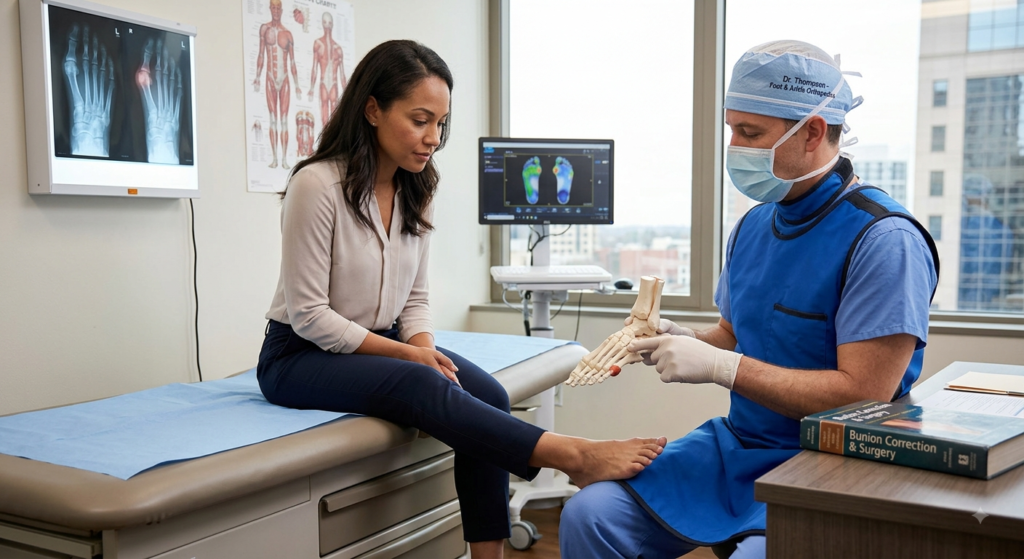
Deciding whether to move forward with surgery is a personal decision that depends on how much the bunionette is affecting your daily life. If padding, wider shoes, and other conservative measures are no longer keeping the pain manageable, and the bump keeps interfering with your ability to walk comfortably or wear normal footwear, surgical correction may genuinely improve your quality of life.
On the other hand, if your symptoms are mild and manageable with simple adjustments, there’s often no urgent need to rush into an operation. The best approach is to have an honest conversation with a qualified foot surgeon who can examine your specific case, take imaging if needed, and walk you through whether surgery, continued conservative treatment, or a combination of both makes the most sense for you.
Final Thoughts
A bunionette might start as a small, easy-to-ignore bump, but for many people it eventually grows into a daily source of discomfort that shoes and pads simply can’t fix anymore. Understanding your options, from bracing and padding to the different surgical techniques available, puts you in a much stronger position to make a confident, informed decision. Whether you end up pursuing conservative treatment or scheduling bunionette correction surgery, the goal is the same: getting back to walking comfortably, without that constant rubbing and pain holding you back.